

Tuesday 08 April 2025
Researchers have made a significant breakthrough in understanding the maximum number of cliques that can be found in certain types of graphs, known as H-free graphs. For those unfamiliar, a clique is a set of vertices in a graph where every pair of vertices is connected by an edge.
The study, published recently in the journal Discrete Mathematics, focused on H-free graphs, which are defined as graphs that do not contain a subgraph isomorphic to a given graph H. The researchers were interested in finding the maximum number of cliques that can be found in such graphs, where the size of the clique is equal to or less than a certain value.
The team used a combination of mathematical techniques and computer simulations to arrive at their findings. They started by assuming that the graph was as large as possible while still being H-free, and then used this assumption to derive upper bounds on the number of cliques that could be found.
One of the key insights that emerged from the study is that the maximum number of cliques in an H-free graph depends heavily on the size of the graph. In particular, the researchers found that as the size of the graph increases, the maximum number of cliques also increases, but at a slower rate.
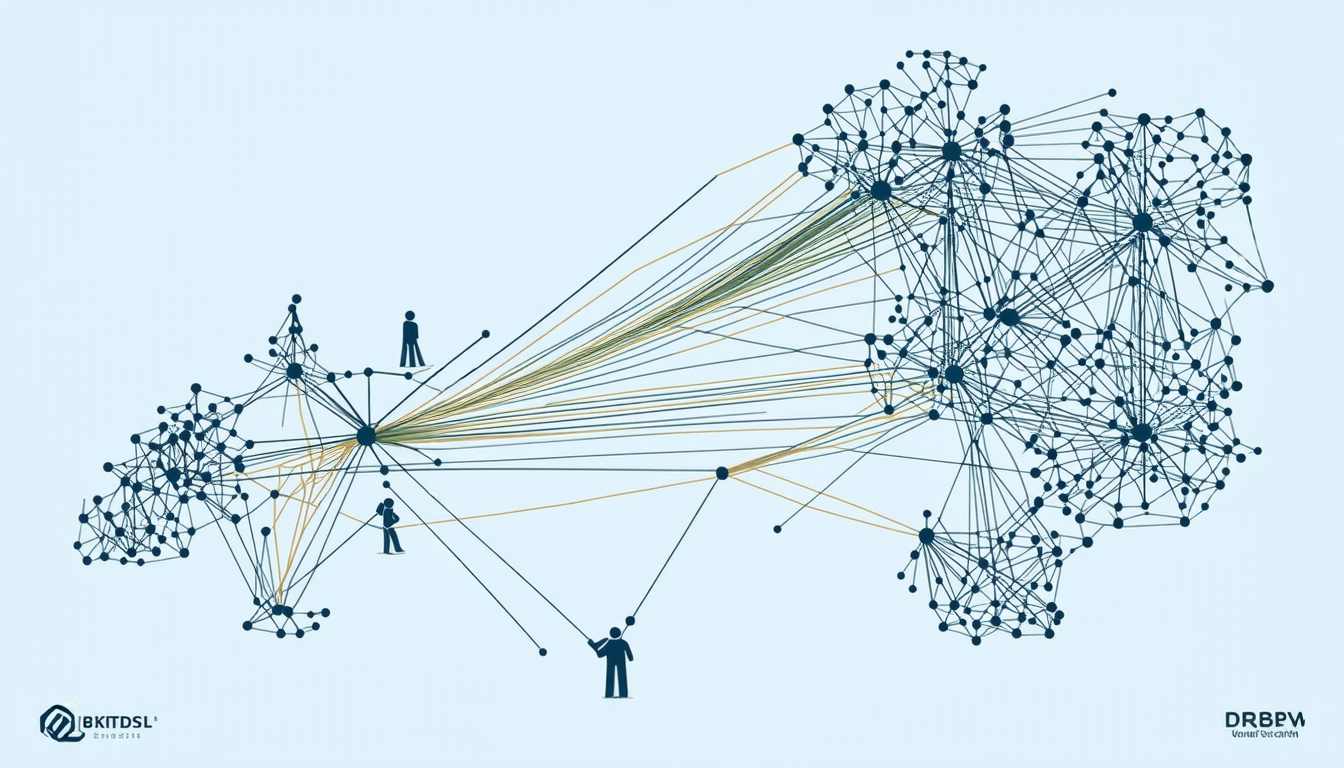
The study has significant implications for our understanding of complex networks and how they are structured. For example, it could be used to develop more efficient algorithms for finding cliques in large graphs, which is an important problem in many areas of computer science and engineering.
In addition, the findings could have applications in fields such as sociology and epidemiology, where studying the structure of social networks and disease transmission patterns can provide valuable insights into how these systems function.
The researchers are already planning further studies to explore the properties of H-free graphs in more detail. They hope that their work will help to shed light on the underlying structures that govern complex systems and ultimately lead to new discoveries and innovations.
In a related development, another team of researchers has been studying the properties of linear forests, which are graphs that can be represented as a collection of paths and cycles. Their findings have significant implications for our understanding of network structure and could potentially be used to develop more efficient algorithms for finding cliques in large graphs.
Cite this article: “Unlocking the Secrets of Cliques: A Breakthrough in Graph Theory”, The Science Archive, 2025.
Graphs, H-Free Graphs, Cliques, Maximum Number Of Cliques, Graph Theory, Complex Networks, Computer Science, Engineering, Sociology, Epidemiology, Network Structure





