

Tuesday 08 April 2025
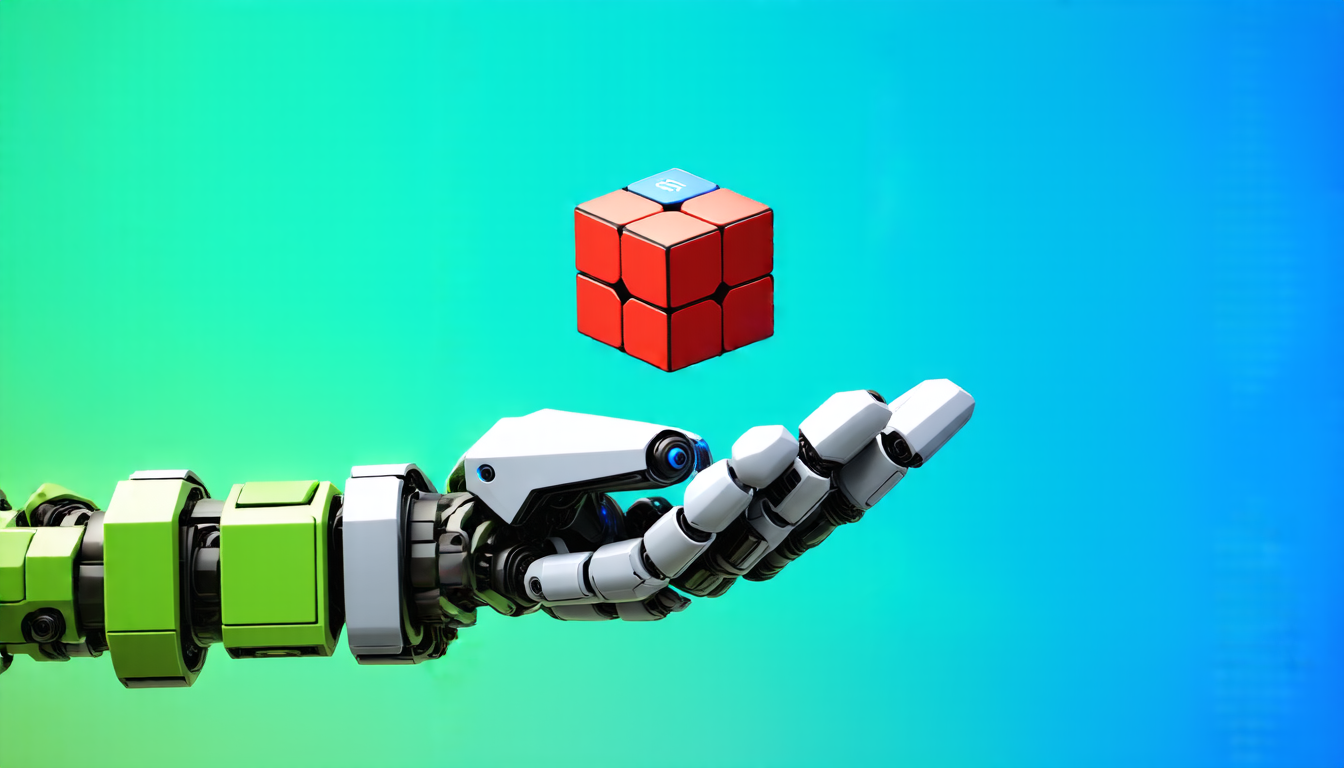
Researchers have made significant strides in developing a new approach to robotic hand control, one that eliminates the need for explicit pose estimation and instead uses synthetic data generated through randomized joint configurations and domain randomization techniques.
The traditional method of controlling robotic hands involves first detecting the hand’s pose using computer vision or machine learning algorithms, followed by translating that information into motor commands. However, this approach has its limitations – it can be prone to errors, is often sensitive to lighting conditions, and requires a significant amount of labeled data for training.
In contrast, the new approach uses a synthetic dataset generated through randomized joint configurations and domain randomization techniques. This means that the model is trained on a wide range of possible hand poses and movements, rather than just relying on a small set of real-world examples.
The researchers used a Vision Language Model (VLM) as the foundation for their model, which was fine-tuned using the synthetic dataset. The VLM is capable of processing text-based instructions and structured outputs, making it an ideal choice for this application.
The results are impressive – the model was able to achieve competitive performance in joint angle prediction accuracy without relying on explicit pose estimation or real-world labeled data. Furthermore, the model demonstrated its ability to generalize across different hand morphologies, including human hands.
This technology has significant implications for robotics and artificial intelligence. For one, it could enable robots to adapt more quickly to new situations and environments, reducing the need for extensive training or manual intervention. Additionally, it could pave the way for more advanced applications such as robotic telekinesis, where a robot is able to manipulate objects using only visual input.
The use of synthetic data also opens up new possibilities for research in robotics and AI. By generating large amounts of realistic but artificial data, researchers can train models that are better equipped to handle real-world scenarios, without the need for expensive or time-consuming data collection methods.
While there is still much work to be done before this technology becomes widely available, the potential benefits are undeniable. As researchers continue to refine and improve their approach, we can expect to see significant advancements in the field of robotics and AI.
The ability to directly map images to joint angles without relying on explicit pose estimation or real-world labeled data has far-reaching implications for robotics and artificial intelligence. By eliminating the need for these intermediate steps, this technology could enable robots to adapt more quickly to new situations and environments, reducing the need for extensive training or manual intervention.
Cite this article: “Breaking Free from Pose Estimation: A Novel Framework for Direct Image-to-Joint Control in Robotics”, The Science Archive, 2025.
Robotic Hand Control, Synthetic Data, Randomized Joint Configurations, Domain Randomization, Robotic Hands, Computer Vision, Machine Learning Algorithms, Vision Language Model, Joint Angle Prediction, Robotics And Artificial Intelligence





