

Tuesday 08 April 2025
The quest for efficient wireless networks just got a whole lot more interesting. Researchers have proposed a new framework that tackles the challenges of integrating distributed learning services into next-generation wireless networks, allowing for more precise control over latency and energy consumption.
In today’s wireless world, we’re seeing an explosion of data-driven applications, from smart homes to autonomous vehicles. As these devices generate vast amounts of data, they need to communicate with each other in real-time to ensure seamless operation. However, traditional wireless networks struggle to keep up with the demands of this new era, leading to delays and inefficiencies.
Enter distributed learning, a technology that enables devices to learn from each other’s experiences without sharing sensitive data. By leveraging edge computing and artificial intelligence, distributed learning can optimize resource allocation, reduce latency, and conserve energy. But how do we ensure these benefits are realized in real-world wireless networks?
That’s where the new framework comes in. It’s a session-based problem formulation that takes into account the heterogeneous nature of local computational tasks and capacities, as well as channel strength. By considering these factors, the framework can optimize resource allocation to minimize latency and energy consumption.
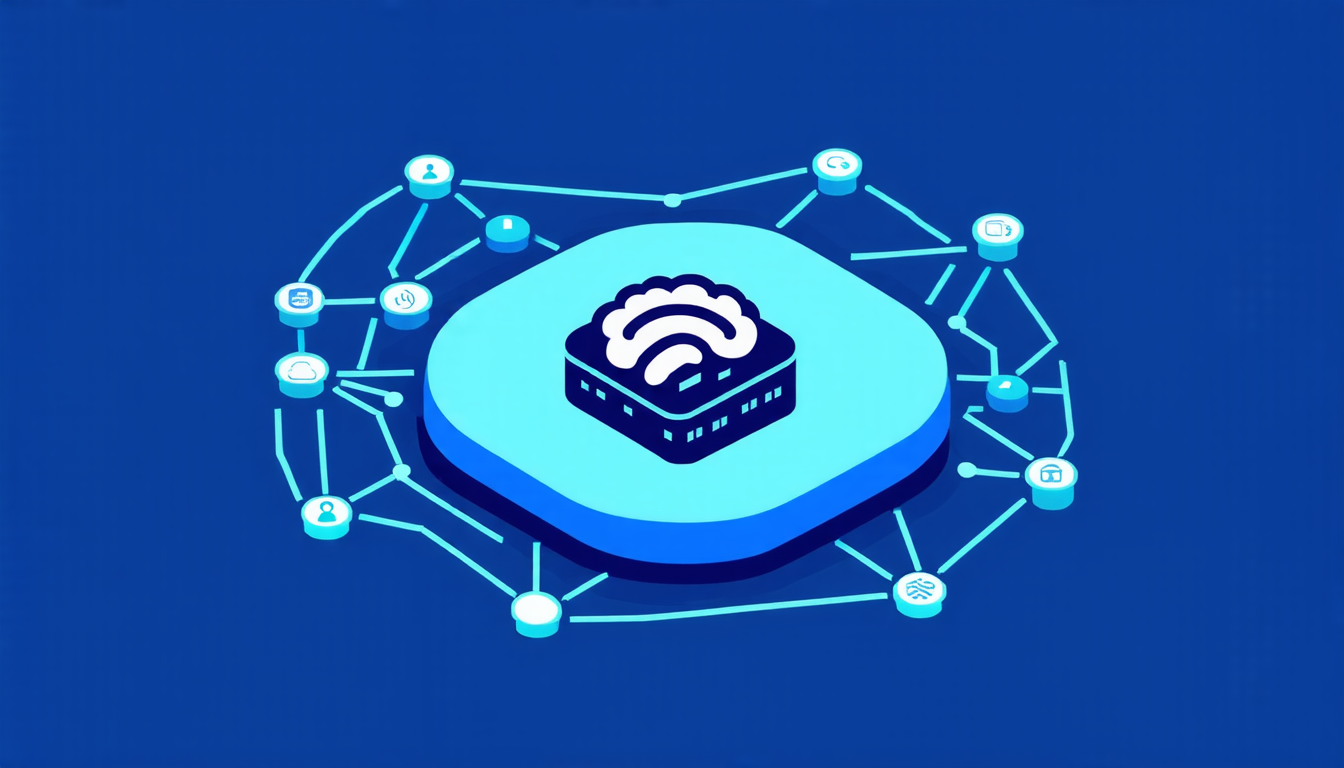
The key innovation lies in its ability to model the wireless network as a set of sessions, each with its own unique characteristics. This allows for more precise control over resource allocation, ensuring that devices receive the resources they need to operate efficiently.
To test the efficacy of this framework, researchers simulated various scenarios using real-world parameters and compared the results to traditional methods. The results were impressive: the new framework outperformed existing approaches in both latency and energy consumption, with some simulations showing a 63% reduction in energy consumption.
But what does this mean for the future of wireless networks? For one, it opens up new possibilities for edge computing and artificial intelligence applications that require real-time communication. It also paves the way for more efficient use of network resources, reducing waste and conserving energy.
Of course, there’s still much work to be done before this technology can be deployed in the wild. But as we continue to push the boundaries of what’s possible with wireless networks, innovations like this framework will be crucial in helping us achieve our goals.
The future of wireless networks is looking brighter than ever, and it’s all thanks to the tireless efforts of researchers who are pushing the limits of what’s possible. As we move forward, we can expect even more innovative solutions that will help us unlock the full potential of these powerful technologies.
Cite this article: “Federated Learning in Wireless Networks: A Novel Session-Based Framework for Efficient Resource Allocation”, The Science Archive, 2025.
Wireless Networks, Distributed Learning, Edge Computing, Artificial Intelligence, Latency, Energy Consumption, Resource Allocation, Session-Based Problem Formulation, Wireless Communication, Network Optimization





