

Tuesday 08 April 2025
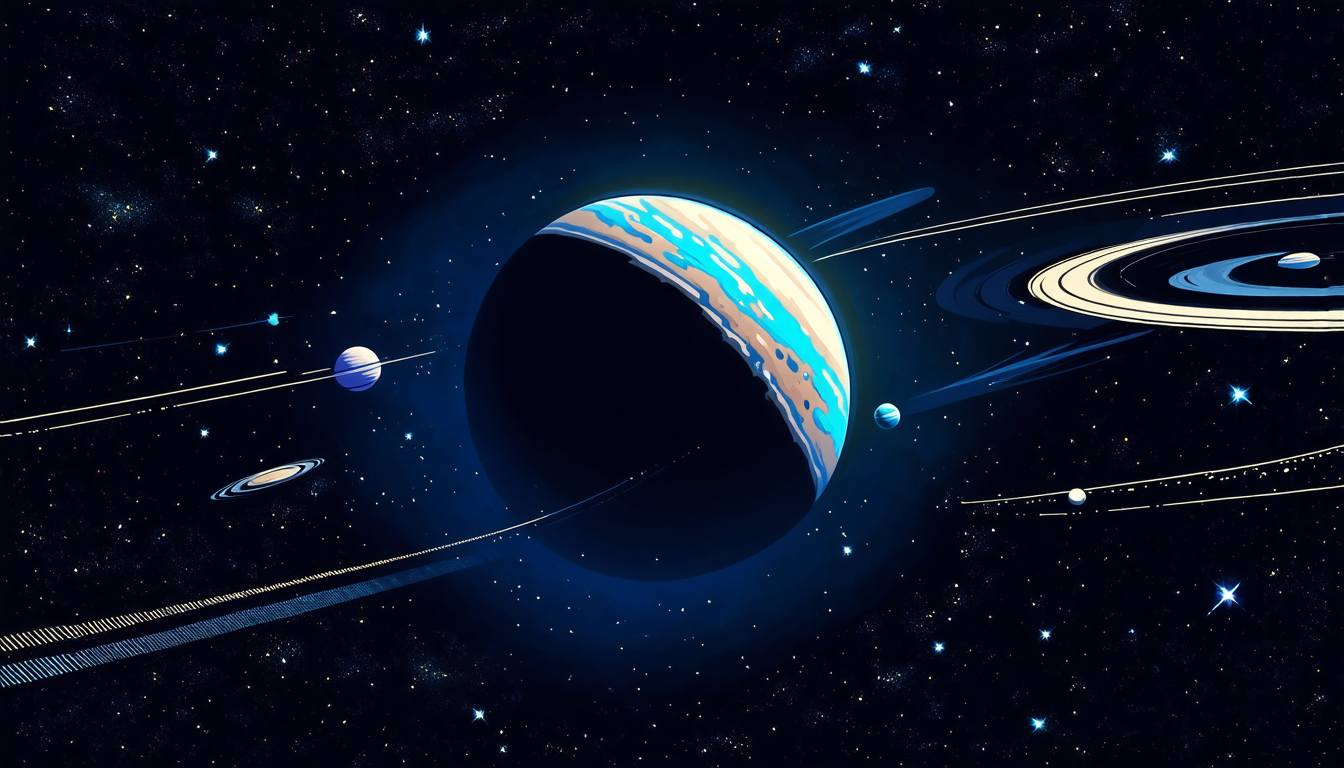
The outer reaches of our solar system are home to a diverse and intriguing population of celestial bodies, known as trans-Neptunian objects (TNOs). These distant worlds offer a window into the early formation and evolution of our cosmic neighborhood. Recent studies have shed new light on the dynamics of TNOs, revealing a complex interplay between their orbital paths and the gravitational influences of nearby planets.
One key finding is that TNOs can be broadly categorized into two distinct groups: those with stable orbits and those with unstable ones. The former are characterized by long-term stability, while the latter exhibit chaotic behavior due to their close proximity to Neptune’s gravitational influence. This distinction has significant implications for our understanding of the solar system’s structure and evolution.
Stable TNOs tend to cluster around specific orbital configurations, such as the longitude of perihelion (the point at which an object is closest to the sun). In contrast, unstable TNOs exhibit a more random distribution. This clustering behavior is thought to be driven by the gravitational influence of Neptune and other planets.
The discovery of these orbital patterns has far-reaching implications for our understanding of the solar system’s early history. It suggests that the formation of TNOs was likely influenced by the presence of nearby planets, which would have shaped their orbits over time. This finding also underscores the importance of considering the gravitational interactions between celestial bodies at large distances.
Another intriguing aspect of TNO behavior is their tendency to warp and distort their orbital planes over time. This warping is thought to be driven by the gravitational influence of nearby planets, particularly Neptune. The resulting distortions can lead to complex and chaotic orbital patterns.
The study of TNOs also offers insights into the potential presence of undiscovered planets in our solar system. Some researchers have proposed that the observed clustering behavior could be evidence of a massive, undiscovered planet lurking at the edge of our solar system. While this idea remains speculative, it highlights the importance of continued exploration and monitoring of these distant worlds.
The discovery of new TNOs is an ongoing process, with the Vera C. Rubin Observatory set to launch in the near future. This powerful telescope will be capable of detecting faint, distant objects that are currently beyond our observational reach. As we continue to explore the outer reaches of our solar system, we can expect to uncover even more secrets about the formation and evolution of our cosmic neighborhood.
Cite this article: “Unlocking the Secrets of the Outer Solar System: Clues to a Hidden Planet”, The Science Archive, 2025.
Trans-Neptunian Objects, Solar System, Celestial Bodies, Orbits, Neptune, Gravity, Chaos, Clustering, Warping, Undiscovered Planets.





