

Tuesday 08 April 2025
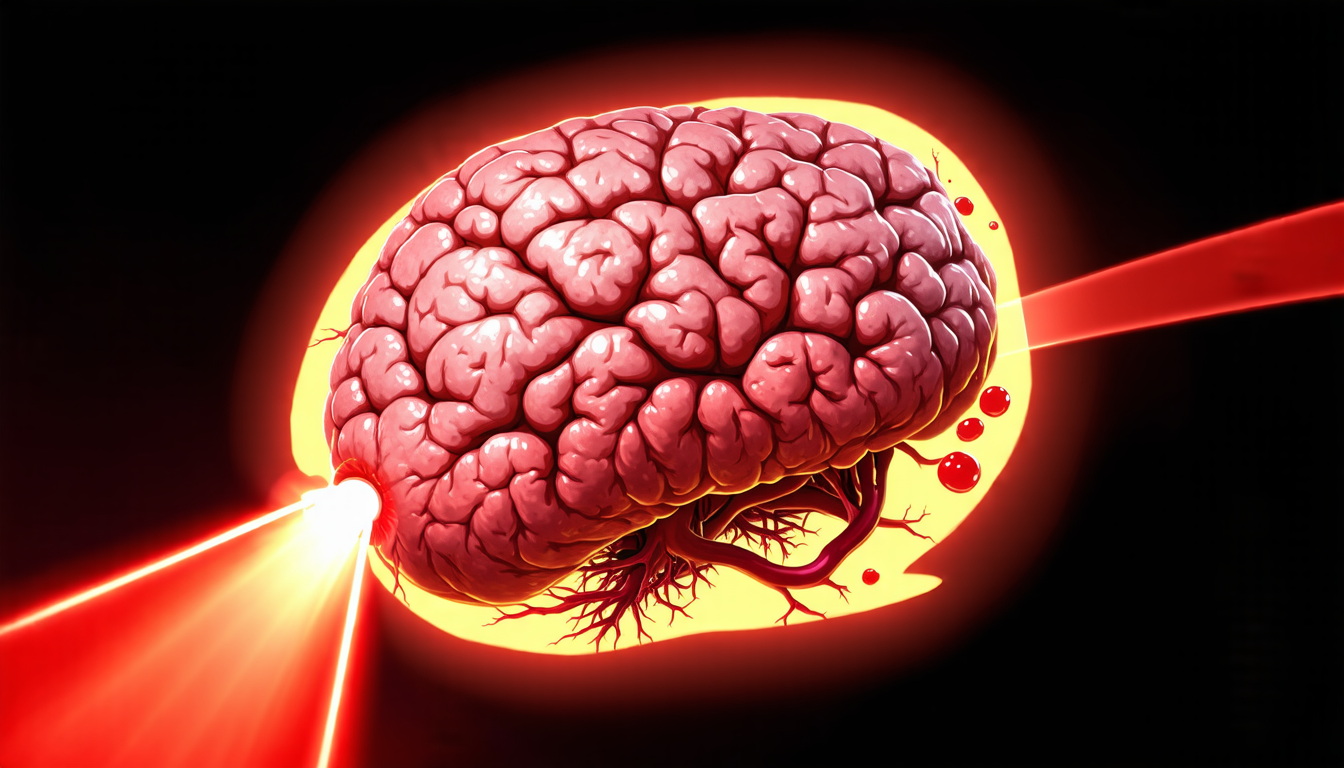
Scientists have made a breakthrough in understanding how laser technology can be used to treat cancerous tumors without causing harm to surrounding healthy tissue. This new study sheds light on the complex interactions between light, heat, and biological tissues, paving the way for more effective and targeted treatments.
The research centers around the concept of focal laser ablation, where high-intensity laser pulses are used to destroy cancer cells by heating them up to a critical temperature. However, this approach has been limited by the difficulty in accurately predicting the distribution of heat within the tissue, which can lead to unintended damage to surrounding healthy areas.
To overcome this challenge, researchers developed a mathematical model that simulates the behavior of light as it penetrates biological tissues. This model takes into account the intricate interactions between light, heat, and tissue properties, such as absorption, scattering, and thermal conductivity. By solving these equations, scientists can accurately predict the temperature distribution within the tissue and identify optimal laser parameters for effective tumor ablation.
One of the key findings is that the shape and size of the tumor play a crucial role in determining the effectiveness of focal laser ablation. Researchers discovered that tumors with irregular shapes or sizes require more precise control over the laser’s energy distribution to avoid damaging surrounding healthy tissue. This knowledge can be used to develop new treatment strategies that take into account the unique characteristics of each patient’s tumor.
Another important discovery is the significance of blood flow in determining the temperature distribution within the tissue. Researchers found that areas with high blood flow tend to have lower temperatures due to the cooling effect of the circulating blood. This highlights the importance of considering blood flow patterns when designing treatment protocols, as it can greatly impact the effectiveness of laser ablation.
The study’s findings have significant implications for the development of novel cancer treatments. By better understanding the complex interactions between light, heat, and biological tissues, researchers can create more targeted and effective therapies that minimize damage to surrounding healthy tissue. This could lead to improved patient outcomes and reduced side effects.
In addition to its clinical applications, this research also has broader implications for our understanding of biological systems. The study demonstrates the importance of considering the intricate interactions between light, heat, and tissues in a wide range of biological processes, from cellular signaling to tissue development.
Overall, this breakthrough has opened up new avenues for researchers to explore the potential of laser technology in cancer treatment.
Cite this article: “Unlocking the Secrets of Laser Ablation: A Novel Analytical Approach to Cancer Treatment”, The Science Archive, 2025.
Laser Therapy, Cancer Treatment, Focal Laser Ablation, Tumor Ablation, Biological Tissues, Light Interactions, Heat Transfer, Mathematical Modeling, Cancer Research, Medical Applications.
Reference: Luisa Consiglieri, “Exact solutions to the cancer laser ablation modeling” (2025).





