

Tuesday 08 April 2025
A team of researchers has developed a new approach to enhancing supply chain visibility, which could help companies better manage risks and disruptions in their global networks.
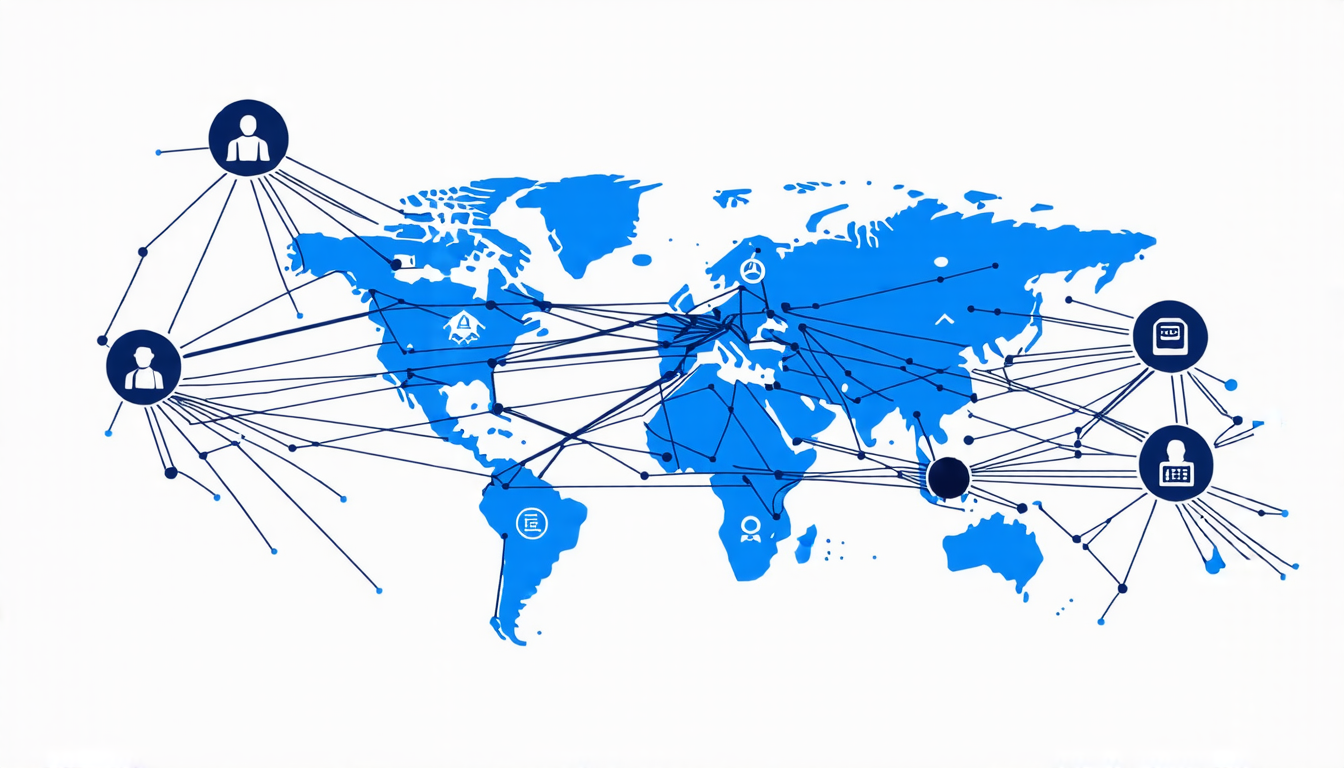
The traditional method of monitoring supply chains relies on sharing data between companies, but this can be time-consuming and may not provide a complete picture of the complex relationships within a network. To overcome these limitations, the researchers have created a framework that uses graph neural networks (GNNs) to analyze large datasets and identify patterns in supply chain interactions.
The team used real-world data from 10 countries to train their GNN models, which were then tested on a range of scenarios designed to simulate common disruptions such as natural disasters or supplier failures. The results showed that the GNN models were able to accurately predict relationships between companies and products, even when faced with incomplete or noisy data.
One of the key benefits of this approach is its ability to handle large datasets and complex relationships within supply chains. Traditional methods may struggle to cope with the sheer scale of modern global supply networks, but the GNN models can analyze vast amounts of data quickly and efficiently.
The researchers also found that their framework was able to identify patterns in supply chain interactions that were not immediately apparent from traditional analysis methods. For example, they discovered that companies with strong relationships with their suppliers were less likely to experience disruptions when those suppliers faced difficulties.
These findings have significant implications for companies looking to improve their supply chain resilience. By using GNNs to analyze large datasets and identify patterns in supply chain interactions, businesses can better anticipate and respond to disruptions, reducing the risk of costly delays or stockouts.
The use of GNNs also opens up new possibilities for collaboration between companies. Traditionally, data sharing has been a major challenge in supply chain management, as companies may be hesitant to share sensitive information with their competitors. However, the GNN framework can analyze large datasets without requiring raw data exchange, making it possible for companies to work together more effectively.
As global supply chains continue to become more complex and interconnected, the need for advanced analytics tools like GNNs will only grow more pressing. By leveraging these technologies, businesses can better navigate the challenges of modern supply chain management and stay ahead of the competition.
Cite this article: “Unlocking Supply Chain Visibility: A Federated Learning Approach to Predicting Relationships in Global Networks”, The Science Archive, 2025.
Supply Chain Visibility, Graph Neural Networks, Data Analytics, Risk Management, Disruption Prediction, Global Supply Chains, Complex Relationships, Machine Learning, Collaboration, Real-Time Data Analysis





