

Tuesday 08 April 2025
A robot that can move without wheels or legs has been developed, capable of navigating complex environments and interacting with its surroundings in a unique way.
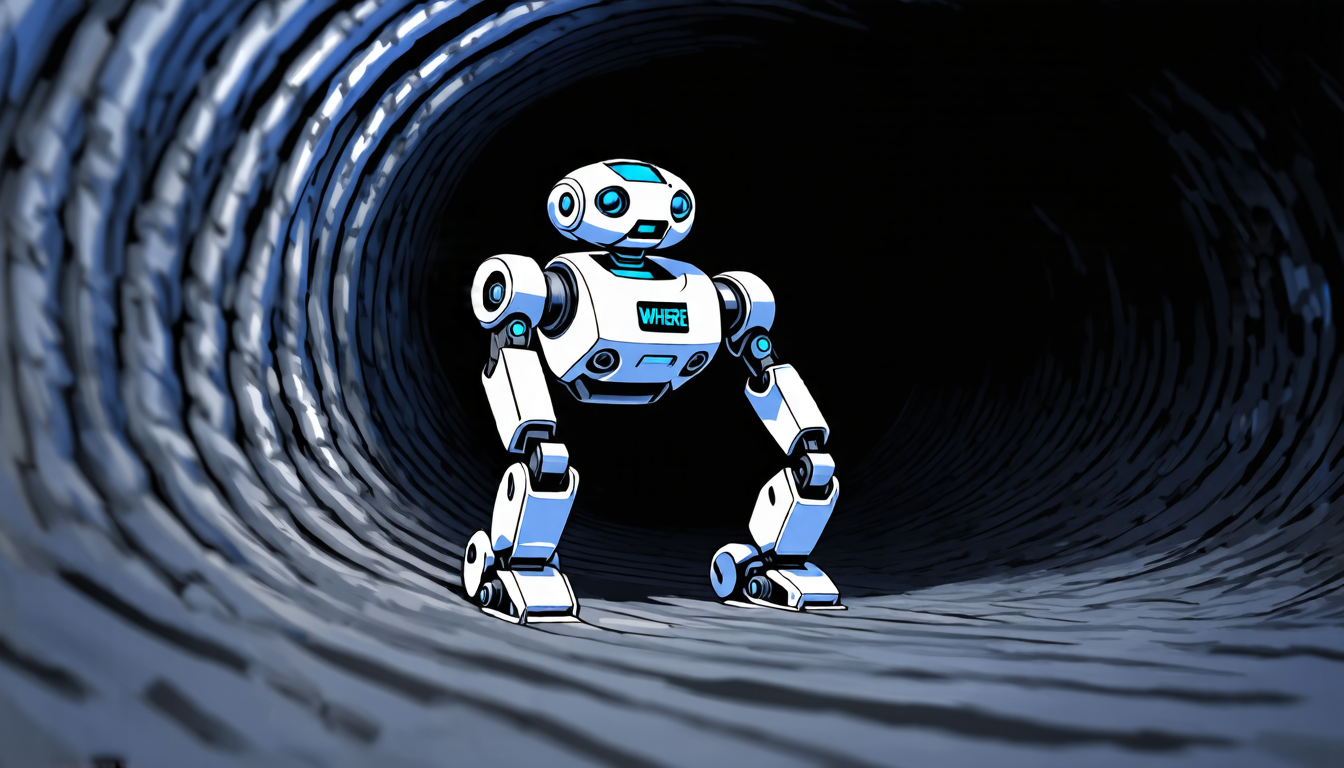
The device, known as the WHERE- Bot, uses a helical structure to propel itself forward, everting – or turning inside out – as it moves. This allows it to adapt to different terrains and obstacles, making it ideal for search and rescue missions or exploring areas that are difficult to access.
The robot’s design is inspired by the way certain animals, such as snakes and worms, move through tight spaces. By using a flexible, helical structure, the WHERE-Bot can navigate through narrow passages and around corners with ease.
One of the key features of the WHERE-Bot is its ability to change direction quickly and easily. This is achieved through a system of servos and gears that allow the robot’s body to rotate and pivot in response to its surroundings.
The WHERE-Bot has been tested in a variety of environments, including flat surfaces, stairs, and rough terrain. In each case, it was able to move smoothly and efficiently, adapting to the changing conditions as it went.
One of the most impressive demonstrations of the WHERE-Bot’s abilities came when it was placed on a rigid surface and allowed to interact with its surroundings. The robot was able to use its everting motion to climb up walls and across ceilings, using its flexible body to navigate through tight spaces.
The development of the WHERE-Bot is an important step forward in the field of robotics, as it opens up new possibilities for how robots can move and interact with their environment. By using a unique combination of mechanical and soft-body components, the WHERE-Bot has been able to achieve a level of flexibility and adaptability that is unmatched by other robots.
In addition to its potential applications in search and rescue missions, the WHERE-Bot could also be used in a variety of other fields, such as healthcare and manufacturing. Its ability to navigate through tight spaces and interact with its surroundings makes it an ideal tool for tasks such as inspecting pipes or exploring confined areas.
Overall, the development of the WHERE-Bot is an exciting milestone in the field of robotics, offering a new level of flexibility and adaptability that could have far-reaching implications for how we design and build robots in the future.
Cite this article: “Revolutionizing Soft Robotics: A Wheel-Less Helical-Ring Everter Takes Locomotion to New Heights”, The Science Archive, 2025.
Robotics, Helical Structure, Search And Rescue, Adaptability, Flexibility, Propulsion, Navigation, Soft-Body Components, Servos, Gears





