

Tuesday 08 April 2025
Researchers have made a significant breakthrough in developing a new type of observer for complex systems, which could potentially revolutionize the way we control and understand intricate networks.
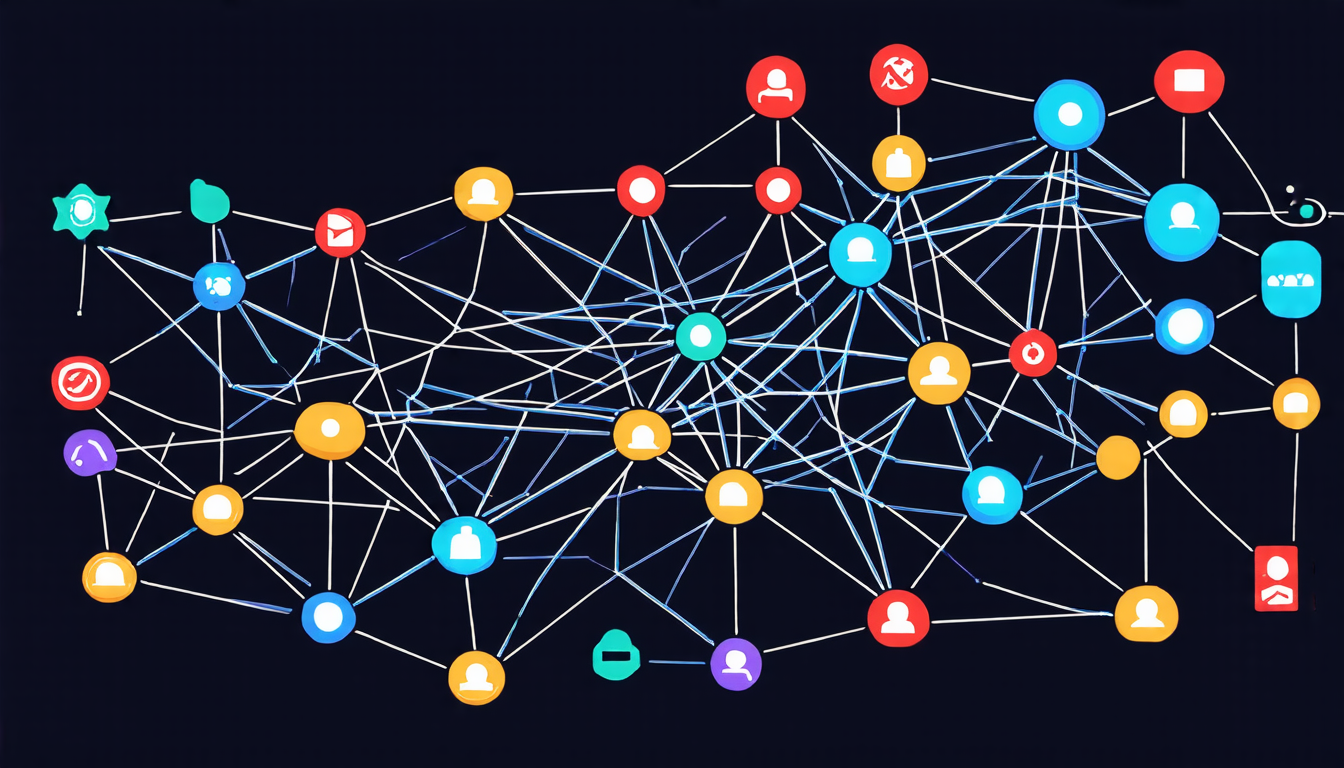
The study focuses on designing a distributed observer that can estimate the states and inputs of agents within a multi-agent system. In other words, it’s like trying to figure out what’s happening in a large group of people by only observing a few individuals nearby.
The researchers used a clever technique called k-hop observation, which allows each agent to gather information from its immediate neighbors and then use that data to make educated guesses about the states and inputs of agents farther away. This approach is particularly useful for systems where communication between agents is limited or unreliable.
One of the key benefits of this new observer is that it’s able to converge quickly and accurately, even in the presence of noise and disturbances. This means that it could be used to control complex systems like power grids, transportation networks, or even robotic swarms.
The researchers also showed that their observer can be combined with existing control strategies to achieve optimal performance. For example, they demonstrated how it could be used to stabilize a network of agents working together to accomplish a common goal.
This breakthrough has significant implications for the field of control theory and its many applications in science and engineering. It could enable more efficient and resilient control systems that can adapt to changing conditions and uncertainties.
The researchers hope that their work will inspire further exploration into the development of distributed observers and their potential applications. With this technology, we may be able to create more sophisticated and autonomous systems that can operate independently and make decisions on their own.
In the future, scientists and engineers may use this observer to study complex biological systems, like networks of neurons or social networks of animals. It could also be used to optimize the performance of large-scale infrastructure projects, like transportation systems or energy distribution grids.
Overall, this research has opened up new possibilities for understanding and controlling complex systems, and its potential applications are vast and exciting.
Cite this article: “Unlocking Distributed Control: A Novel K-Hop Observer-Based Approach for Multi-Agent Systems”, The Science Archive, 2025.
Complex Systems, Observer Design, Multi-Agent Systems, Distributed Observer, K-Hop Observation, Noise, Disturbances, Control Theory, Autonomous Systems, Optimization





