

Tuesday 08 April 2025
As we venture into the uncharted territories of non-terrestrial networks (NTNs), a new era of communication is unfolding before our eyes. The fusion of terrestrial, aerial, and satellite technologies is revolutionizing the way we connect and communicate, opening up vast possibilities for remote communities, emergency responders, and industries alike.
At the heart of this technological marriage lies the concept of federated learning (FL). In traditional machine learning, data from multiple sources is centralized and aggregated to train a single model. FL takes a different approach: individual devices or nodes learn from their own local data, sharing only the necessary information with others to create a more comprehensive model.
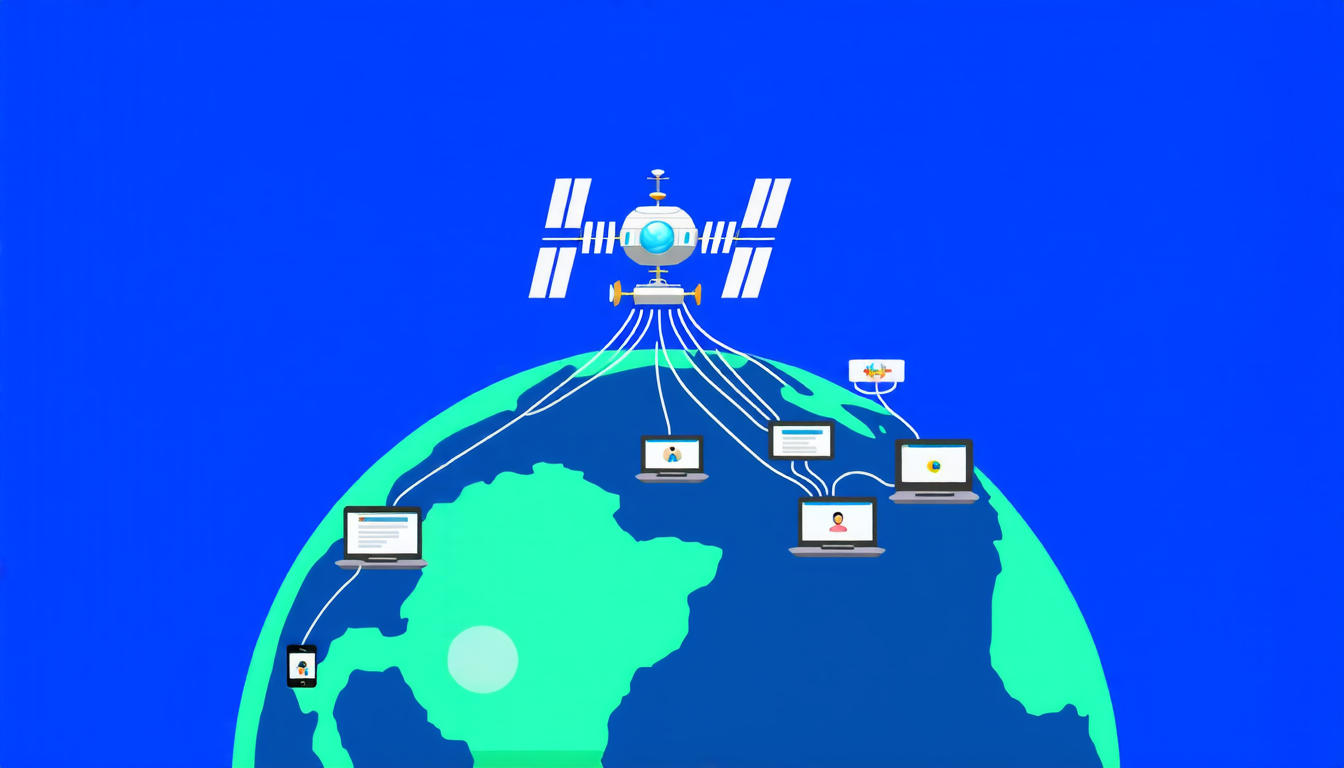
In the context of NTNs, FL becomes particularly relevant. Aerial platforms such as high-altitude platform stations (HAPS) and low-Earth orbit satellites are capable of providing seamless connectivity across vast distances. By leveraging these platforms for FL, researchers can harness the power of distributed learning, enabling devices to collaborate and learn from each other without requiring a central hub.
The benefits of this approach are multifaceted. For one, it reduces latency and energy consumption by minimizing the need for data transmission between nodes. Additionally, FL allows for more accurate models, as local data is taken into account when training the global model. This is particularly important in NTNs, where devices may operate in diverse environments with varying conditions.
The proposed framework for distributed FL in NTNs involves a hierarchical structure, with HAPS nodes serving as intermediate aggregators and satellites communicating with each other to disseminate models globally. This architecture enables efficient communication and processing, allowing devices to learn from each other without overwhelming the network.
Simulation results confirm the superiority of this approach, showcasing improved model accuracy and reduced training loss compared to traditional centralized FL systems. The trade-off in latency is a small price to pay for the benefits reaped: faster convergence times, increased device participation, and more accurate models.
As we continue to push the boundaries of NTNs, the potential applications of distributed FL are vast. Autonomous vehicles can learn from each other’s experiences on the road, while remote healthcare monitoring systems can leverage shared knowledge to improve patient outcomes. Industries such as logistics and transportation can optimize routes and schedules through data-driven insights generated by FL.
The future of communication is not just about connecting people; it’s about empowering devices and networks to work together seamlessly. As we navigate this new frontier, the possibilities are endless, and the potential for innovation is limited only by our imagination.
Cite this article: “Revolutionizing Wireless Communications: Distributed Federated Learning Empowers Next-Generation Non-Terrestrial Networks”, The Science Archive, 2025.
Non-Terrestrial Networks, Federated Learning, Machine Learning, High-Altitude Platform Stations, Low-Earth Orbit Satellites, Distributed Learning, Artificial Intelligence, Iot, Edge Computing, Connectivity





