

Tuesday 08 April 2025
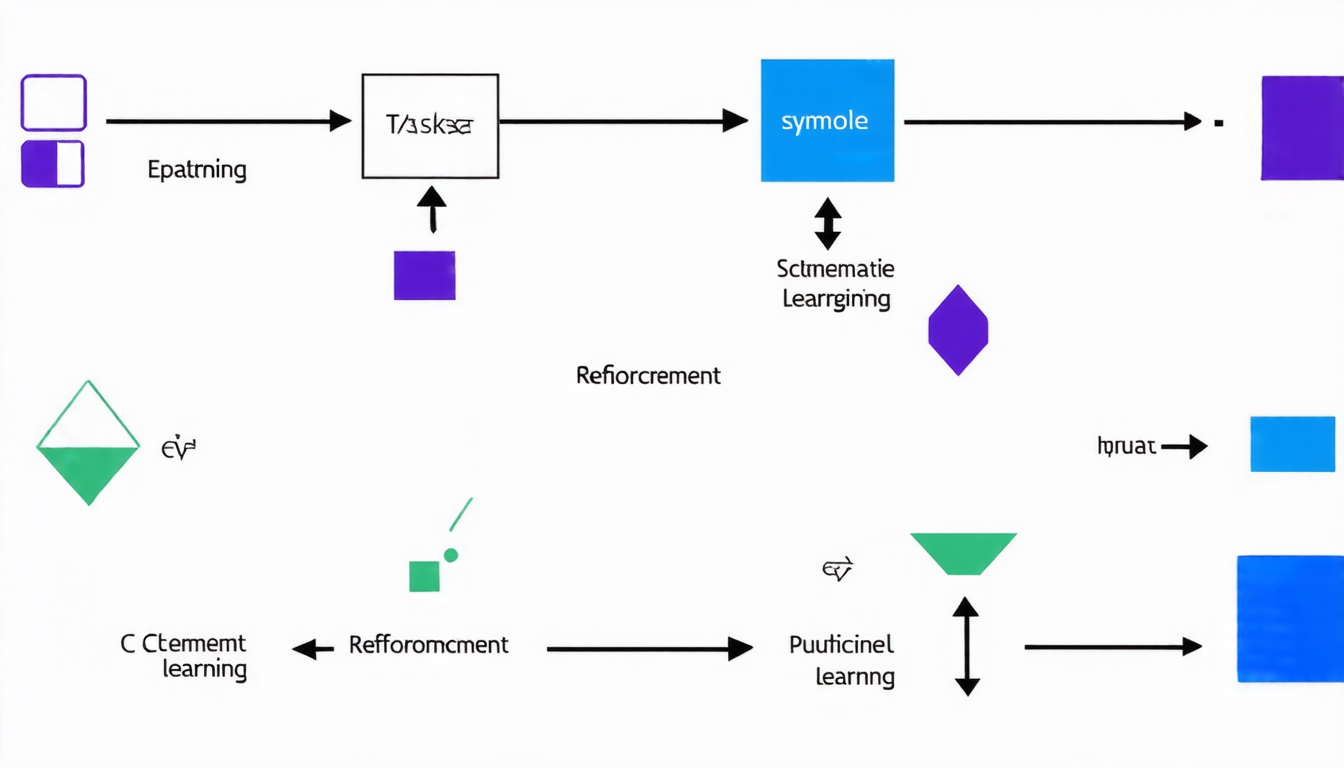
For decades, scientists have been working on developing machines that can think and learn like humans. One of the most promising areas of research is reinforcement learning, which involves training artificial intelligence (AI) models to make decisions based on rewards or punishments. Recently, a team of researchers has made significant progress in this field by applying reinforcement learning to multimodal tasks.
Multimodal tasks involve processing and analyzing multiple types of data at once, such as text, images, and diagrams. This is a challenging problem because each type of data requires different techniques for analysis and integration. To overcome this challenge, the researchers developed a new approach that combines the strengths of various AI models to achieve better results.
The team’s approach involves using a large language model as the foundation, which is then fine-tuned with reinforcement learning algorithms to perform specific tasks. This allows the model to learn from its mistakes and adapt to new situations more effectively. In addition, the researchers used difficulty-based data filtering to ensure that the model receives a balanced diet of easy and hard problems, which helps it improve faster.
The results are impressive: the researchers’ model can solve complex math problems that involve visual diagrams, such as understanding mathematical concepts from charts and graphs. This is significant because humans often rely on visual aids to understand complex ideas, and AI models have traditionally struggled with this type of problem.
One of the key challenges in developing multimodal AI models is handling ambiguity and uncertainty. In many cases, there may be multiple possible solutions or interpretations, and the model must learn to weigh the evidence and make a decision. The researchers addressed this challenge by using a combination of techniques, including reinforcement learning and attention mechanisms, which allow the model to focus on specific parts of the input data.
The potential applications of multimodal AI models are vast. For example, they could be used to help students understand complex math concepts more effectively, or to assist doctors in diagnosing diseases from medical images. The researchers’ approach could also be applied to other areas, such as natural language processing and computer vision.
Overall, the development of multimodal AI models represents a significant step forward in the field of artificial intelligence. By combining the strengths of different AI models and techniques, researchers can create machines that are capable of solving complex problems and making decisions in a more human-like way. As this technology continues to evolve, it is likely to have a profound impact on many areas of society.
Cite this article: “Unlocking Multimodal Reasoning in Large Language Models: A Journey of Discovery and Limitations”, The Science Archive, 2025.
Artificial Intelligence, Reinforcement Learning, Multimodal Tasks, Machine Learning, Large Language Model, Data Filtering, Ambiguity, Uncertainty, Attention Mechanisms, Natural Language Processing





