

Tuesday 08 April 2025
Scientists have been studying how liquids behave when they dry out, a process known as evaporation. It’s a crucial aspect of our daily lives, from the way coffee stains form on your shirt to the way paint dries on a wall. But researchers have discovered that there’s more to evaporation than meets the eye.
In recent years, scientists have been exploring how different types of liquids behave when they dry out. For example, water evaporates quickly and easily, while oil takes much longer to dry out. But what about liquids made up of complex molecules, like those found in polymers? How do these liquids behave during evaporation?
Researchers from the University of Science and Technology have been investigating this very question. They created a series of experiments using polyethylene glycol, a type of polymer commonly used in products such as cosmetics and pharmaceuticals.
The team discovered that the molecular weight of the polymer plays a crucial role in how it behaves during evaporation. In other words, the size of the molecules affects the way they interact with each other and their surroundings. This has significant implications for industries that rely on polymers, such as manufacturing and textiles.
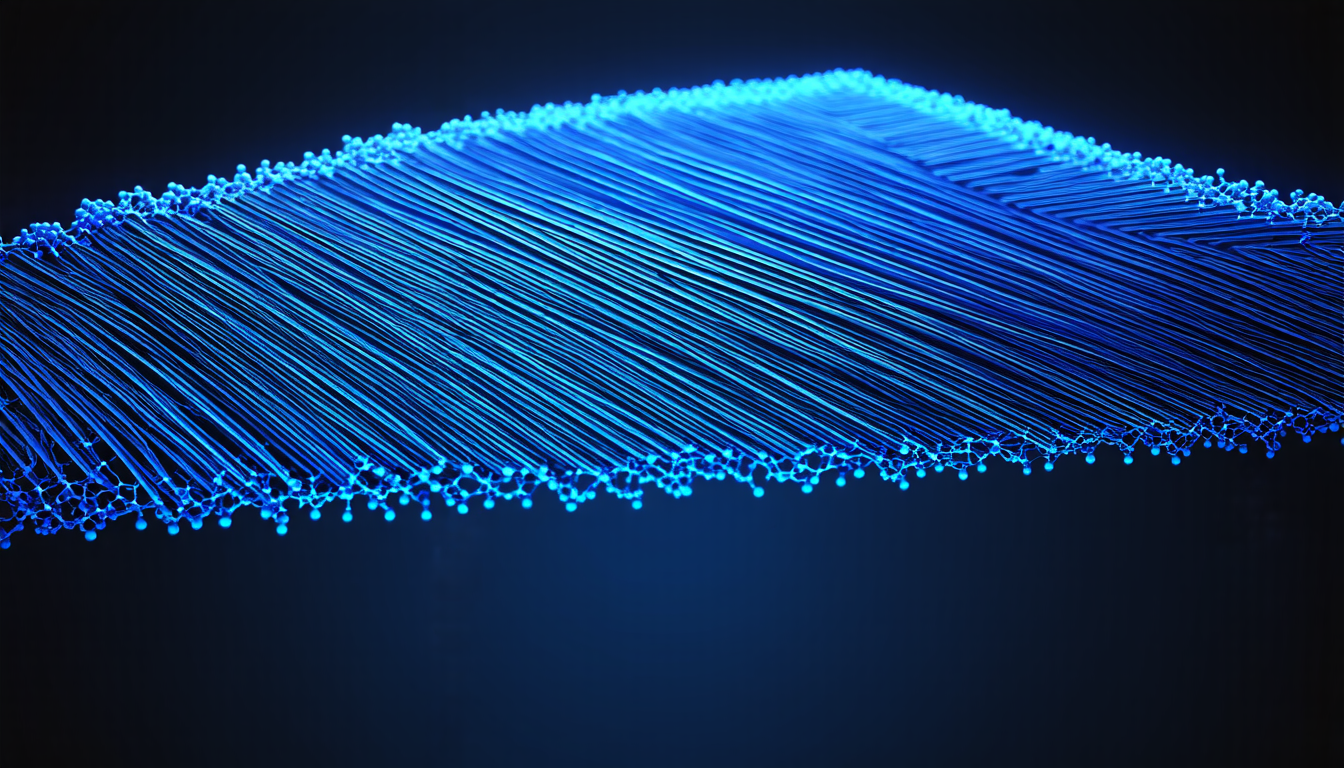
One of the key findings was that higher-molecular-weight polymers tend to form more complex patterns when they dry out. These patterns can include everything from delicate filaments to intricate networks of fibers. The researchers believe that this is because the larger molecules are able to interact with each other in more complex ways, leading to a greater variety of shapes and structures.
The study also showed that the rate at which polymers evaporate can affect their behavior during drying. For example, when a polymer dries quickly, it tends to form a flat, smooth surface. But when it dries slowly, it can create more complex patterns and even form three-dimensional structures.
These findings have significant implications for industries such as manufacturing and textiles. By understanding how polymers behave during evaporation, researchers can develop new materials with specific properties that are ideal for certain applications.
For example, imagine creating a fabric that is both lightweight and durable, or a coating that can withstand extreme temperatures. The study of polymer evaporation could lead to the development of these types of materials in the future.
The research also has implications for our understanding of how liquids behave in general. By studying the complex interactions between molecules during evaporation, scientists can gain a deeper understanding of the fundamental principles that govern the behavior of all liquids.
Cite this article: “Unlocking the Secrets of Drying Droplets: A Study on Polymer Evaporation Dynamics”, The Science Archive, 2025.
Evaporation, Polymers, Molecular Weight, Liquid Behavior, Drying, Materials Science, Manufacturing, Textiles, Surface Tension, Thermodynamics





