

Wednesday 09 April 2025
Nuclear physicists have long been fascinated by the mysteries of the atomic nucleus, and a new study offers fresh insights into one of its most enigmatic aspects: the neutron skin.
The neutron skin is a thin layer of neutrons that surrounds the protons in an atom’s core. It’s a crucial component of nuclear physics, as it plays a key role in determining the properties of heavy elements like lead and calcium. However, scientists have long struggled to understand the neutron skin’s behavior, particularly in cases where its thickness seems to defy expectations.
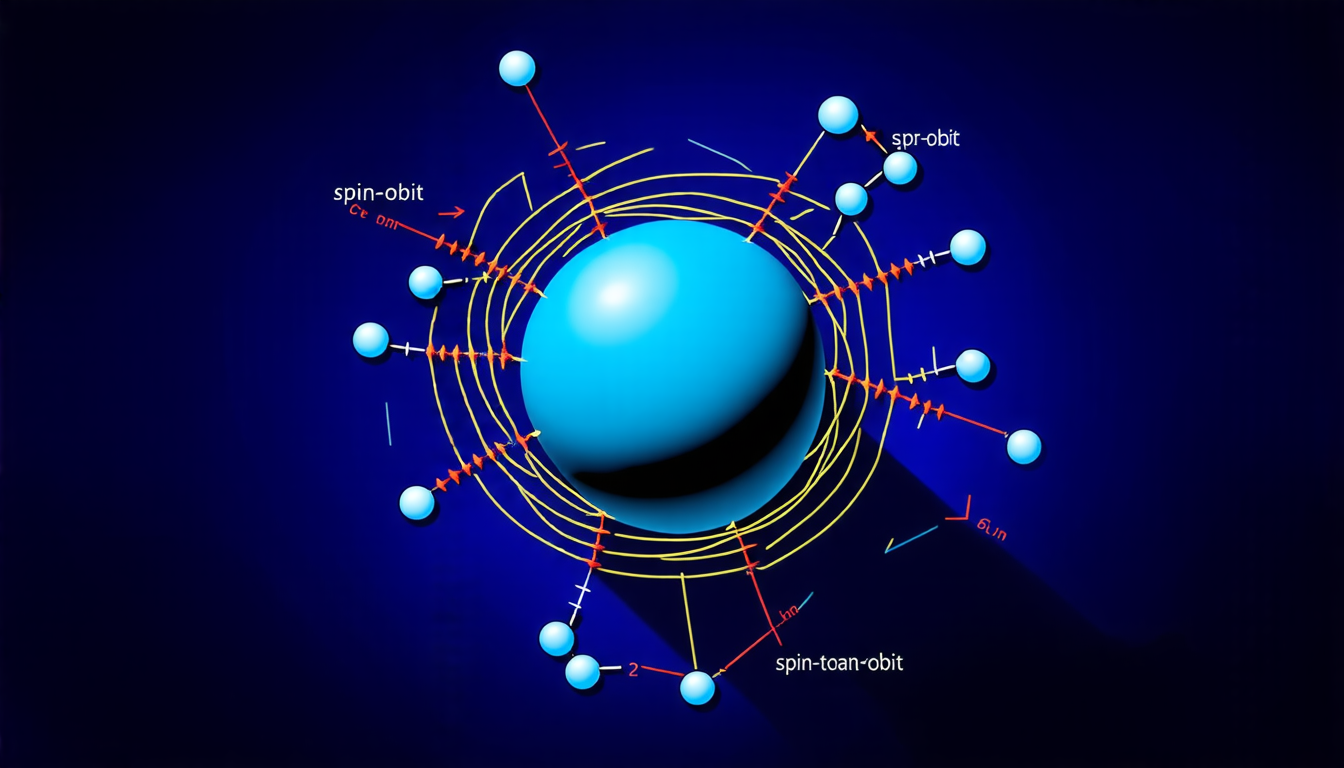
A recent paper published by researchers from Florida State University and Lawrence Livermore National Laboratory sheds new light on this phenomenon. By using advanced computer simulations and experimental data, the team was able to pinpoint a previously unknown factor that contributes to the neutron skin’s behavior: an enhanced spin-orbit potential.
The spin-orbit potential is a fundamental force in atomic physics, governing the way particles interact with each other. However, its effects on the neutron skin had been largely overlooked until now. By incorporating this factor into their simulations, the researchers were able to reproduce the observed thickness of the neutron skin in both lead and calcium, two elements that have puzzled scientists for years.
The discovery is significant because it could have far-reaching implications for our understanding of nuclear physics. The neutron skin’s behavior has a direct impact on our ability to model the properties of heavy elements, which are critical components of many astrophysical processes. By better understanding these processes, scientists can gain insights into phenomena like supernovae explosions and the formation of black holes.
The researchers’ approach was innovative in its own right. They used a combination of theoretical models and experimental data to validate their findings. This included analyzing data from the CREX (Charge Radius EXperiment) and PREX (Parity Radius Experiment) collaborations, which have been conducting experiments at the Jefferson National Accelerator Facility.
One of the most impressive aspects of this study is its ability to reconcile seemingly contradictory results from previous experiments. For years, scientists have been struggling to understand why calcium’s neutron skin appears thinner than expected, while lead’s appears thicker. By incorporating the spin-orbit potential into their simulations, the researchers were able to explain these discrepancies and provide a unified understanding of the neutron skin’s behavior.
The study is also significant because it highlights the importance of interdisciplinary collaboration in scientific research.
Cite this article: “Unlocking the Secrets of Nuclear Skin: A Breakthrough in Understanding the Mystery of Neutron Skin Thickness”, The Science Archive, 2025.
Nuclear Physics, Neutron Skin, Spin-Orbit Potential, Atomic Nucleus, Florida State University, Lawrence Livermore National Laboratory, Computer Simulations, Experimental Data, Astrophysical Processes, Black Holes, Supernovae Explosions





