

Wednesday 09 April 2025
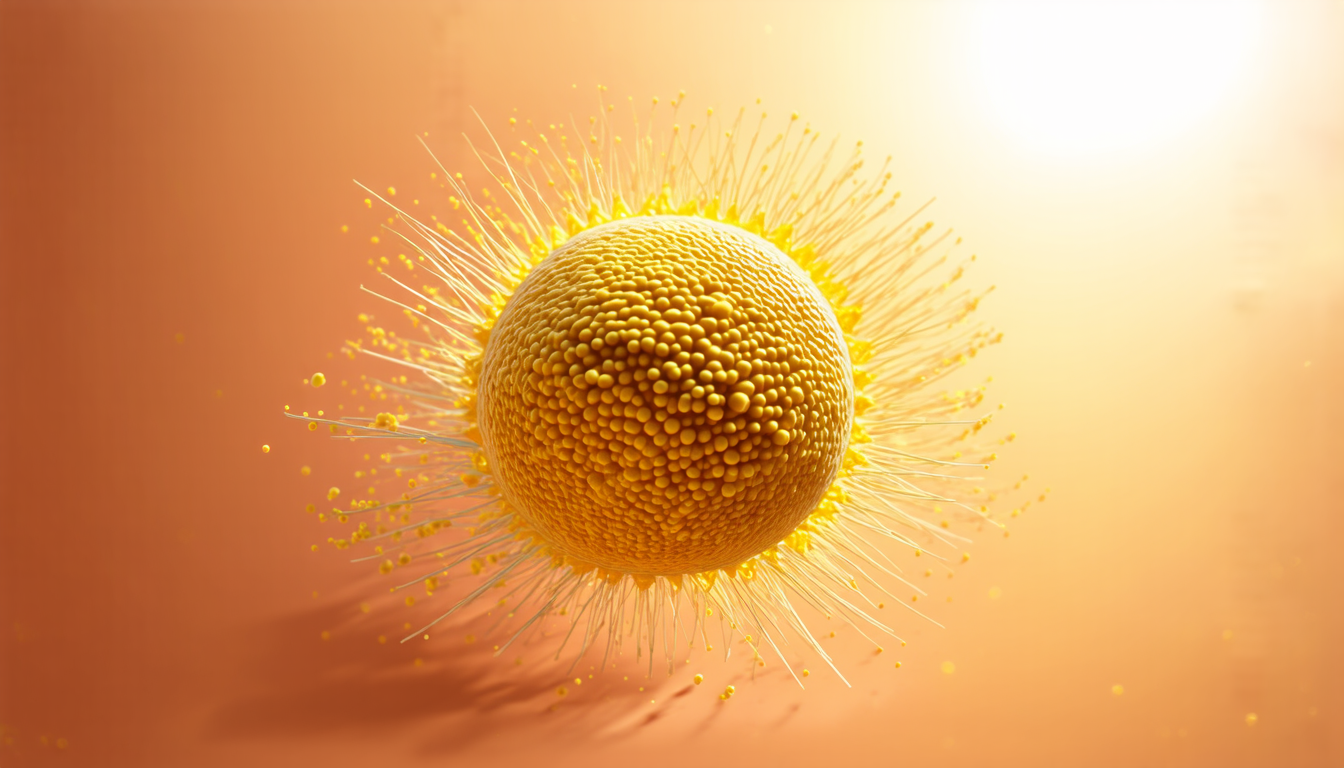
Pollen, those tiny particles that can wreak havoc on our allergies and cause misery for millions of people around the world. But what if we could classify these pesky little grains more accurately? Enter a team of researchers who have developed a new method using deep learning techniques to identify pollen with unprecedented precision.
Traditionally, identifying pollen has been a time-consuming and labor-intensive process, relying on manual examination under a microscope. But this approach can be prone to errors and is often limited by the skill level of the person doing the examining. The researchers wanted to find a way to make the process more efficient and accurate.
To do this, they turned to deep learning, a type of artificial intelligence that has revolutionized many fields in recent years. They trained a neural network on a dataset of 6472 pollen stack images, each captured with 20 slices along the Z-axis. The network was able to learn the patterns and features of different types of pollen, allowing it to accurately classify them.
The results were impressive. The team’s method achieved an accuracy of 98.3%, beating previous methods by a significant margin. This means that it can accurately identify pollen grains even when they are similar in appearance or shape.
But what makes this technique so special is its ability to analyze the three-dimensional structure of pollen grains, something that traditional methods cannot do. By using deep learning to analyze the stack images, the researchers were able to capture subtle patterns and features that would be lost if they only looked at individual slices.
The implications of this research are significant. Accurate pollen identification is crucial for monitoring air quality and predicting allergy outbreaks. This technique could also be used in medical settings to diagnose allergies more quickly and accurately.
One potential application is in the development of personal allergen trackers, which could alert people with severe allergies to potential threats before they experience symptoms. Another possibility is in the creation of pollen-based biomarkers for disease diagnosis.
The researchers acknowledge that there are still limitations to their method, including the need for large datasets and high-quality images. But they believe that their approach has the potential to revolutionize the field of pollen research and open up new avenues for medical applications.
As we continue to grapple with the challenges of climate change and environmental degradation, it’s more important than ever to develop new technologies that can help us better understand and interact with our world. This innovative technique is a step in the right direction, and its potential benefits are vast.
Cite this article: “Unlocking the Secrets of Pollen Classification with Deep Learning”, The Science Archive, 2025.
Pollen, Classification, Deep Learning, Artificial Intelligence, Accuracy, Precision, Air Quality, Allergy Diagnosis, Medical Applications, Biomarkers.





