

Wednesday 09 April 2025
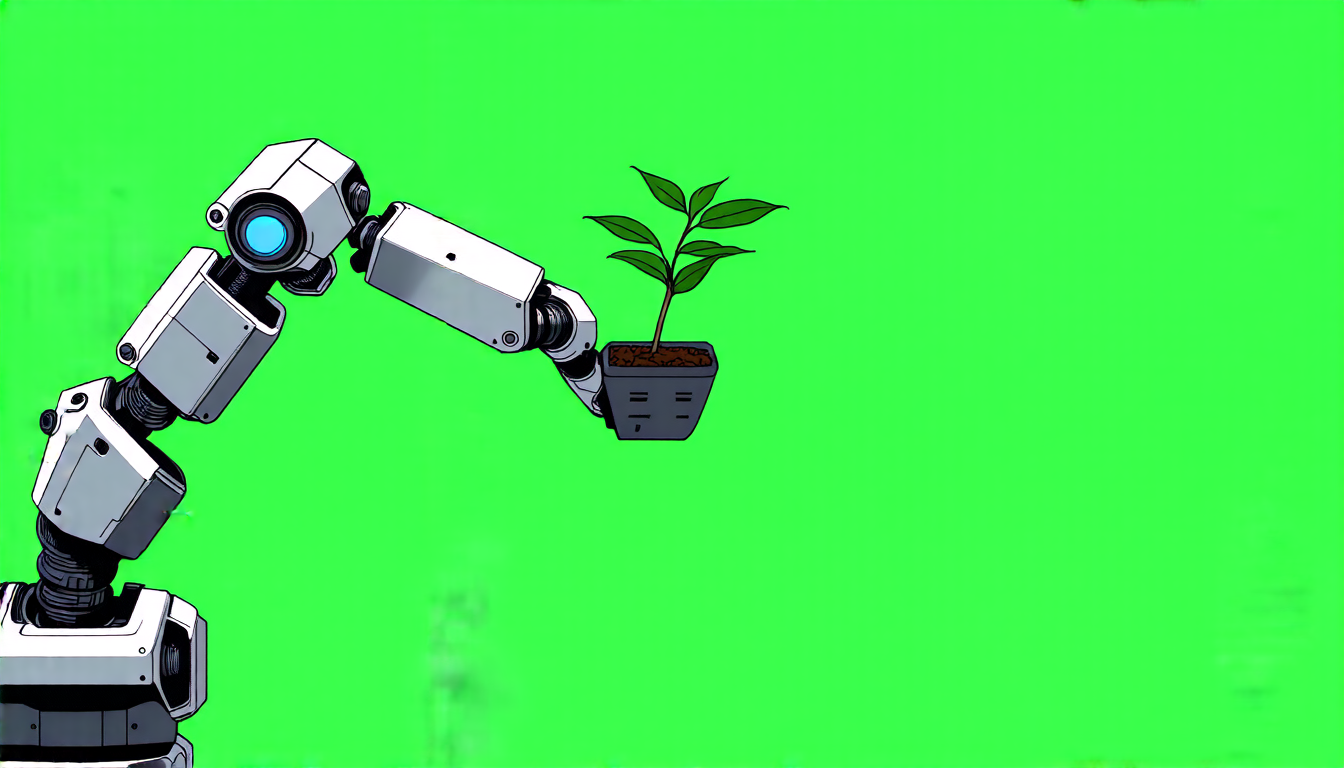
Agricultural robots are set to revolutionise the way we grow our food, but a major hurdle remains: manipulating branches. It’s a task that requires finesse and precision, as excessive force can damage delicate plant structures.
Now, researchers have developed a novel approach that uses a combination of computer simulations and real-time feedback to safely navigate these complex obstacles. The system is designed for use in precision agriculture, where robots are being increasingly used to assist with tasks such as harvesting, pruning, and pollination.
The problem with traditional robotic manipulation systems is that they often rely on pre-programmed paths or rigid body kinematics, which can lead to unpredictable results when dealing with deformable objects like branches. To address this issue, the researchers developed a new planning algorithm that takes into account the unique properties of plant branches, such as their flexibility and non-linear dynamics.
The system works by first simulating the motion of the robot’s arms in a virtual environment, taking into account the shape and rigidity of the branch being manipulated. This allows the algorithm to predict potential collisions and adjust its path accordingly. Once the simulation is complete, the robot receives real-time feedback from sensors that monitor the force exerted on the branch.
If the force exceeds a predetermined threshold, the algorithm re-plans the motion in real-time, ensuring that the robot avoids applying excessive pressure. This process is repeated continuously throughout the manipulation process, allowing the robot to adapt to changing conditions and maintain precise control over its movements.
The researchers tested their system using an artificial branch model and found that it was able to successfully manipulate the branch while keeping force levels below 40 Newtons – a threshold considered safe for most plant structures. The study also demonstrated that the algorithm could learn from experience, adapting to new situations and improving its performance over time.
While this technology is still in its early stages, it has significant potential implications for precision agriculture. By enabling robots to safely and efficiently manipulate branches, farmers will be able to streamline their operations and reduce labor costs. Additionally, the system’s ability to adapt to changing conditions could improve crop yields and quality by allowing for more precise control over pruning and harvesting.
As this technology continues to evolve, we may see a future where robots play a crucial role in shaping the way we grow our food – from planting seeds to harvesting crops. And with their precision and agility, it’s likely that these machines will become an essential tool for farmers looking to stay ahead of the curve in an increasingly complex and competitive agricultural landscape.
Cite this article: “Unlocking the Secrets of Branch Manipulation: A Force-Aware Approach to Agricultural Robotics”, The Science Archive, 2025.
Agricultural Robots, Precision Agriculture, Branch Manipulation, Computer Simulations, Real-Time Feedback, Robotic Arms, Plant Structures, Flexibility, Non-Linear Dynamics, Force Control.





