

Wednesday 09 April 2025
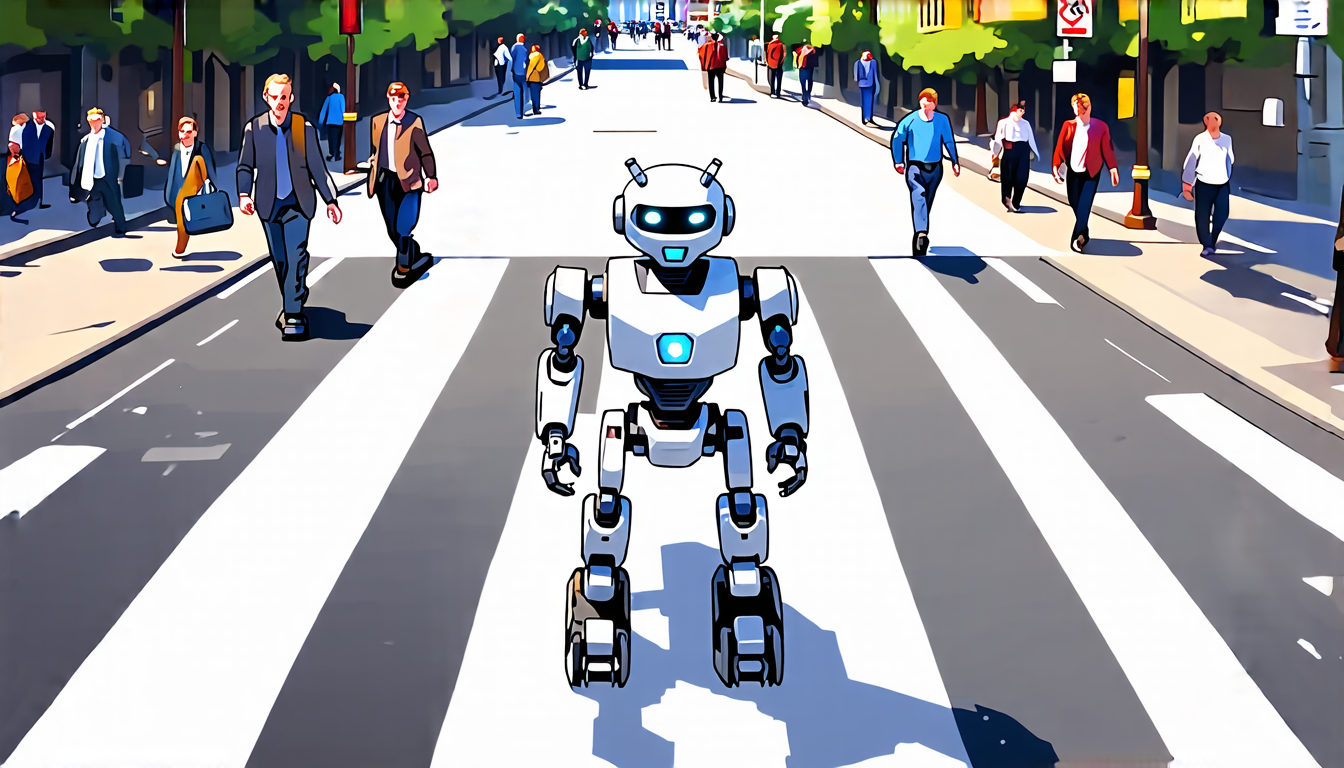
Scientists have made a significant breakthrough in developing robots that can navigate complex social situations, such as busy streets or crowded shopping centers, with ease.
Researchers have long struggled to create robots that can understand and respond to human behavior in a natural way. This is because humans are highly unpredictable, and their actions can be influenced by a wide range of factors, from cultural background to personal experience.
To overcome this challenge, scientists have turned to artificial intelligence (AI) and machine learning algorithms. These technologies allow computers to learn from large datasets and adapt to new situations on the fly.
In recent years, researchers have made significant progress in developing AI systems that can understand and respond to human language. However, these systems still struggle to understand the nuances of human behavior, such as body language and facial expressions.
The latest breakthrough comes from a team of scientists who have developed an AI system that can learn to recognize and respond to human behavior in complex social situations. The system, known as AutoSpatial, uses a combination of machine learning algorithms and computer vision techniques to analyze visual data and predict human behavior.
AutoSpatial is trained on a large dataset of images and videos showing people interacting with each other in various settings. The system learns to identify patterns and relationships between different behaviors, such as walking, talking, and gesturing.
Once the system has learned these patterns, it can use them to make predictions about how humans will behave in new situations. For example, if a robot sees someone approaching on the street, it can predict that they are likely to stop at a red light or crosswalk.
The implications of this technology are significant. In the future, robots could be used to assist people with disabilities, provide companionship for the elderly, and even help with tasks such as search and rescue operations.
However, there are also potential drawbacks to consider. For example, if robots become too good at predicting human behavior, they may start to make assumptions about our actions without actually understanding why we are doing them.
Additionally, there is a risk that robots could become biased towards certain groups of people or certain behaviors, which could have negative consequences in the long run.
Despite these challenges, the development of AutoSpatial represents a significant step forward in the field of robotics and AI. It has the potential to revolutionize the way we interact with machines and each other, and could lead to a wide range of new applications and technologies in the years to come.
Cite this article: “Unlocking Human-Like Social Navigation with Vision-Language Models: A Breakthrough in Autonomous Robotics”, The Science Archive, 2025.
Robots, Artificial Intelligence, Machine Learning, Social Situations, Navigation, Complex Behaviors, Human Behavior, Facial Expressions, Body Language, Autospatial





