

Wednesday 09 April 2025
In a fascinating new study, scientists have discovered that certain types of matter can exhibit unique properties when they interact in non-reciprocal ways. Non-reciprocity occurs when the way one particle or system affects another is different from how it’s affected by that same particle or system.
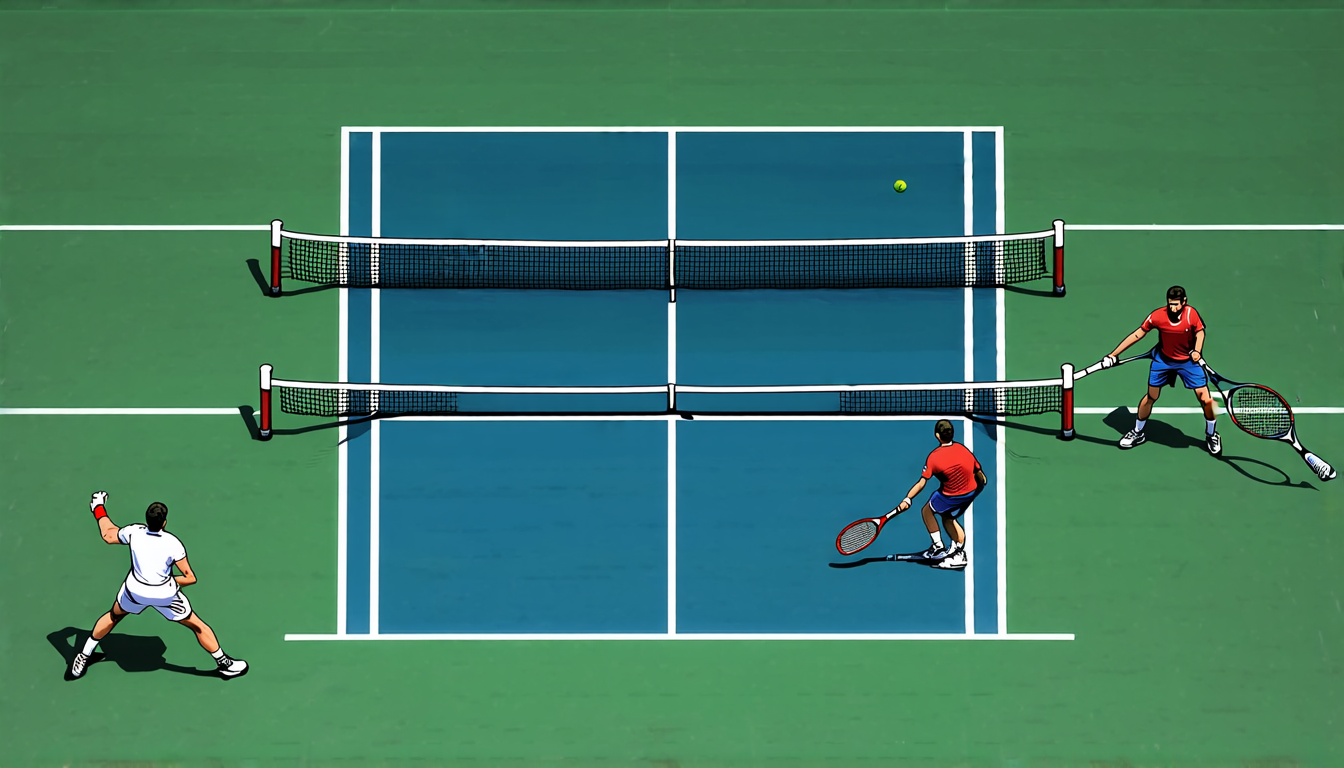
Think of it like a game of tennis. In a traditional match, the players hit the ball back and forth with equal force. But what if one player started hitting the ball harder than they received it? That’s basically what non-reciprocal interactions do – they introduce an imbalance in how particles interact with each other.
Researchers have been studying these kinds of interactions for some time now, but recent work has focused on a specific type of matter called active matter. Active matter is made up of tiny particles or molecules that are capable of moving around and interacting with their surroundings. This can include things like bacteria, cells, and even artificial systems like robotic swarms.
In the new study, scientists have explored how non-reciprocal interactions affect the behavior of active matter. They found that these interactions can lead to some pretty unusual properties, such as the emergence of novel phase transitions and the creation of complex patterns.
One of the most interesting aspects of this research is its potential applications in fields like biology and materials science. By understanding how non-reciprocal interactions shape the behavior of active matter, scientists may be able to design new systems that exhibit unique properties – like self-healing materials or swarms of robots that can adapt to changing environments.
The study also highlights the importance of considering non-reciprocity in our understanding of complex systems. In many cases, we assume that interactions between particles are reciprocal – that is, they’re equal and opposite. But this new research shows that this assumption may not always hold true, especially when it comes to active matter.
Overall, the discovery of novel properties in non-reciprocal active matter has far-reaching implications for our understanding of complex systems and their potential applications. As scientists continue to explore these interactions, we can expect to see even more fascinating developments in the world of materials science and beyond.
Cite this article: “Unlocking the Secrets of Non-Reciprocal Interactions: A New Frontier in Active Matter Research”, The Science Archive, 2025.
Matter, Non-Reciprocal Interactions, Active Matter, Particles, Systems, Biology, Materials Science, Phase Transitions, Complex Patterns, Robotics, Swarms





