

Wednesday 09 April 2025
The latest advancements in artificial intelligence have led to a surge in innovative applications across various industries, including visual question answering (VQA). Researchers have developed AI models capable of analyzing images and providing accurate answers to complex questions about the scene depicted.
One such model is the Open-World Visual Question Answering (OWLViz) benchmark, designed to evaluate the performance of VQA systems on real-world scenarios. The OWLViz challenge presents concise, unambiguous queries that require integrating multiple capabilities, including visual understanding, web exploration, and specialized tool usage. In contrast to traditional benchmarks that focus on simple recognition tasks, OWLViz simulates human-like interactions with images.
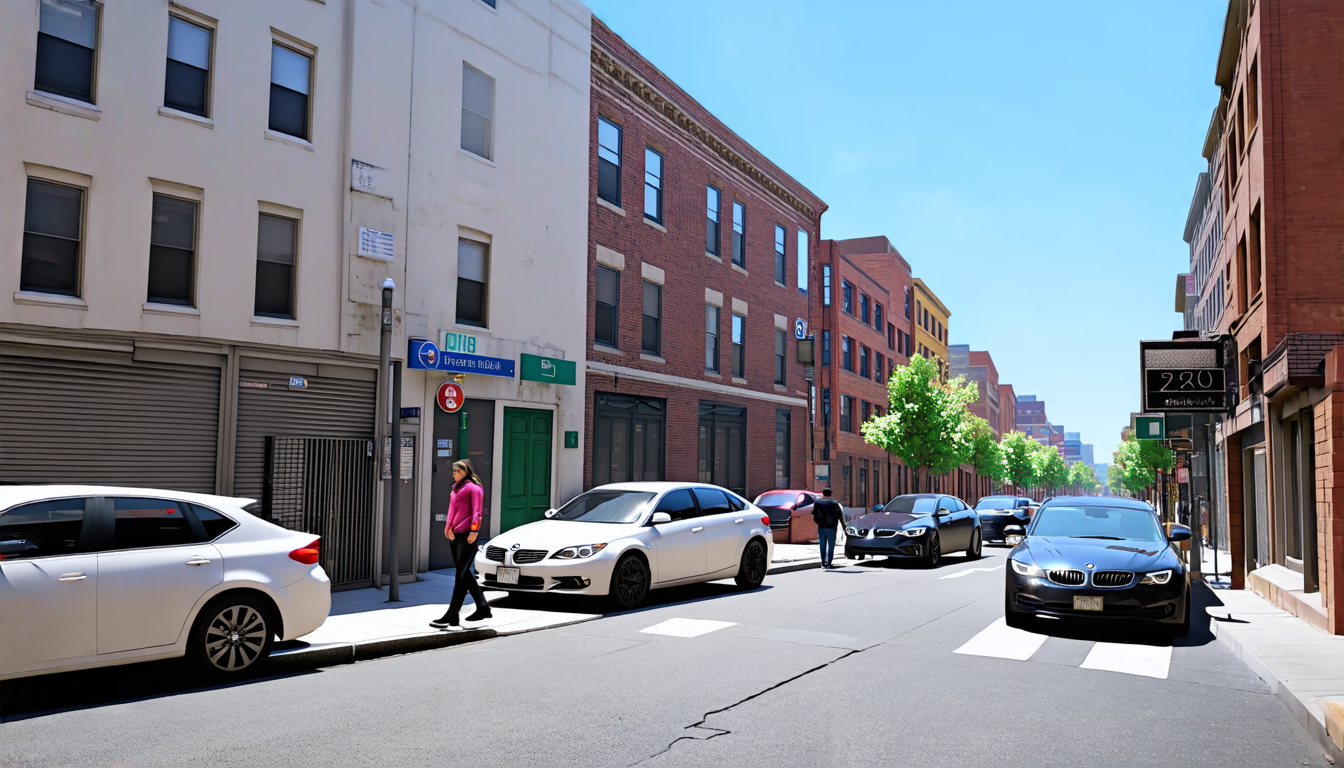
To assess the capabilities of various AI models, researchers have created a comprehensive dataset featuring diverse scenarios, such as cityscapes, store displays, and architectural scenes. The dataset includes 1,000 images, each accompanied by a question or series of questions that require precise answers. For instance, participants must identify specific objects, recognize patterns, or extract information from the scene.
The OWLViz benchmark has been used to evaluate several AI models, including Gemini, Molmo, HF Agent, and DynaSaur. These systems employ different strategies to tackle VQA tasks, such as visual inspection, object detection, OCR (optical character recognition), and web search.
Gemini, a state-of-the-art VQA model, excelled in identifying objects within images but struggled with more complex reasoning tasks. Molmo, on the other hand, demonstrated impressive spatial reasoning capabilities but faltered when faced with ambiguous queries. HF Agent and DynaSaur showed promising results, leveraging their ability to recognize patterns and extract information from images.
The OWLViz benchmark has significant implications for various applications, including robotics, autonomous vehicles, and virtual assistants. By developing more advanced VQA systems, researchers can create intelligent machines that can better understand and interact with the world around them.
As AI continues to evolve, it is essential to develop more comprehensive benchmarks like OWLViz that push the boundaries of what these models can accomplish. By doing so, researchers can unlock new possibilities for visual question answering and ultimately create more sophisticated machines capable of simulating human-like intelligence.
Cite this article: “Assessing the Accuracy and Effectiveness of Visual Question Answering Systems on Real-World Images: A Comparative Study”, The Science Archive, 2025.
Artificial Intelligence, Visual Question Answering, Computer Vision, Machine Learning, Natural Language Processing, Object Detection, Optical Character Recognition, Robotics, Autonomous Vehicles, Virtual Assistants





