

Wednesday 09 April 2025
A new approach to understanding how light interacts with matter has been developed by a team of scientists. This approach, known as the Chevy approximation, allows researchers to study the behavior of excitons – pairs of electrons and holes that are bound together – in a more accurate and efficient way.
Excitons are important because they play a key role in many biological and technological processes. For example, they help plants convert sunlight into energy during photosynthesis, and they are also involved in the functioning of LEDs and other electronic devices. However, studying excitons is complex because they are highly sensitive to their environment and can easily become distorted or destroyed by external influences.
The Chevy approximation is a mathematical technique that allows researchers to simplify the behavior of excitons and study them more accurately. It does this by focusing on the interactions between the electrons and holes that make up the exciton, rather than trying to model the entire system at once. This approach has several advantages over traditional methods, including increased accuracy and efficiency.
One of the key benefits of the Chevy approximation is that it allows researchers to study the behavior of excitons in a more realistic way. For example, they can use the technique to simulate the interactions between excitons and their environment, such as other particles or electromagnetic fields. This can help them better understand how excitons behave in different situations, which can be useful for developing new technologies or improving existing ones.
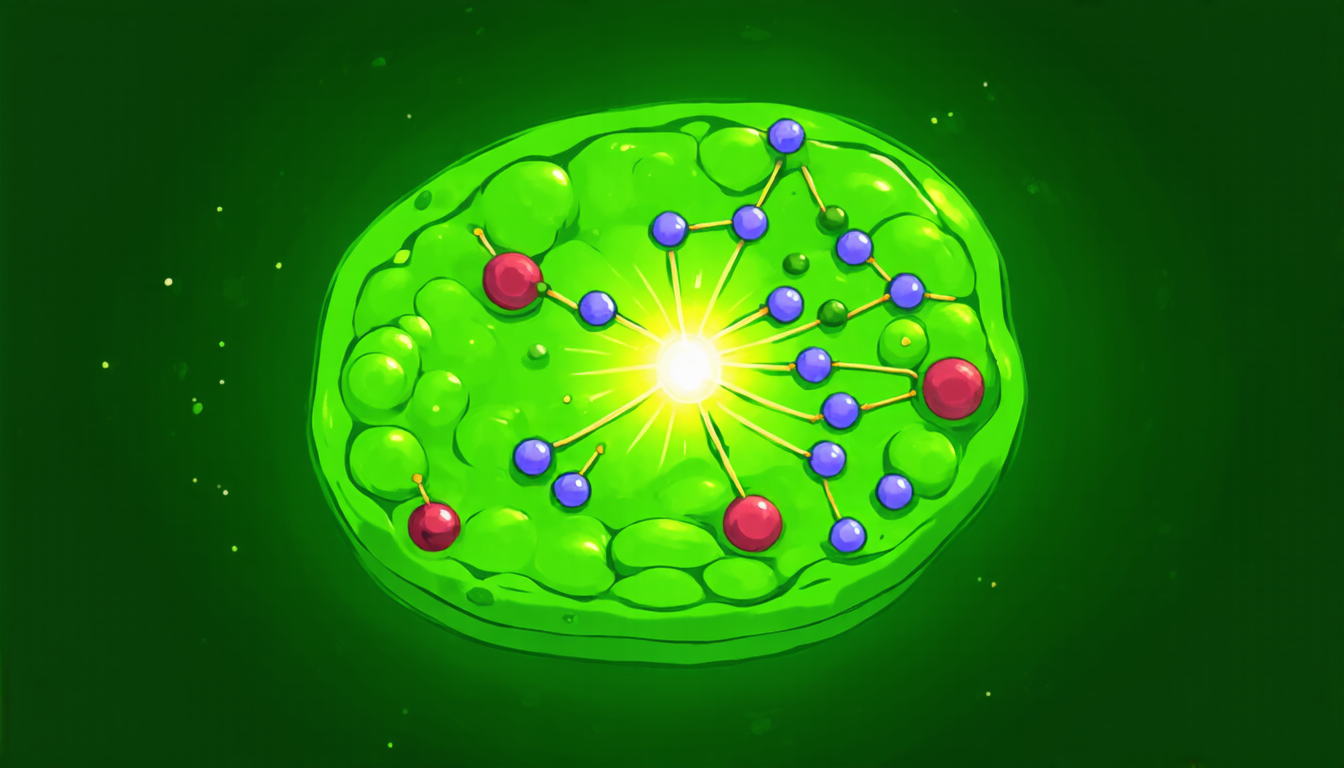
The Chevy approximation is also important because it has the potential to revolutionize our understanding of biological systems. For example, researchers have used the technique to study the behavior of excitons in photosynthetic organisms, such as plants and algae. By better understanding how these systems work, scientists may be able to develop new ways to produce energy or improve crop yields.
In addition to its potential applications, the Chevy approximation is also an important tool for advancing our understanding of quantum mechanics. Excitons are a type of quasiparticle that arises from the interactions between electrons and holes, and studying them can help us better understand the fundamental laws of physics. The Chevy approximation provides a new way to approach this problem, which could lead to important breakthroughs in our understanding of the universe.
Overall, the Chevy approximation is an important development in the field of materials science and has the potential to have significant impacts on a wide range of fields, from biology to energy production.
Cite this article: “Unlocking the Secrets of Exciton-Polaron Formation in Moiré Heterostructures”, The Science Archive, 2025.
Excitons, Quantum Mechanics, Materials Science, Chevy Approximation, Photosynthesis, Leds, Electrons, Holes, Quasiparticles, Energy Production.





