

Wednesday 09 April 2025
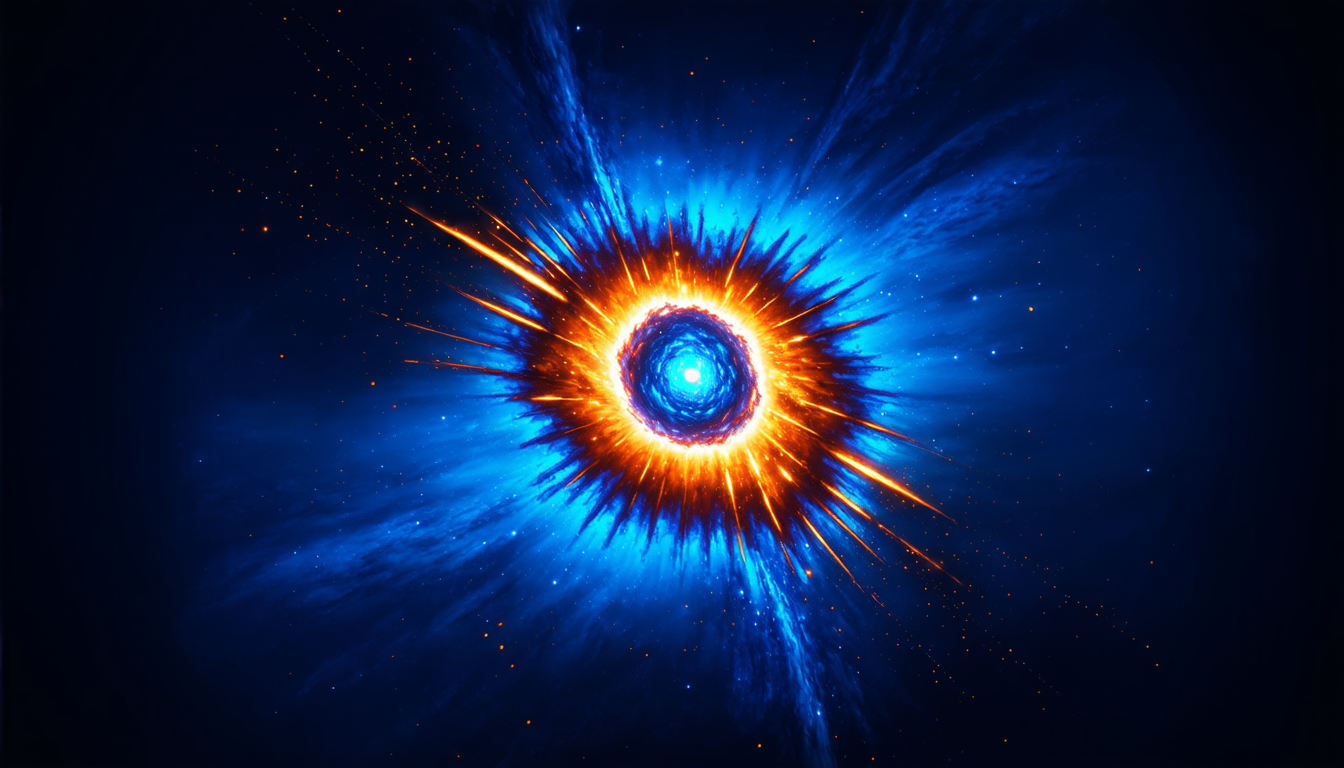
Supernovae, those brilliant and brief explosions of stars, have long been a fascination for astronomers. But beneath their fiery display, these cosmic events also leave behind a lasting legacy – dusty remnants that can shape the development of new stars and planets.
Now, scientists have shed light on one of the key mechanisms at play in this process: mechanical torque disruption. This phenomenon occurs when dust grains are spun up by shock waves emanating from supernovae explosions, eventually leading to their destruction. It’s a crucial process that can determine the fate of interstellar dust and gas, which in turn affects the formation of new stars and planetary systems.
To study this mechanism, researchers simulated the evolution of a wind-driven bubble formed by a massive star before its eventual explosion. They found that mechanical torque disruption plays a significant role in shaping the destruction of dust grains within these bubbles. The simulations revealed that the timescales for this process are surprisingly long, often spanning millions to tens of millions of years.
But what does this mean for our understanding of the universe? For one, it highlights the importance of considering multiple processes simultaneously when modeling dust evolution in and around supernovae remnants. This is crucial because different mechanisms can have competing effects on the fate of interstellar dust and gas.
The findings also suggest that mechanical torque disruption may not be as dominant a force as previously thought. Instead, other factors such as radiation and grain collisions may play a more significant role in shaping the evolution of dust grains.
Furthermore, the research has implications for our understanding of star formation and planetary development. The destruction of interstellar dust and gas can affect the availability of raw materials for new star formation, while also influencing the composition and structure of planets that eventually form.
The study’s authors used complex simulations to model the behavior of dust grains within wind-driven bubbles. These simulations accounted for various factors such as grain size, temperature, and density, allowing researchers to gain insight into the intricate dance between mechanical torque disruption and other processes at play.
Ultimately, this research provides a deeper understanding of the complex interplay between supernovae explosions, interstellar dust and gas, and the formation of new stars and planets. As scientists continue to probe the mysteries of the universe, it’s clear that the study of mechanical torque disruption will remain an essential piece of the puzzle.
Cite this article: “Supernova Shock Waves: The Ultimate Dust Destroyers?”, The Science Archive, 2025.
Supernovae, Dust Grains, Mechanical Torque Disruption, Interstellar Dust, Gas, Star Formation, Planetary Development, Radiation, Grain Collisions, Wind-Driven Bubbles





