

Wednesday 09 April 2025
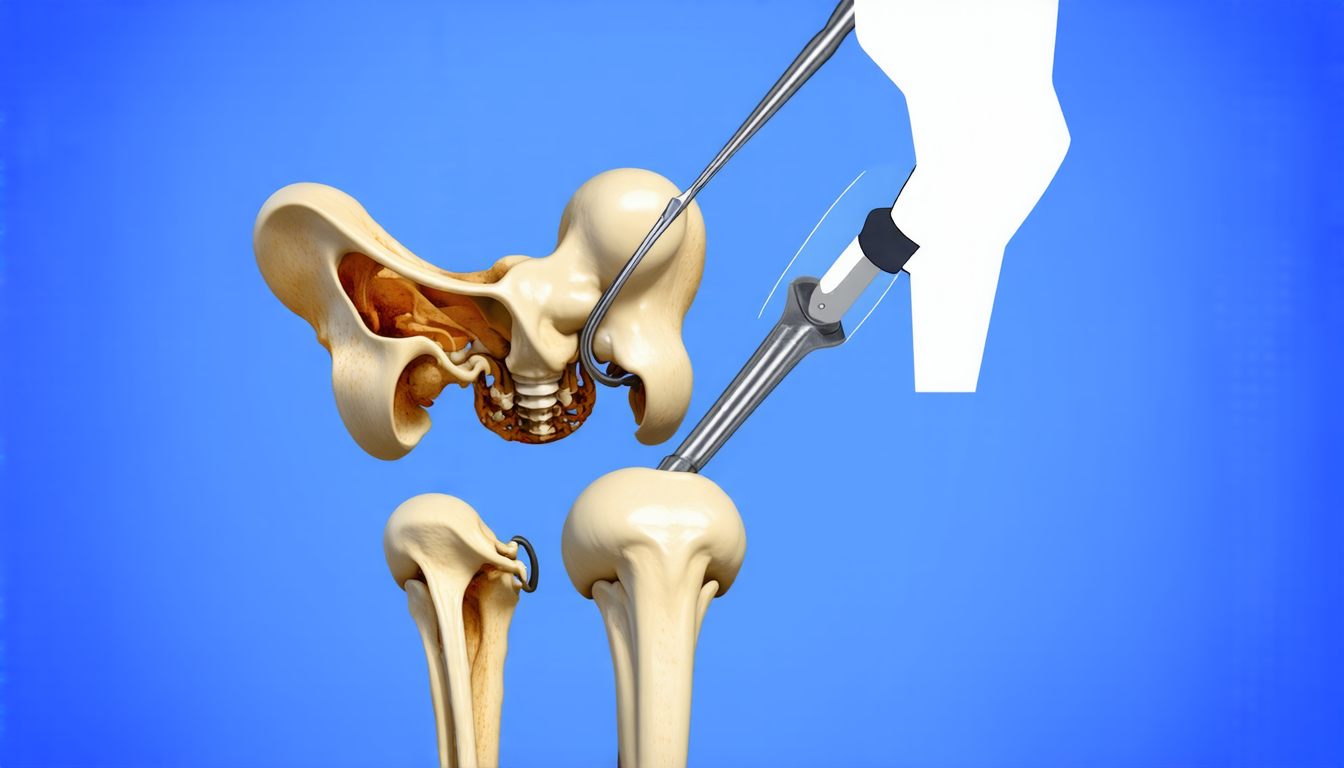
A team of researchers has made a significant breakthrough in developing a new method for accurately tracking hip implants during surgery. The innovative approach uses a combination of computer vision and machine learning to estimate the orientation and position of the implant in real-time, allowing surgeons to make more precise and effective decisions.
The traditional method of tracking hip implants involves using plain radiographs or fluoroscopy images, which can be prone to errors and require manual annotation by surgeons. In contrast, this new approach uses a technique called perspective projection to create a virtual image of the implant’s position and orientation in 3D space. This allows for more accurate tracking and reduces the need for manual annotation.
The researchers used a series of experiments to test the effectiveness of their method, including simulations using synthetic data and real-world images from cadavers. The results showed that the new approach was able to accurately estimate the implant’s position and orientation with high precision, even in cases where the implant was positioned at a distance from the imaging device.
One of the key advantages of this new method is its ability to handle complex anatomy and movement during surgery. Unlike traditional methods, which can be limited by the quality of the images or the accuracy of manual annotation, this approach can accurately track the implant’s position and orientation in real-time, even as the patient moves or the implant shifts during surgery.
The potential benefits of this technology are significant. By providing surgeons with more accurate and precise information about the implant’s position and orientation, this method could help reduce the risk of complications and improve outcomes for patients undergoing hip replacement surgery. Additionally, the ability to track the implant in real-time could enable more efficient and effective procedures, reducing operating times and improving patient recovery.
The researchers are now working to refine their approach and develop it for clinical use. They believe that this technology has the potential to make a significant impact on the field of orthopedic surgery and improve the lives of patients undergoing hip replacement surgery. With further development and testing, this innovative method could become a valuable tool in the operating room, helping surgeons to provide better care for their patients.
The researchers used computer vision and machine learning algorithms to develop a novel approach to tracking hip implants during surgery. By creating a virtual image of the implant’s position and orientation in 3D space, they were able to accurately estimate its location and movement in real-time. The results of their experiments showed that this method was highly effective, even in complex cases where the implant was positioned at a distance from the imaging device.
Cite this article: “Unlocking Accurate Hip Implant Orientation: A Novel Perspective on 2D-3D Registration”, The Science Archive, 2025.
Hip Implants, Computer Vision, Machine Learning, Surgery, Tracking, Orthopedic, 3D Space, Position, Orientation, Real-Time





