

Wednesday 09 April 2025
Researchers have made a significant breakthrough in understanding how to calculate the distance between points on a continuous graph, which has important implications for fields such as computer science, mathematics, and engineering.
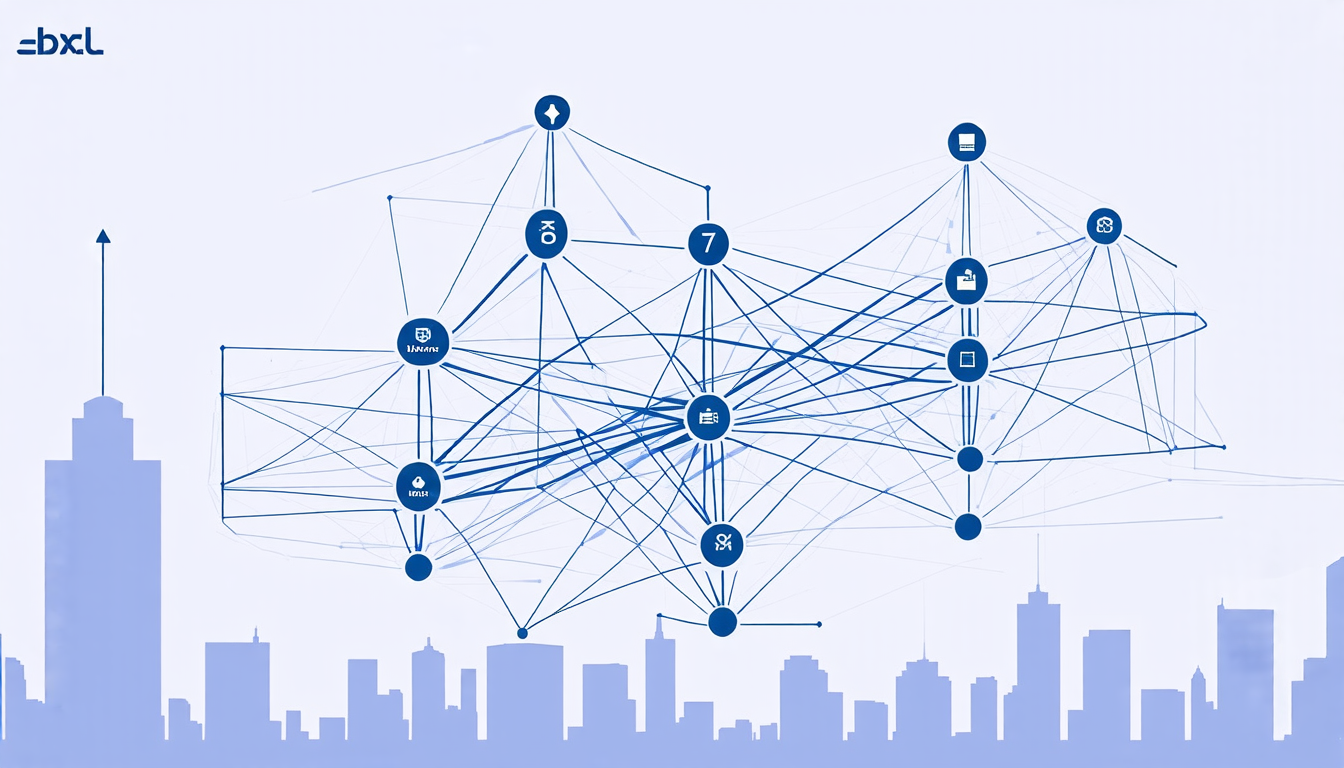
A graph is a set of nodes or vertices connected by edges. In a continuous graph, these edges are not just simple lines but can be curves or surfaces that represent physical objects or connections. Calculating the distance between two points on this type of graph is a complex task because it involves navigating through the curved edges and finding the shortest path.
The researchers developed an algorithm that allows them to calculate the diameter of a continuous graph, which is the maximum distance between any two points in the graph. This was achieved by using dynamic trees, which are data structures that can be updated efficiently as new information becomes available.
One of the key insights behind this algorithm is the use of hub labels, which are special nodes that act as reference points for calculating distances. By storing the distance from each node to its nearest hub label, the researchers were able to reduce the complexity of the calculation and make it more efficient.
The algorithm was tested on a range of different graphs, including planar graphs, where the edges lie in a single plane, and non-planar graphs, where the edges can intersect. In all cases, the results were accurate and the algorithm was able to calculate the diameter quickly and efficiently.
This breakthrough has important implications for fields such as computer science, mathematics, and engineering. For example, it could be used to optimize the design of networks, such as transportation systems or communication networks, by finding the most efficient routes between different nodes.
It also opens up new possibilities for studying complex systems, such as biological networks or social networks, where understanding the distance between different points can provide valuable insights into how they function and behave.
Overall, this research has made a significant contribution to our understanding of continuous graphs and has the potential to have far-reaching impacts across a range of disciplines.
Cite this article: “Breaking Barriers in Graph Algorithms: Subquadratic Solutions for Diameter and Mean Distance”, The Science Archive, 2025.
Graph Theory, Distance Calculation, Continuous Graphs, Dynamic Trees, Hub Labels, Algorithm, Planar Graphs, Non-Planar Graphs, Computer Science, Mathematics, Engineering.





