

Wednesday 09 April 2025
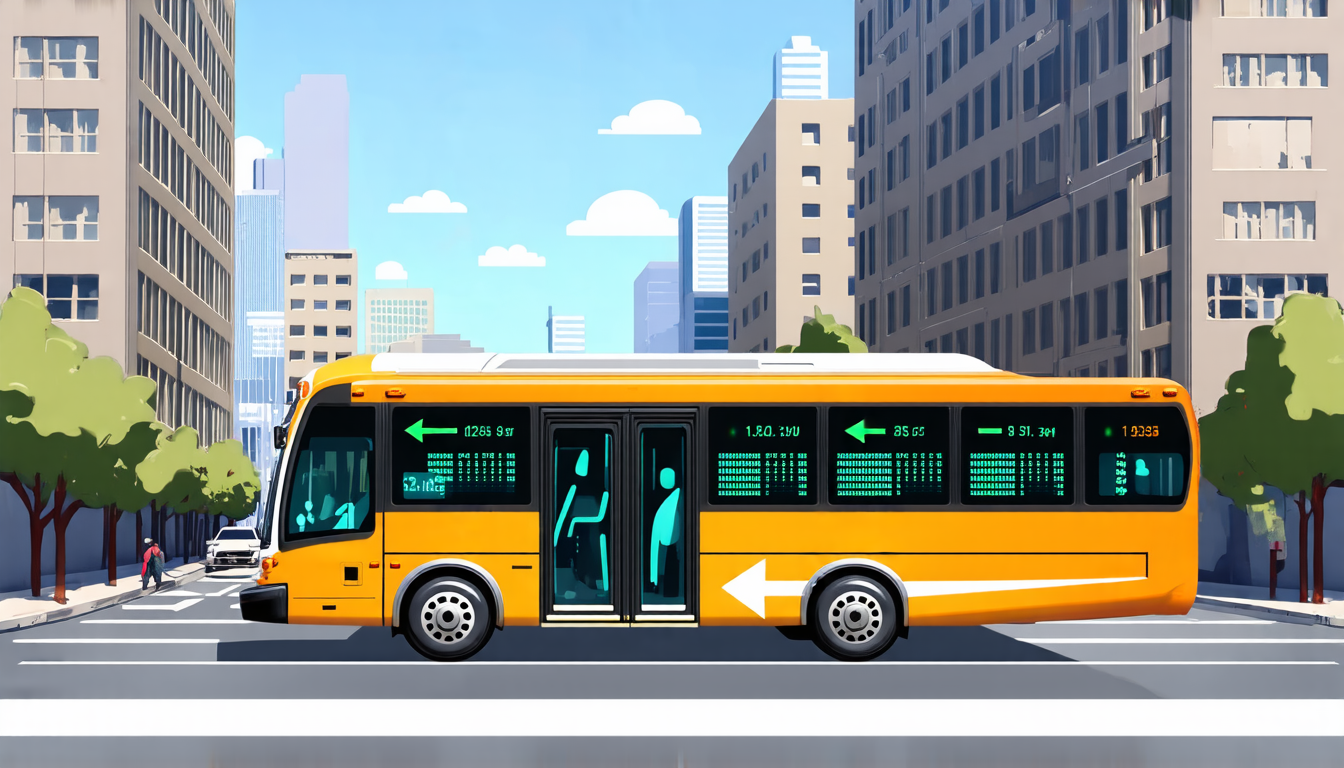
As we navigate our daily commutes, it’s easy to take for granted the intricate dance of buses and passengers that unfolds on the roads. But what if we told you there’s a way to optimize this chaos, making public transportation more efficient, cost-effective, and environmentally friendly? Enter Demand Adaptive Systems (DAS), a revolutionary concept that’s been gaining traction in recent years.
The idea is simple: by leveraging real-time data and sophisticated algorithms, DAS allows buses to adapt their routes on the fly, responding to changing passenger demand and traffic patterns. It’s like having a personal chauffeur for your daily commute, minus the luxury sedan.
To make this magic happen, researchers have developed complex models that simulate the behavior of both passengers and buses. These simulations take into account factors such as road conditions, construction, and even weather forecasts, allowing planners to fine-tune their strategies with unprecedented precision.
One of the key innovations is a two-stage stochastic program that enables operators to optimize their routes in real-time. This involves breaking down complex transportation networks into smaller, more manageable chunks, and then solving each segment using advanced optimization techniques. The result is a system that can dynamically adjust its route to accommodate changing passenger demand, minimizing delays and reducing the number of buses on the road.
But what about the passengers? Won’t they be confused by the ever-changing routes? Not according to the researchers. By integrating DAS with existing public transportation systems, passengers will still have access to reliable and efficient services, with the added benefit of real-time information and flexible routing options.
The environmental benefits are just as impressive. With fewer buses on the road, there’s less fuel consumption, reduced emissions, and a lower carbon footprint. It’s a win-win for both commuters and the planet.
Of course, implementing DAS won’t happen overnight. Cities will need to invest in new infrastructure, such as real-time data collection systems and advanced analytics software. But the potential payoff is substantial: increased efficiency, reduced costs, and a more sustainable transportation system that benefits everyone.
As researchers continue to refine their models and test their theories on real-world scenarios, it’s clear that Demand Adaptive Systems are poised to revolutionize the way we think about public transportation. By harnessing the power of data and algorithmic magic, we may just find ourselves zipping through our daily commutes with ease, all while doing our part for the environment.
Cite this article: “Unlocking Efficiency in Public Transit: A Dynamic Approach to Demand-Adaptive Systems”, The Science Archive, 2025.
Public Transportation, Demand Adaptive Systems, Optimization, Algorithmic Magic, Real-Time Data, Traffic Patterns, Passenger Demand, Bus Routes, Environmental Sustainability, Efficient Commuting





