

Wednesday 09 April 2025
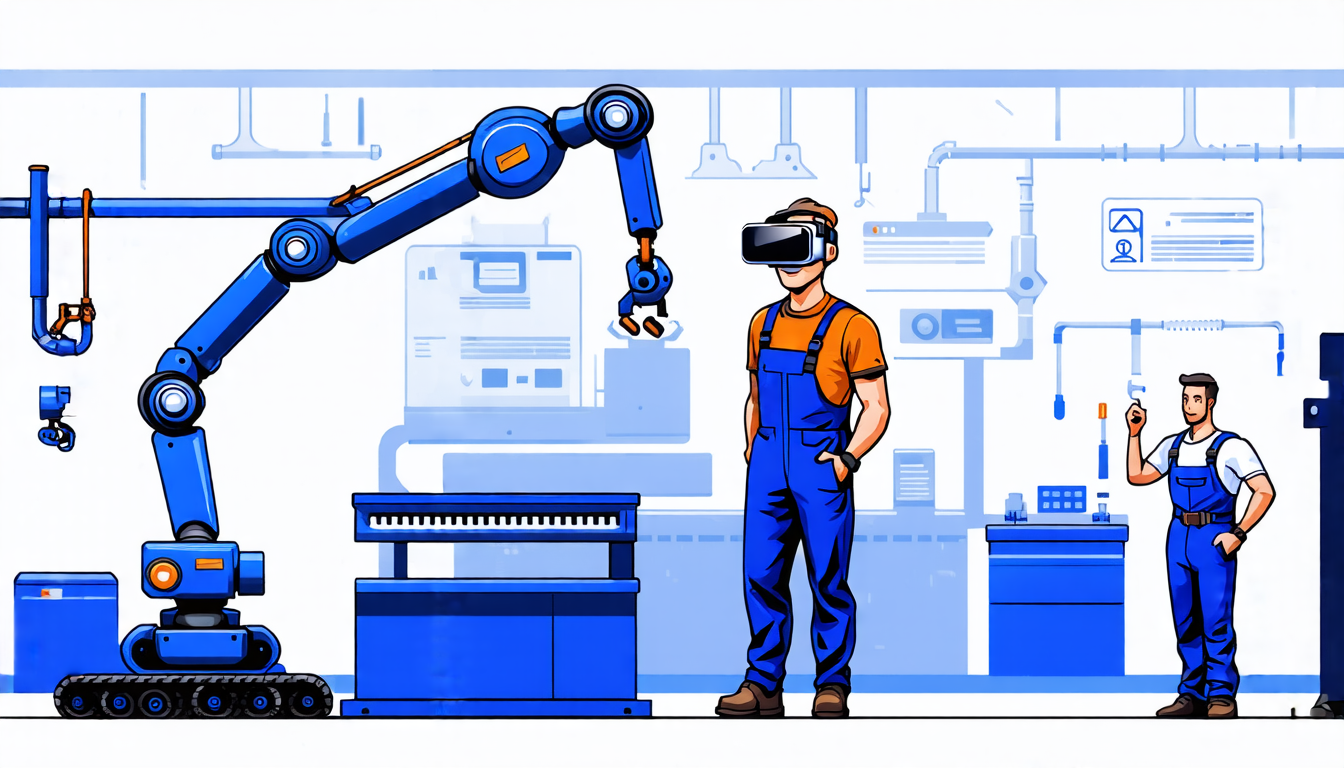
Scientists have made a significant breakthrough in developing a framework for human-robot collaboration, which has the potential to revolutionize the way we work alongside machines. The new system combines advanced visual perception technologies, real-time ergonomic monitoring, and adaptive decision-making to ensure a safe and efficient working environment.
The framework uses a combination of computer vision and machine learning algorithms to track the movements and actions of humans working alongside robots. This allows the system to detect potential hazards and intervene in real-time to prevent accidents or injuries. The system is also designed to adapt to changing circumstances, such as unexpected movements or changes in the work environment.
One of the key features of the framework is its ability to monitor ergonomic risk factors, such as posture and movement patterns. This allows the system to identify potential health risks and provide real-time feedback to workers to adjust their behavior and reduce the risk of injury. The system can also be integrated with existing safety protocols and guidelines to ensure compliance with regulatory requirements.
The researchers used a combination of data from sensors and cameras to develop the framework, which was tested in a simulated industrial environment. The results showed that the system was able to accurately detect and respond to potential hazards, and adapt to changing circumstances.
The implications of this technology are significant, as it has the potential to improve workplace safety and efficiency across a range of industries. For example, in manufacturing, robots can be used to perform repetitive or hazardous tasks, freeing up human workers to focus on higher-value tasks. In healthcare, robots can be used to assist with patient care, such as transferring patients from bed to wheelchair.
The framework is also designed to be modular and scalable, making it easy to integrate into existing production lines and workflows. This means that companies can quickly and easily adopt the technology without having to make significant changes to their operations.
Overall, this new framework for human-robot collaboration has the potential to transform the way we work alongside machines. By combining advanced visual perception technologies with real-time ergonomic monitoring and adaptive decision-making, the system can ensure a safe and efficient working environment while also improving productivity and reducing costs.
Cite this article: “Unlocking Safe Human-Robot Collaboration: A Novel Framework for Ergonomic Risk Assessment and Adaptive Decision-Making in Industrial Settings”, The Science Archive, 2025.
Robotics, Human-Robot Collaboration, Machine Learning, Computer Vision, Ergonomics, Safety, Industrial Automation, Manufacturing, Healthcare, Artificial Intelligence





