

Wednesday 09 April 2025
A recent paper published in an academic journal has shed new light on the complex problem of optimizing energy storage and demand management for residential buildings. The research, conducted by a team of experts, utilized advanced algorithms and simulations to develop a more effective approach to managing energy consumption and generation.
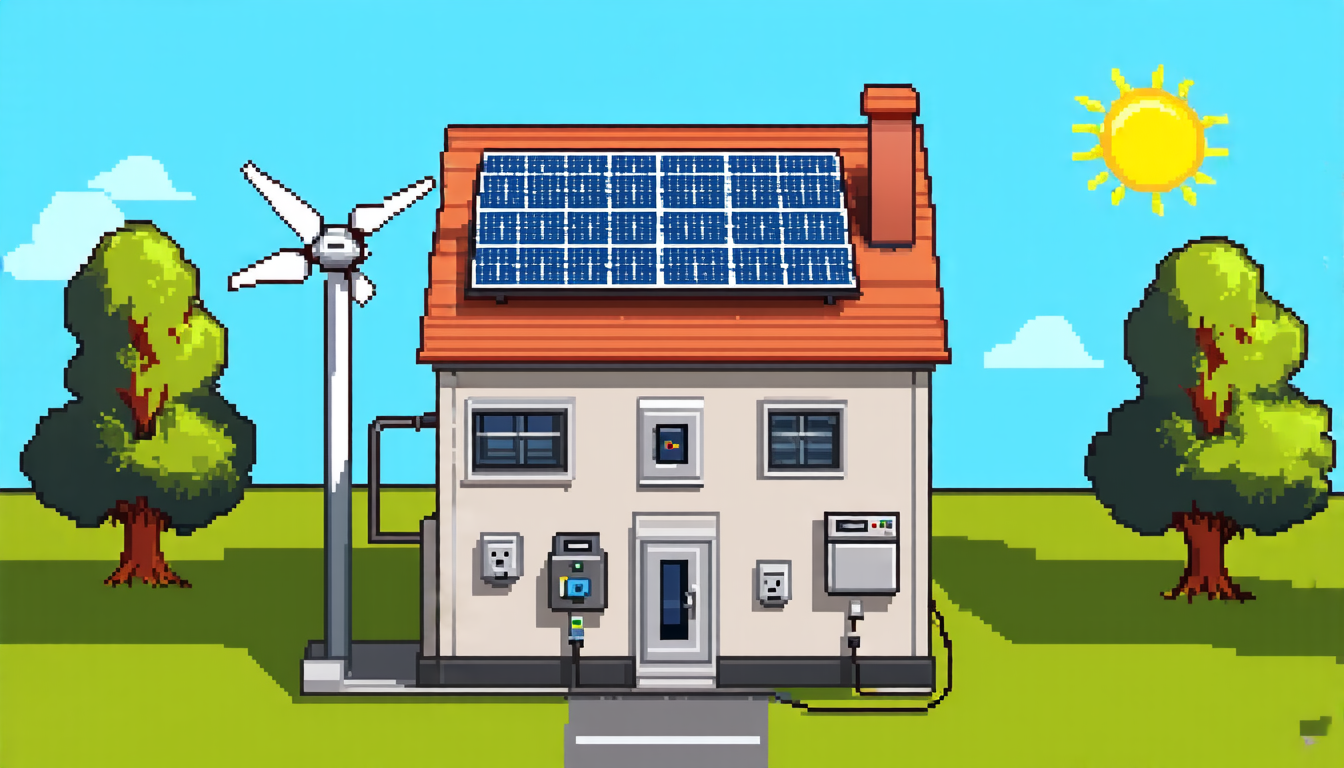
The study focused on the challenges faced by households with rooftop solar panels and energy storage systems, such as batteries. These systems can help reduce peak demand charges and increase self-sufficiency, but require careful optimization to maximize their benefits.
To address this challenge, the researchers developed a dynamic program that takes into account various factors, including weather forecasts, electricity prices, and appliance usage patterns. The algorithm is designed to optimize energy storage and demand management in real-time, ensuring that households can take full advantage of their solar power and reduce their reliance on the grid.
The team’s approach uses a combination of machine learning and optimization techniques to identify the most cost-effective strategy for managing energy consumption and generation. This involves predicting energy demand and availability, as well as adjusting the operation of appliances and energy storage systems accordingly.
One of the key innovations of this research is its ability to account for uncertainty in energy demand and supply. The algorithm can adjust to changing conditions, such as unexpected changes in weather or appliance usage patterns, to ensure that households remain powered and costs are minimized.
The study’s findings suggest that this approach can lead to significant cost savings and increased self-sufficiency for residential buildings. By optimizing energy storage and demand management, households can reduce their reliance on the grid and take advantage of renewable energy sources.
This research has important implications for the future of smart grids and energy management systems. As the world continues to transition towards a more sustainable and decentralized energy infrastructure, the ability to optimize energy storage and demand management will become increasingly critical.
The study’s authors have demonstrated that advanced algorithms and simulations can be used to develop more effective approaches to managing energy consumption and generation. This has important implications for households, utilities, and policymakers seeking to create a more efficient and sustainable energy system.
In addition to its technical innovations, this research highlights the importance of considering the needs and behaviors of end-users in the development of smart grid systems. By prioritizing the interests of households and businesses, we can create an energy system that is not only more efficient but also more equitable and sustainable.
Cite this article: “Smart Homes, Smarter Energy: Co-Optimizing Distributed Energy Resources for Efficient and Sustainable Living”, The Science Archive, 2025.
Energy Storage, Demand Management, Residential Buildings, Rooftop Solar Panels, Energy Consumption, Generation, Optimization, Machine Learning, Smart Grids, Sustainability





