

Wednesday 09 April 2025
The dynamics of random walkers in the presence of absorbing traps have long fascinated physicists and mathematicians alike. Recently, a team of researchers has made a fascinating discovery that sheds new light on this complex phenomenon.
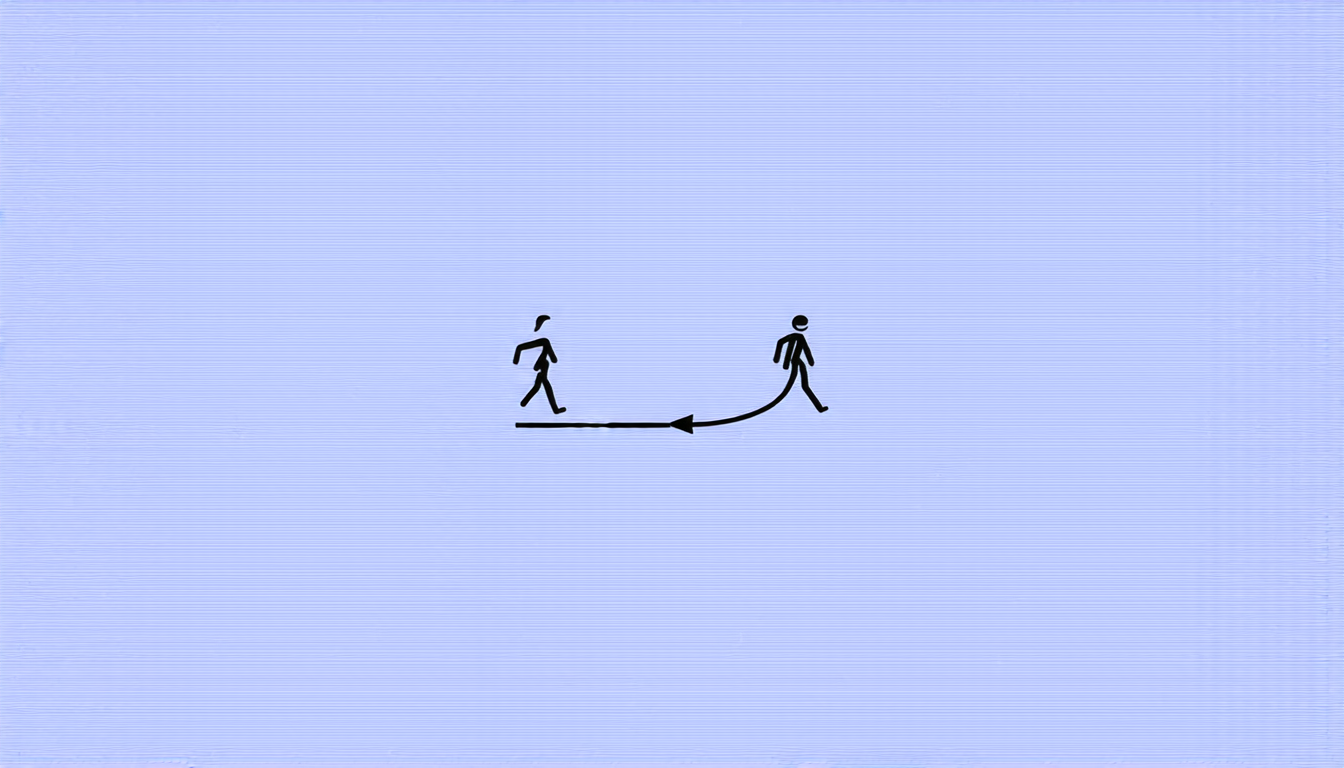
At its core, the problem involves a simple yet intriguing setup: a random walker, who starts at the origin, takes steps towards an absorbing trap with probability q. The twist lies in the fact that the trap itself moves away from the starting point over time, creating a delicate interplay between the walker’s trajectory and the trap’s motion.
In a remarkable feat of mathematical wizardry, the researchers have derived an analytical expression for the survival probability function, which describes the likelihood of the walker avoiding absorption at each step. The result is nothing short of astonishing: in certain regimes, the survival probability decays not exponentially, as one might expect, but rather as an inverse power-law.
This finding has far-reaching implications for our understanding of complex systems and phase transitions. In particular, it suggests that even in the presence of absorbing traps, random walkers can exhibit non-trivial behavior, characterized by a subtle interplay between the walker’s dynamics and the trap’s motion.
The researchers’ analytical approach is noteworthy not only for its elegance but also for its ability to capture the intricate details of this complex problem. By cleverly exploiting the symmetry of the system, they were able to derive an exact expression for the survival probability function, which can be used to study a wide range of phenomena, from simple random walks to more complex systems involving multiple traps and walkers.
One of the most striking aspects of this research is its potential applications in fields such as epidemiology and finance. In these domains, understanding the dynamics of random walkers can provide valuable insights into the spread of diseases or the behavior of financial markets. By incorporating the moving trap effect into their models, researchers may be able to develop more accurate predictions and make more informed decisions.
Furthermore, this study’s findings have implications for our understanding of phase transitions in complex systems. In these systems, subtle changes in the underlying dynamics can give rise to dramatic shifts in behavior. The discovery of inverse power-law decay in random walkers near absorbing traps offers a fascinating window into these phenomena, allowing researchers to better understand the intricate dance between walker and trap.
In the end, this research is a testament to the power of mathematical analysis in unlocking the secrets of complex systems.
Cite this article: “Traps in Motion: Unveiling the Surprising Dynamics of Random Walkers”, The Science Archive, 2025.
Random Walkers, Absorbing Traps, Probability Theory, Statistical Physics, Phase Transitions, Power-Law Decay, Complex Systems, Epidemiology, Finance, Mathematical Analysis
Reference: Shahar Hod, “Sisyphus random walks in the presence of moving traps” (2025).





