

Wednesday 09 April 2025
The quest for a reliable guarantee of how well artificial intelligence systems will perform on new, unseen data has long been an open question in the field of machine learning. A recent study has shed light on this problem, revealing that the popular PAC-Bayes theory may not provide the robust generalization guarantees it promises.
PAC-Bayes, short for probably approximately correct Bayes, is a mathematical framework used to analyze the performance of machine learning models. It provides a way to estimate how well a model will generalize to new data, even if it’s never seen before. The theory has been widely adopted in the field, but researchers have long suspected that its guarantees may be too optimistic.
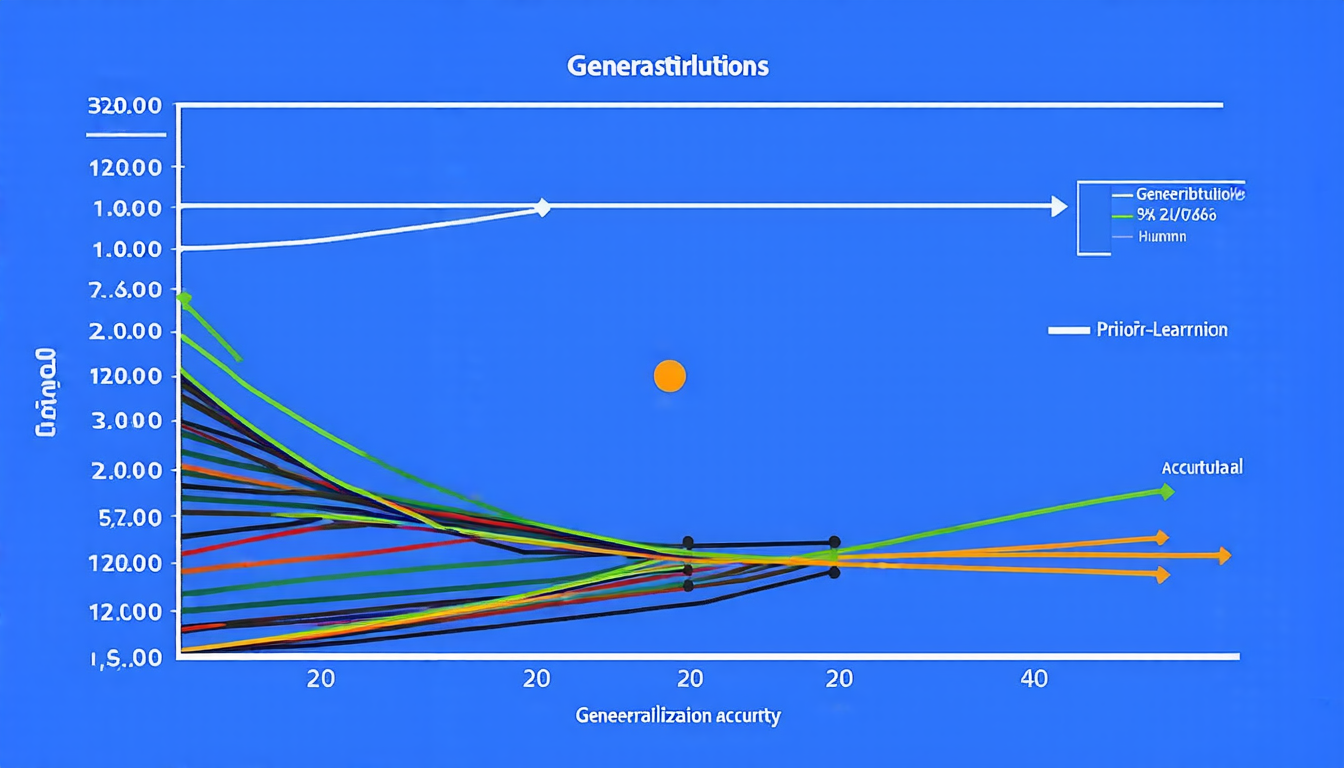
The study in question analyzed the PAC-Bayes bound, which is a measure of how well a model is expected to perform on new data. The authors found that the bound relies heavily on a prior distribution over possible models, which can greatly influence the outcome. In particular, they showed that if the prior does not place enough mass on high-performing models, the PAC-Bayes bound will not provide meaningful guarantees of generalization.
This has significant implications for machine learning practitioners, who often rely on PAC-Bayes bounds to evaluate their models’ performance. The study suggests that simply using a wide range of models and averaging their predictions may not be enough to guarantee good generalization performance.
The authors also explored the relationship between the prior distribution and the test data used to train the model. They found that if the prior is chosen wisely, it can help improve the PAC-Bayes bound’s accuracy. However, this requires careful consideration of the prior’s properties, which can be challenging in practice.
One potential solution to these issues is to use data-dependent priors, which are designed specifically for a given dataset. These priors can take into account the structure and characteristics of the data, leading to more accurate PAC-Bayes bounds.
The study’s findings have important implications for the development of machine learning algorithms that can learn from limited amounts of data. By better understanding the limitations of PAC-Bayes theory, researchers can develop more robust methods for evaluating their models’ performance and improving their generalization abilities.
In practical terms, this means that machine learning practitioners will need to be more careful in designing their prior distributions and choosing their test datasets. This may require additional computational resources or more sophisticated algorithms, but the payoff could be significant: improved accuracy and reliability of their models.
Cite this article: “Unlocking the Power of Prior Knowledge: A New Era in Machine Learning Generalization Guarantees”, The Science Archive, 2025.
Machine Learning, Artificial Intelligence, Pac-Bayes Theory, Generalization Guarantees, Model Performance, Prior Distribution, Test Data, Machine Learning Practitioners, Data-Dependent Priors, Algorithm Development





