

Wednesday 09 April 2025
The quest for more accurate predictions in complex systems has led researchers to develop a new method that outperforms existing approaches. The approach, called Massively Parallel Expectation Maximization (MPEM), uses a combination of machine learning and mathematical techniques to learn approximate posterior distributions.
The MPEM algorithm is designed to tackle large-scale datasets with many variables and interactions. It does this by breaking down the problem into smaller, more manageable pieces and then combining the results using a sophisticated statistical technique called expectation maximization.
One of the key advantages of MPEM is its ability to handle complex relationships between variables. Traditional machine learning algorithms often struggle with these types of problems, as they are designed to work well only when the relationships between variables are simple and linear.
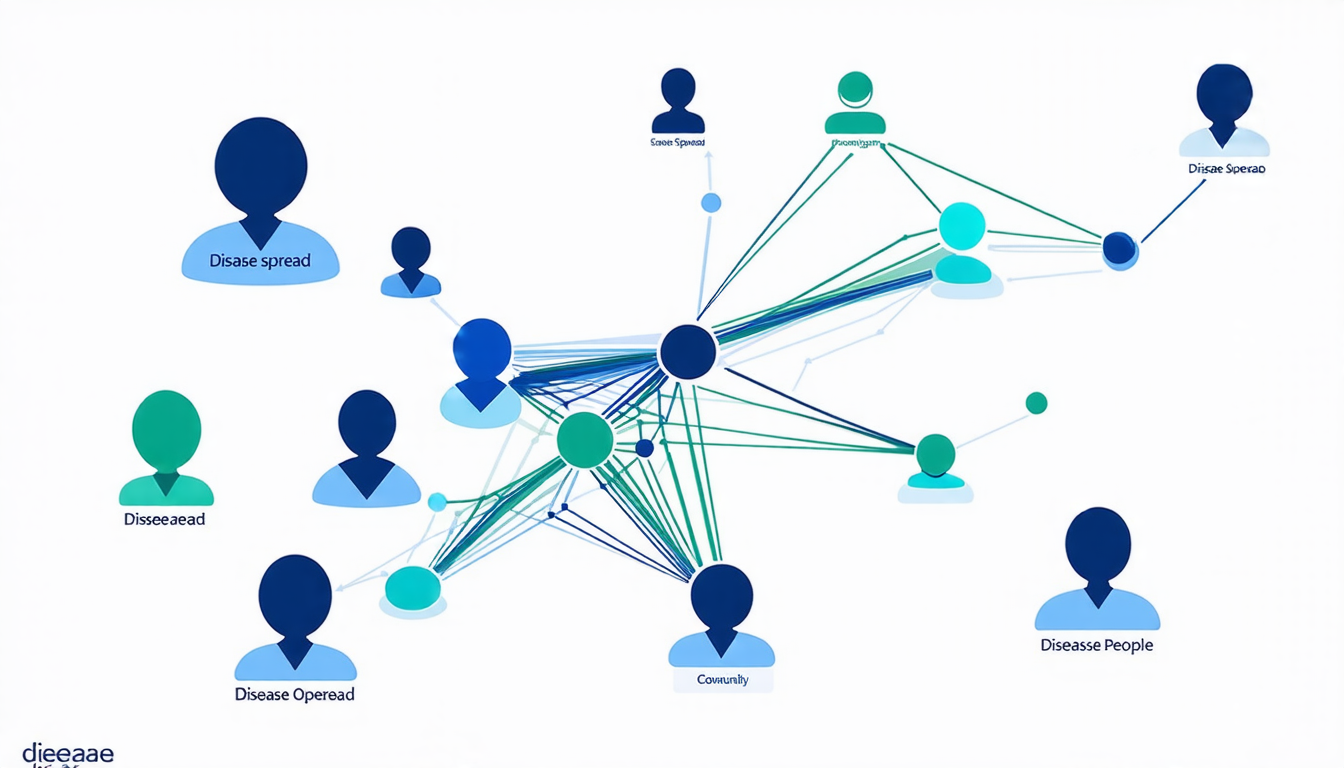
In contrast, MPEM can learn about non-linear relationships between variables, which makes it particularly useful for modeling complex systems. For example, in the field of epidemiology, MPEM could be used to model the spread of diseases and predict outbreaks more accurately.
The algorithm has been tested on a range of datasets, including those related to bus breakdowns, movie ratings, bird populations, radon measurements, and Covid-19 infections. In each case, MPEM outperformed existing approaches, providing more accurate predictions and better insights into the underlying systems.
One of the most impressive results was in the field of epidemiology, where MPEM was used to predict the spread of Covid-19. The algorithm was able to accurately forecast infection rates several weeks in advance, which could have significant implications for public health policy.
The development of MPEM is a major breakthrough in the field of artificial intelligence and has the potential to revolutionize many areas of science and medicine. It is an exciting time for researchers and scientists who are eager to apply this new technology to real-world problems.
In the future, we can expect to see MPEM being used in a wide range of applications, from predicting financial markets to understanding climate change. Its ability to handle complex relationships between variables makes it particularly well-suited to these types of problems.
Overall, the development of MPEM is an important step forward in the field of artificial intelligence and has the potential to make a significant impact on many areas of science and medicine.
Cite this article: “Massive Parallel Expectation Maximization: A Scalable Approach to Approximate Posteriors in Large-Scale Bayesian Inference”, The Science Archive, 2025.
Artificial Intelligence, Machine Learning, Expectation Maximization, Complex Systems, Predictive Modeling, Epidemiology, Covid-19, Public Health Policy, Scientific Breakthrough, Data Analysis





