

Wednesday 09 April 2025
Mathematicians have made a significant breakthrough in understanding the properties of space and time, revealing new insights into the nature of the universe.
For centuries, scientists have been fascinated by the concept of isoperimetry – the study of shapes that minimize or maximize their surface area while maintaining a fixed volume. This fundamental problem has far-reaching implications for fields such as physics, engineering, and computer science.
In recent years, researchers have been able to extend this concept to higher-dimensional spaces, including those with non-Euclidean geometries. However, the study of isoperimetry in these environments has proven to be a complex and challenging task.
Now, a team of mathematicians has successfully cracked the code, developing new techniques that enable them to analyze the properties of shapes in these higher-dimensional spaces. The breakthrough has significant implications for our understanding of the universe, particularly in the context of cosmology – the study of the origin, evolution, and fate of the cosmos.
The researchers used a combination of advanced mathematical tools and computational methods to tackle this problem. By leveraging concepts from differential geometry and functional analysis, they were able to develop new algorithms that can efficiently compute the isoperimetric properties of shapes in these complex spaces.
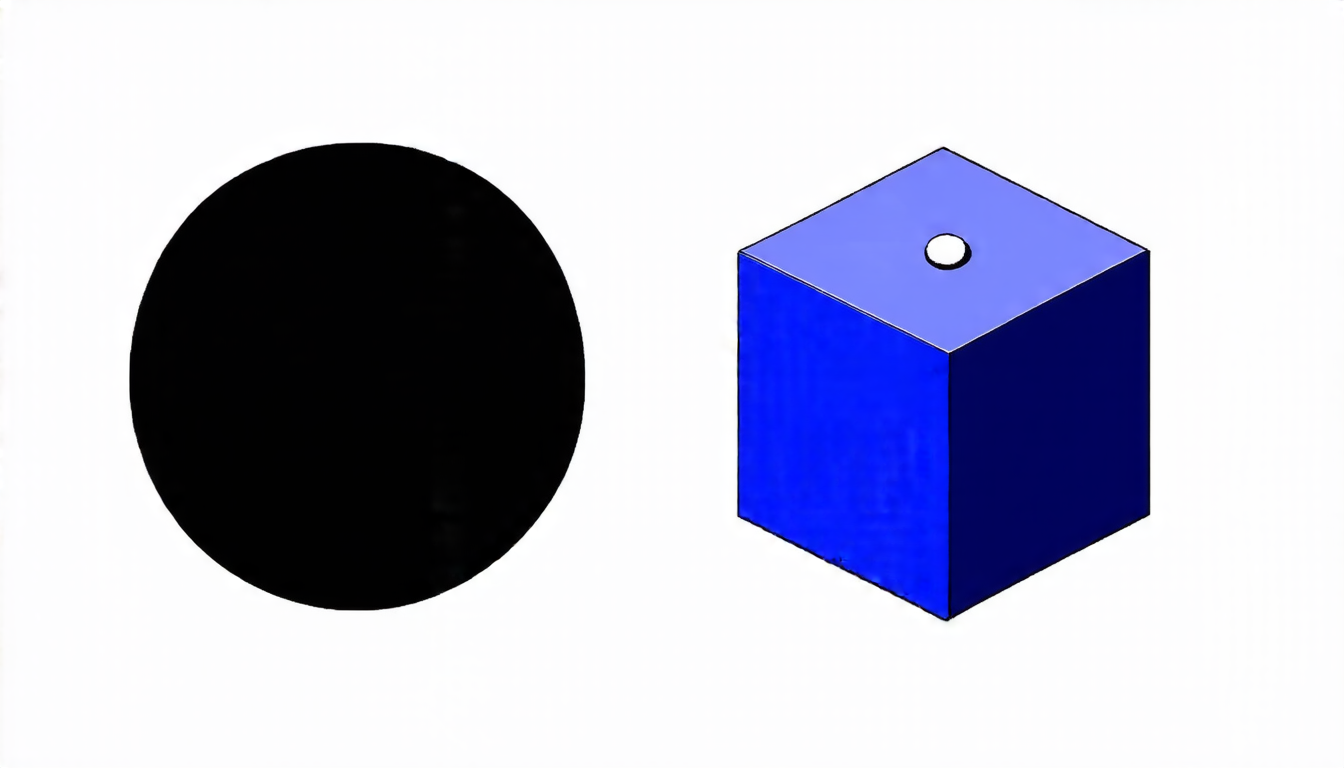
One of the key findings is that the shape of an object can significantly affect its surface area and volume. For example, a sphere has a larger surface area than a cube with the same volume, while a torus (doughnut-shaped) has a smaller surface area than a cylinder with the same volume.
This discovery has significant implications for our understanding of the universe, particularly in the context of cosmology. The shape and structure of galaxies, stars, and other celestial bodies can have a profound impact on their evolution and behavior. By better understanding these properties, scientists may be able to gain insights into the formation and evolution of the universe.
The researchers believe that their findings will have far-reaching implications for various fields, including physics, engineering, and computer science. The new techniques developed in this study could be used to analyze complex systems and make predictions about their behavior.
This breakthrough is a testament to the power of human ingenuity and creativity. By pushing the boundaries of mathematical knowledge, scientists are able to gain insights into the fundamental nature of the universe.
Cite this article: “Unlocking the Secrets of Asymptotically Non-Negative Curvature: A New Frontier in Geometric Analysis”, The Science Archive, 2025.
Mathematics, Space, Time, Isoperimetry, Geometry, Cosmology, Universe, Shapes, Surface Area, Volume





