

Wednesday 09 April 2025
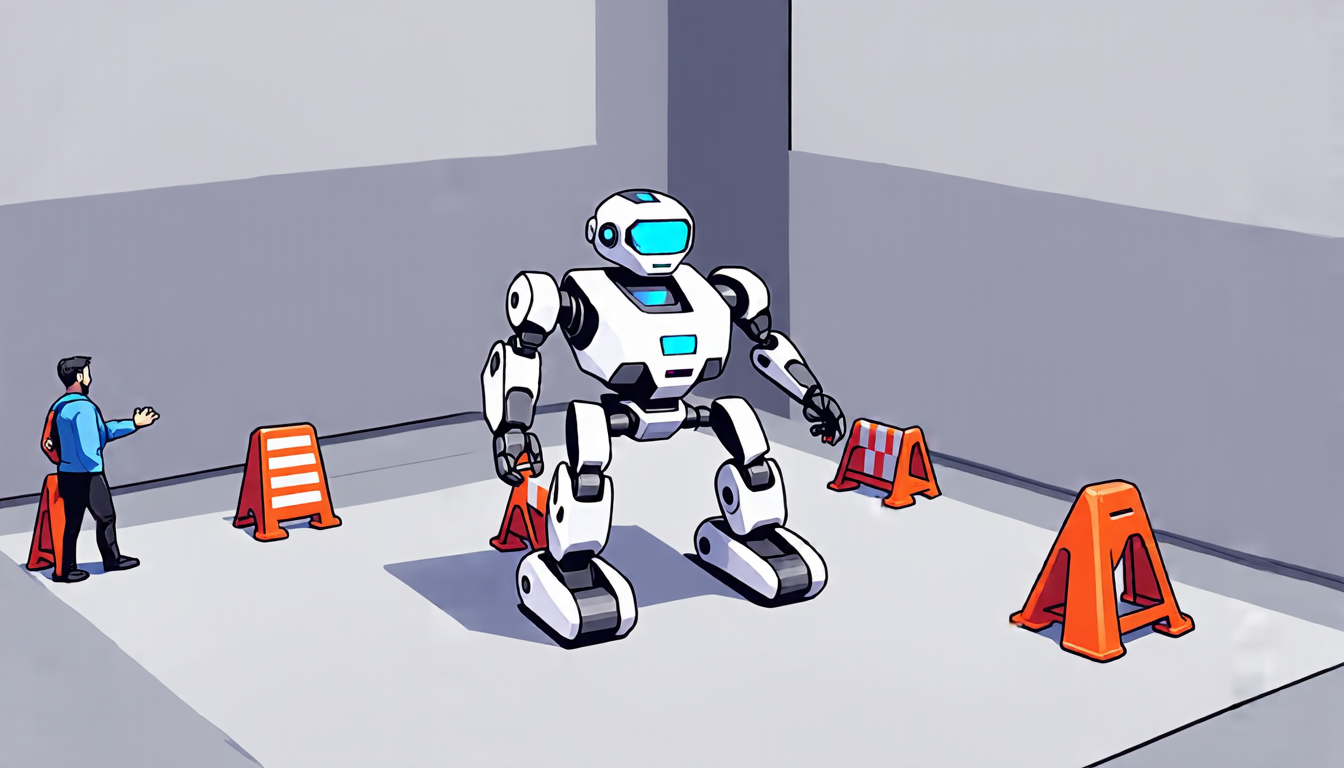
Scientists have been working on developing autonomous robots that can navigate complex environments, and a recent study has made significant progress in this area. Researchers have created an artificial intelligence system that allows a robot to learn how to move around in a physical space without getting stuck or lost.
The AI system uses a combination of sensors and machine learning algorithms to help the robot understand its surroundings and make decisions about where to go next. The robot is equipped with cameras, lidar (a type of radar), and other sensors that provide it with information about its environment. This data is then fed into an artificial intelligence program that helps the robot plan its route and avoid obstacles.
One of the key challenges in developing autonomous robots is teaching them how to understand their environment. Humans take for granted the ability to see and understand the world around us, but it’s much harder for a machine to do the same. The researchers have developed a system that uses visual localization to help the robot understand where it is and where it needs to go.
The system works by using cameras on the robot to capture images of its surroundings. These images are then compared to a database of known locations, allowing the robot to determine its position and orientation. This information is used to update the robot’s understanding of its environment and help it plan its route.
Another challenge in developing autonomous robots is dealing with uncertainty. In real-world environments, there are many variables that can affect the robot’s ability to move around, such as other objects or people moving through the space. The researchers have developed a system that uses probabilistic models to account for these uncertainties and help the robot make more informed decisions.
The AI system has been tested in a variety of environments, including indoor and outdoor spaces with different types of obstacles. In each case, the robot was able to navigate the space successfully using its sensors and machine learning algorithms. The researchers are now working to improve the system’s ability to adapt to new environments and handle more complex scenarios.
The development of autonomous robots has many potential applications, from search and rescue missions to healthcare and transportation. By allowing machines to move around in physical spaces without human intervention, we can open up new possibilities for how we live and work. The researchers’ work is an important step towards making this a reality.
Cite this article: “Unlocking End-to-End Navigation with Robust Dynamical Systems: A Study on Visual Localization and Probing Future Pose”, The Science Archive, 2025.
Artificial Intelligence, Autonomous Robots, Navigation, Machine Learning, Sensors, Robotics, Localization, Uncertainty, Probabilistic Models, Robotics Applications.





