

Wednesday 09 April 2025
As humans and robots increasingly work together on assembly lines, in warehouses, and even in our own homes, one of the biggest challenges is ensuring that they don’t collide or harm each other. A new approach to risk assessment aims to tackle this problem by analyzing not just the robot’s movements, but also the human’s behavior.
The traditional method for assessing safety in robotics relies on rigid rules and guidelines, such as keeping a safe distance between humans and robots. But this approach has its limitations – it can’t account for the unpredictable nature of human behavior or the complex interactions that can occur when humans and robots work together.
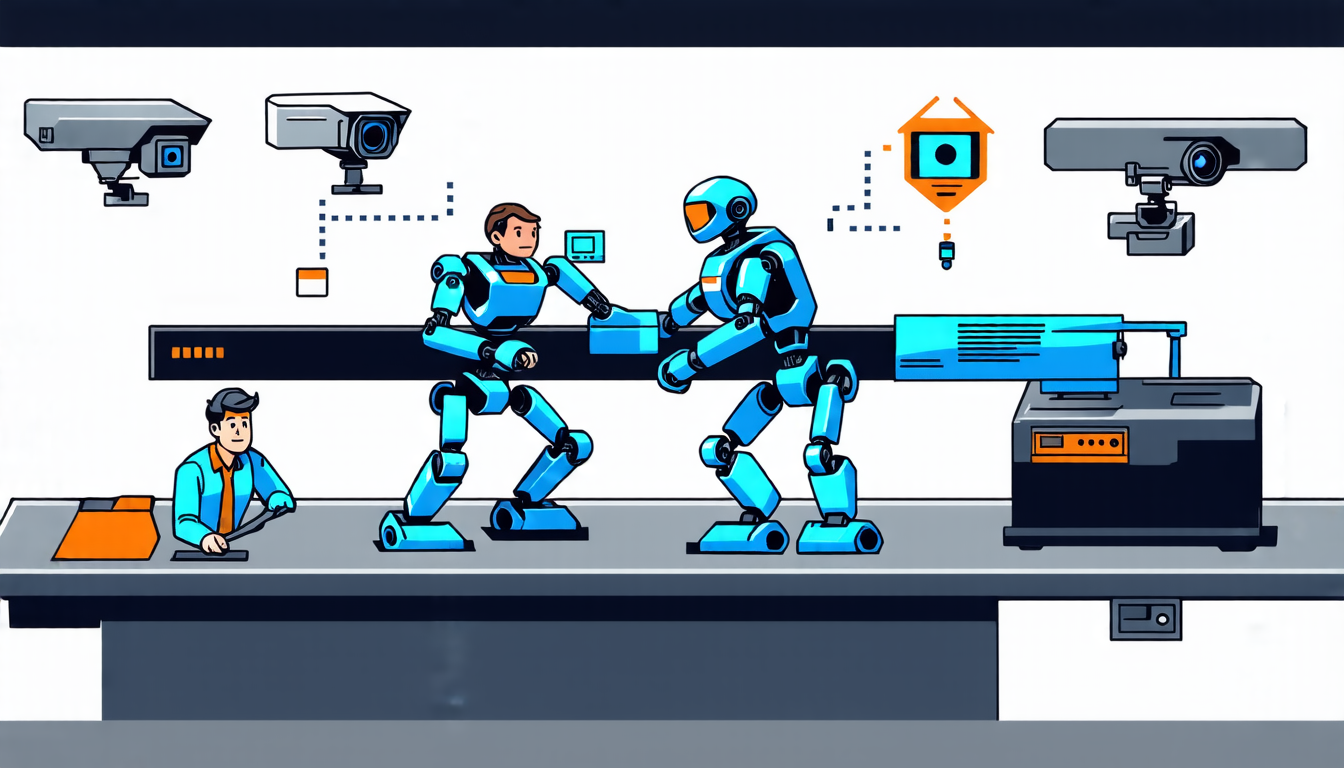
Researchers have developed a new method that takes into account both the robot’s movements and the human’s behavior. This method uses machine learning algorithms to analyze data from sensors and cameras, tracking the position and movement of both humans and robots in real-time. The system then uses this data to calculate the risk of collision or harm, taking into account factors such as the speed and direction of the robot, the distance between humans and robots, and even the human’s attention and awareness.
The new approach has been tested on a dataset of human-robot interaction scenarios, including tasks such as assembly lines and collaborative cleaning. The results show that the system is able to accurately assess risk in real-time, taking into account complex interactions and unpredictable human behavior.
One of the key benefits of this approach is its ability to adapt to changing situations. For example, if a human suddenly moves into a robot’s path, the system can quickly re-evaluate the risk and take evasive action to prevent a collision.
The new method also opens up possibilities for more advanced safety features, such as predictive maintenance and autonomous emergency shutdowns. By analyzing data on robot performance and human behavior, manufacturers could identify potential problems before they occur, reducing downtime and improving overall safety.
While this technology is still in its early stages, it has the potential to revolutionize the way we design and interact with robots. As humans and robots continue to work together more closely, a system that can accurately assess risk and adapt to changing situations will be essential for ensuring safe and efficient collaboration.
Cite this article: “Unlocking Safer Human-Robot Collaboration: A Heuristics-Based Approach to Dynamic Risk Assessment”, The Science Archive, 2025.
Risk Assessment, Robotics, Human-Robot Interaction, Machine Learning, Sensors, Cameras, Collision Avoidance, Predictive Maintenance, Autonomous Shutdowns, Safety Features





