

Wednesday 09 April 2025
The quest for explainability in artificial intelligence has been an ongoing challenge for researchers and developers alike. With the increasing reliance on AI-driven decision-making processes, it’s crucial that we can understand how these systems arrive at their conclusions. Recently, a team of scientists made significant strides in addressing this issue by introducing a novel approach to interpretable graph neural networks.
The problem lies in the fact that many AI models are black boxes, making it difficult for humans to comprehend the reasoning behind their outputs. This lack of transparency can lead to mistrust and undermine the effectiveness of these systems. The new approach, dubbed i-WiViG (Interpretable Window Vision Graph), aims to change this by providing a window into the decision-making process.
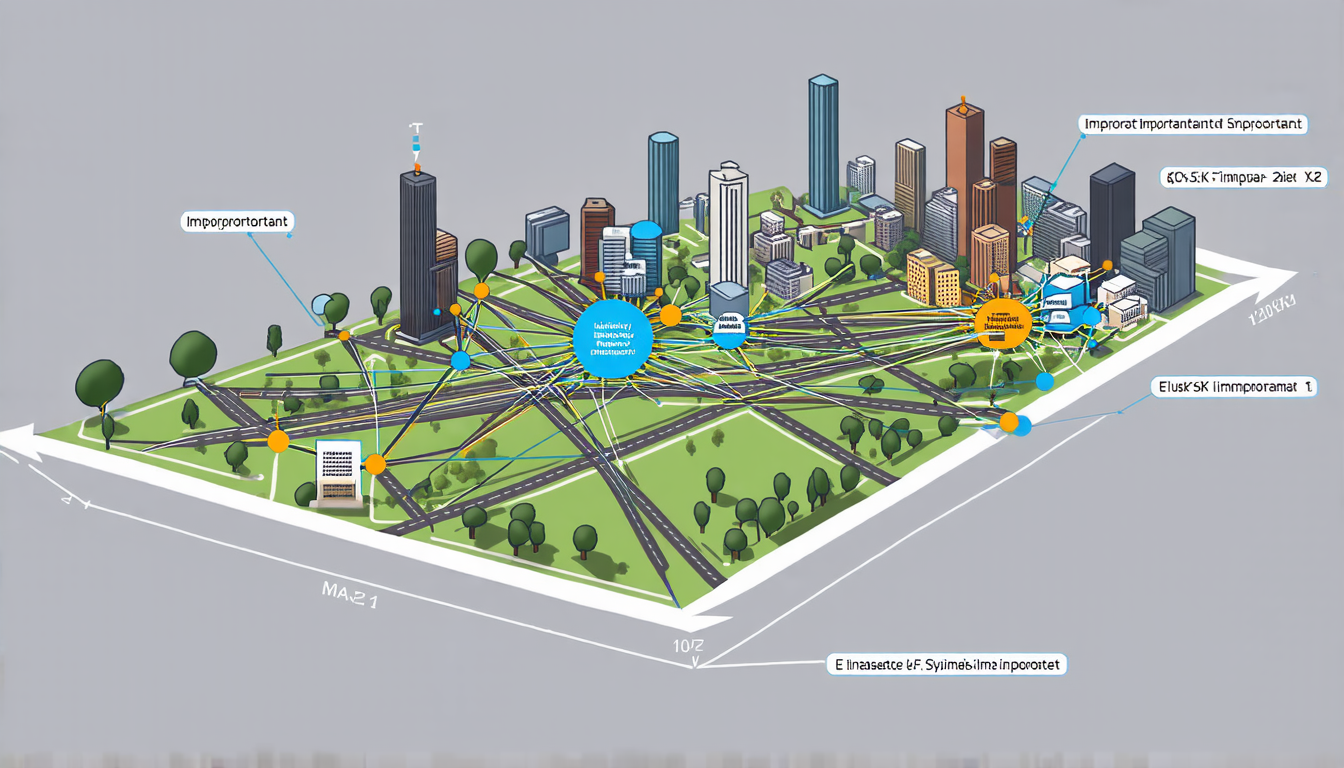
At its core, i-WiViG is a type of graph neural network that processes images as graphs, where each node represents a local region of the image and edges connect nodes based on their spatial relationships. This allows the model to capture long-range dependencies between regions, which are crucial for tasks such as scene classification and regression.
The key innovation lies in the incorporation of a novel graph attention mechanism, known as GSAT (Graph Stochastic Attention), which learns to rank the importance of edges in the graph. This means that the model can identify the most critical relationships between nodes, providing a clear explanation for its predictions.
To evaluate the effectiveness of i-WiViG, researchers tested it on two benchmark datasets: NWPU-RESISC45 for scene classification and Liveability for regression tasks. The results were impressive, with i-WiViG achieving competitive performance to state-of-the-art models while producing more interpretable explanations.
One notable aspect of i-WiViG is its ability to identify relevant subgraphs that contribute to the model’s predictions. These subgraphs can be visualized as a network of nodes and edges, providing a tangible representation of how the model arrived at its conclusions.
The implications of this research are far-reaching, with potential applications in fields such as healthcare, finance, and transportation. By making AI models more transparent and explainable, we can foster greater trust and confidence in their decisions.
In the future, researchers plan to continue refining i-WiViG and exploring its capabilities in various domains. As AI becomes increasingly integral to our daily lives, it’s essential that we prioritize transparency and understanding in these systems. With i-WiViG, we’re one step closer to achieving this goal.
Cite this article: “Unlocking the Secrets of Remote Sensing: An Interpretable Graph Neural Network for Scene Classification and Regression”, The Science Archive, 2025.
Artificial Intelligence, Explainability, Interpretable, Graph Neural Networks, Transparency, Decision-Making, Black Boxes, Graph Attention Mechanism, Scene Classification, Regression Tasks





