

Wednesday 09 April 2025
A team of scientists has made a significant breakthrough in our understanding of the universe, shedding new light on the mysterious forces that shape it. By studying the way galaxies bend and distort as they pass behind massive objects like stars or black holes, researchers have been able to uncover hidden secrets about the cosmos.
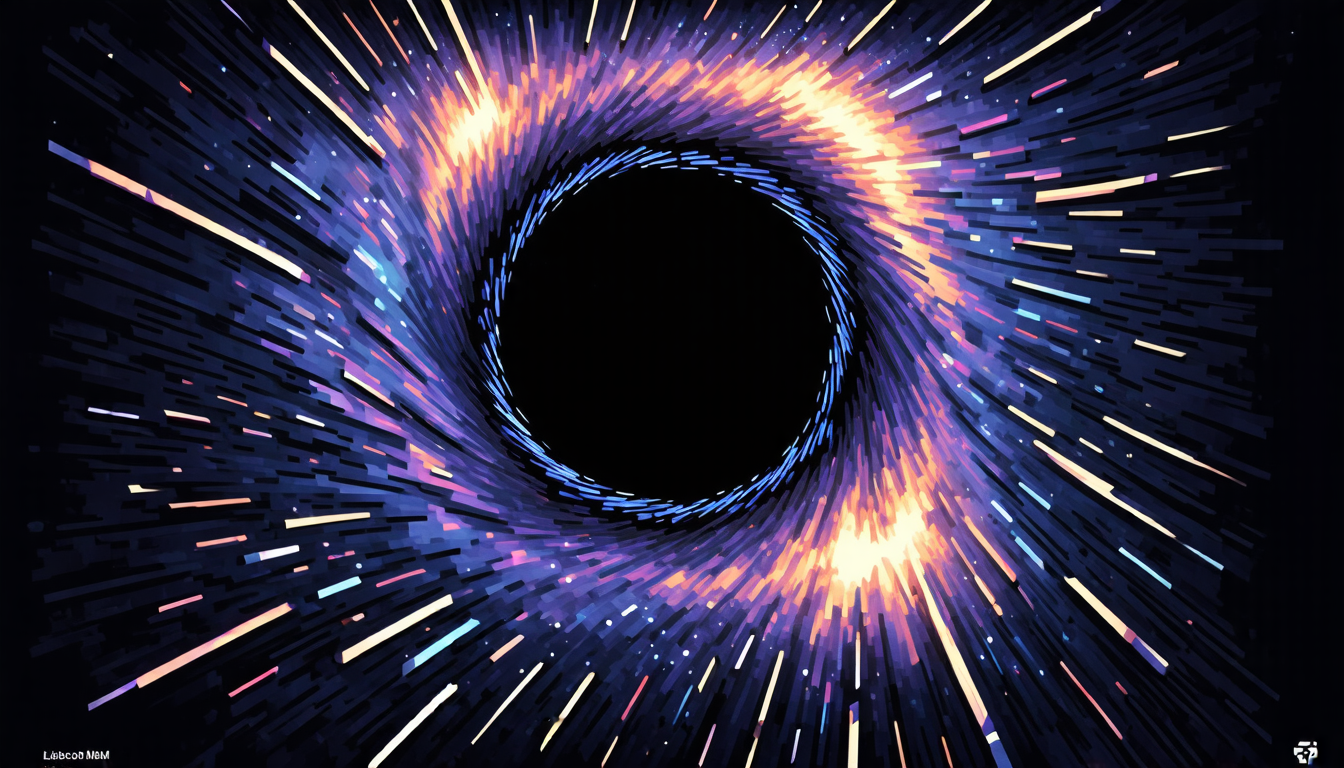
The technique used by the team is called gravitational lensing, and it’s a powerful tool for understanding the universe. Essentially, when light from a distant galaxy passes near a massive object, its path is bent and distorted, much like how a heavy book can warp a piece of paper on a table. By analyzing this bending, scientists can learn more about the mass and composition of the foreground object.
In recent years, researchers have been using gravitational lensing to study galaxies that are so distant they’re invisible to our telescopes. These galaxies are thought to be some of the most ancient and enigmatic in the universe, and by studying them, scientists hope to gain insights into how the cosmos evolved over billions of years.
The new findings, published in a recent paper, reveal that many of these distant galaxies are much more massive than previously thought. This is significant because it challenges our understanding of how galaxies grew and developed over time. The researchers used computer simulations to model the behavior of these massive galaxies, and their results suggest that they may have played a crucial role in shaping the universe as we know it today.
One of the most exciting implications of this research is that it could help us understand why some parts of the universe are more densely populated with galaxies than others. By studying the way these massive galaxies interacted with each other, scientists hope to gain insights into how the large-scale structure of the universe came to be.
The discovery also has implications for our understanding of dark matter and dark energy, two mysterious forces that are thought to make up a significant portion of the universe’s mass-energy budget. By studying the way these massive galaxies bend and distort light, researchers may be able to learn more about the properties of dark matter and dark energy, which could help us better understand the underlying physics of the universe.
The research is ongoing, but the findings so far are promising. As scientists continue to study these distant galaxies and the forces that shape them, we can expect even more exciting discoveries in the future.
Cite this article: “Unlocking the Secrets of the Cosmic Eyelash: A New Era in Gravitational Lensing Research”, The Science Archive, 2025.
Universe, Galaxies, Gravitational Lensing, Dark Matter, Dark Energy, Mass-Energy Budget, Cosmos, Astronomy, Space, Physics





