

Wednesday 09 April 2025
For decades, scientists have been working on developing autonomous vehicles that can navigate complex roads and scenarios without human intervention. Recently, a team of researchers made significant progress in this field by introducing V- Max, an open-source framework for making Reinforcement Learning (RL) practical for Autonomous Driving.
The development of RL for AD is crucial because it allows the system to learn from its experiences and adapt to new situations. However, applying RL to real-world tasks like driving introduces significant challenges, such as sample efficiency and training environments. To overcome these hurdles, V-Max combines two key elements: a hardware-accelerated AD simulator called Waymax, and ScenarioNet’s approach for fast simulation of diverse AD datasets.
Waymax is designed to facilitate large-scale experimentation with realistic scenarios, while ScenarioNet enables the creation of complex driving scenarios with varying conditions. By integrating these tools, V-Max provides researchers with a comprehensive platform for testing and improving RL-based autonomous driving systems.
The framework also includes observation functions that can be used to extract relevant information from the environment. These functions are tailored to specific aspects of the driving scenario, such as lane markings, traffic lights, or road topology. By incorporating these features, V-Max enables agents to better understand their surroundings and make more informed decisions.
To evaluate the effectiveness of V-Max, researchers tested various RL algorithms on a range of scenarios. The results showed that V-Max significantly improved the performance of these algorithms, enabling them to navigate complex environments with greater ease.
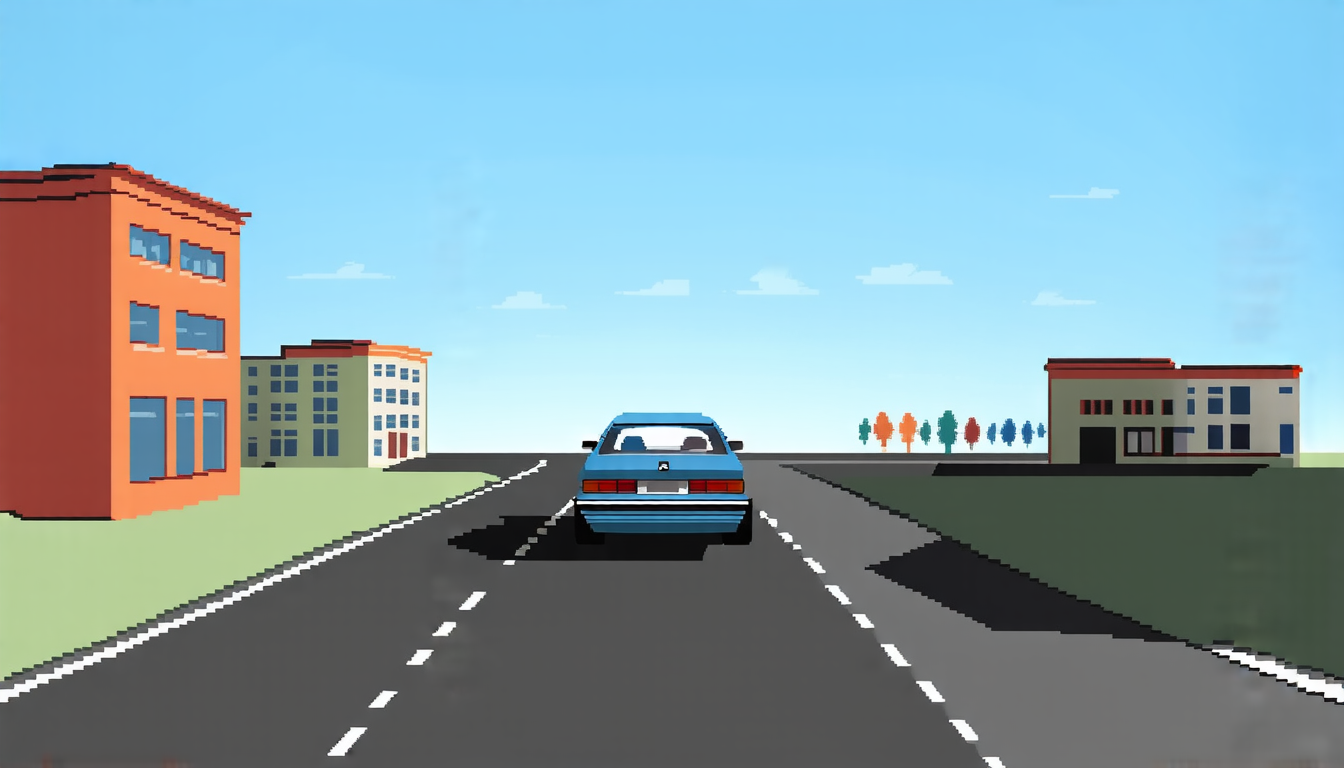
One of the key benefits of V-Max is its ability to simulate diverse driving scenarios. This allows researchers to test their agents in a wide range of conditions, from urban streets to rural highways. By doing so, they can better prepare their systems for real-world deployment and ensure that they are capable of handling unexpected situations.
Another advantage of V-Max is its open-source nature. This means that the framework is freely available to researchers and developers, who can use it to improve their own autonomous driving projects. Additionally, the community-driven approach allows users to contribute new features and scenarios, further expanding the capabilities of V-Max.
The development of V-Max marks an important milestone in the pursuit of autonomous vehicles. By providing a comprehensive platform for RL-based AD research, it has the potential to accelerate the development of safer and more efficient self-driving cars. As researchers continue to build upon this framework, we can expect to see significant advancements in the field of autonomous driving.
Cite this article: “Autonomous Driving Made Safer: A Multi-Agent Learning Approach to Mitigating Complex Traffic Scenarios”, The Science Archive, 2025.
Autonomous Vehicles, Reinforcement Learning, Open-Source Framework, Waymax, Scenarionet, Simulation, Autonomous Driving, Rl-Algorithms, Performance Evaluation, Ad Research





