

Wednesday 09 April 2025
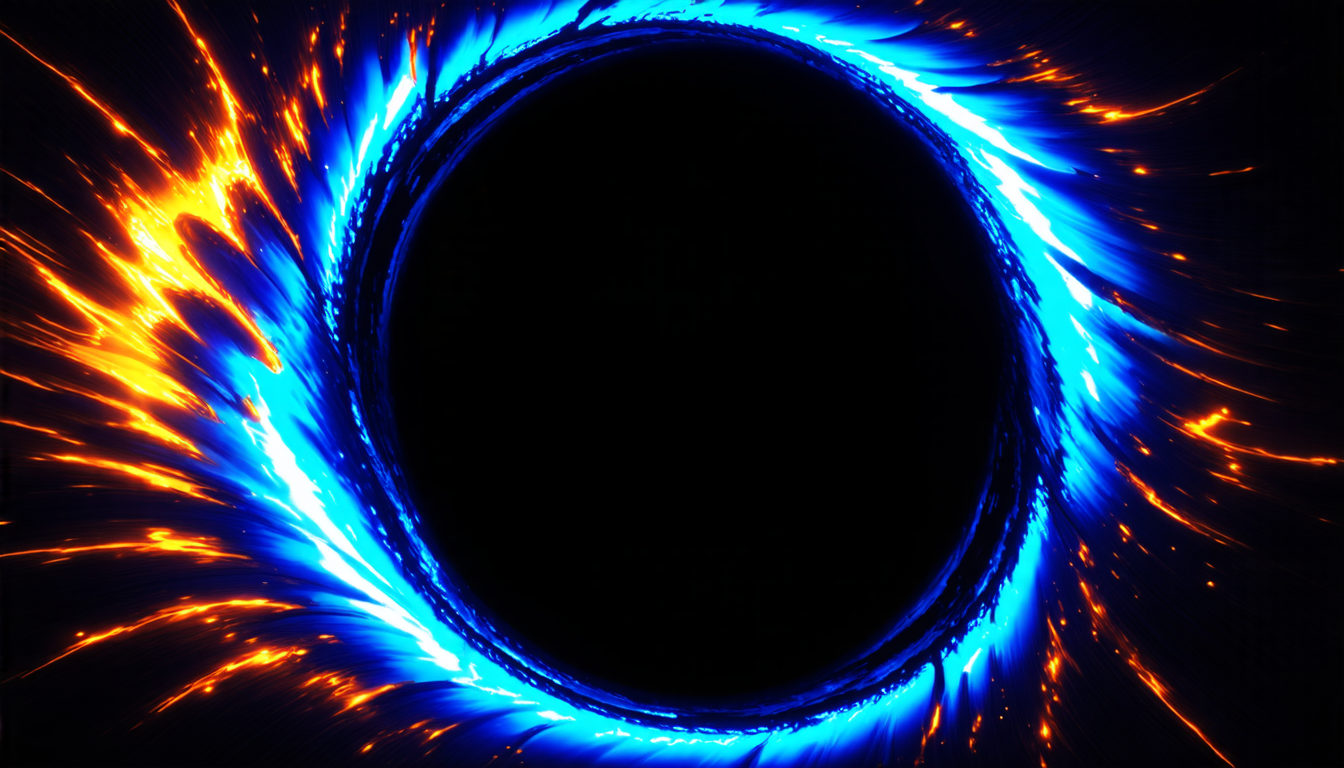
Scientists have long been fascinated by the mysteries of black holes, those regions in space where gravity is so strong that nothing, not even light, can escape once it gets too close. One of the most intriguing aspects of black holes is their ability to distort and bend the light around them, creating an effect known as gravitational lensing.
Recently, researchers have made significant progress in understanding the physics behind this phenomenon by studying the behavior of black holes with thin accretion disks. An accretion disk is a swirling disk of hot, dense gas that forms around a black hole as it feeds on nearby material.
Using complex mathematical models and powerful computers, scientists have simulated the behavior of these black holes and their accretion disks in various environments. By analyzing the results, they were able to gain insights into the way gravity warps space-time around these cosmic monsters.
One of the key findings was that the gravitational lensing effect is not uniform around the black hole. Instead, it varies depending on the angle at which light passes through the accretion disk. This means that if we were to observe a black hole from different angles, we would see different distortions in the surrounding space.
This discovery has significant implications for our understanding of the universe. For one, it suggests that gravitational lensing could be used as a tool to study black holes and their environments in greater detail than ever before. By analyzing the distortions caused by a black hole’s gravity, scientists may be able to learn more about its mass, spin, and even its internal structure.
Furthermore, this research highlights the importance of considering the effects of accretion disks on our understanding of black holes. These disks are not just passive bystanders; they play a crucial role in shaping the behavior of the black hole itself.
The study also has implications for the search for dark matter, a mysterious substance that makes up about 27% of the universe but has yet to be directly observed. Some theories suggest that dark matter could be related to the way gravity warps space-time around black holes.
While this research is still in its early stages, it marks an important step forward in our understanding of these cosmic enigmas. As scientists continue to study black holes and their accretion disks, we can expect even more surprising discoveries that will help us unravel the secrets of the universe.
Cite this article: “Unlocking the Secrets of Black Hole Accretion Disks with Bumblebee Gravity”, The Science Archive, 2025.
Black Holes, Gravitational Lensing, Accretion Disks, Space-Time, Gravity, Light, Dark Matter, Mass, Spin, Structure





