

Wednesday 09 April 2025
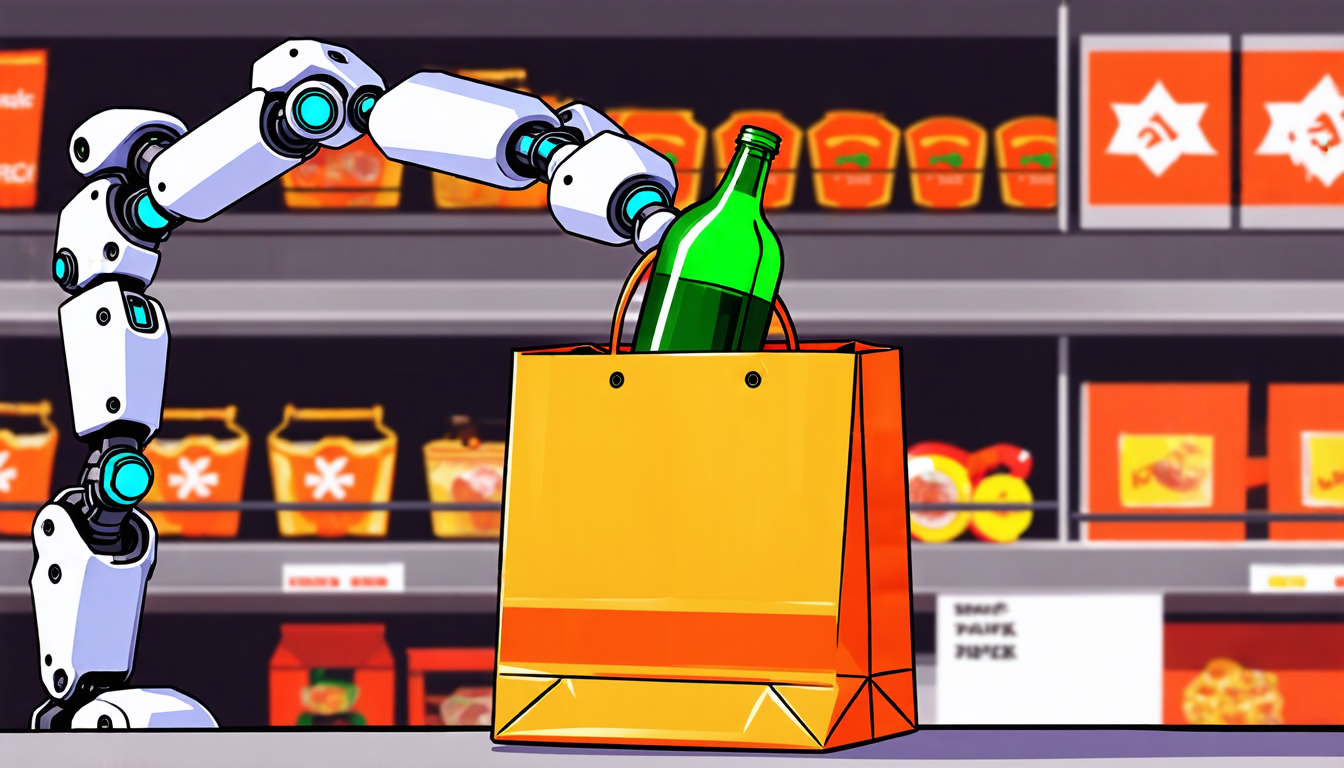
The latest innovation in robotics is a system that can pack groceries into a bag, and it’s surprisingly good at it. Researchers have developed an AI-powered approach called LLM- Pack that uses computer vision and machine learning to efficiently place items like bottles, cans, and vegetables into a bag without damaging them.
One of the biggest challenges in creating such a system is ensuring that fragile or heavy items are placed safely and securely. To address this issue, the researchers used a combination of data-driven metrics and human-annotated sequences to train their AI model. This allowed it to learn patterns and preferences for packing different types of items together.
The team tested their system with a custom dataset containing 40 scenes featuring various grocery items, ranging from six to 20 objects per scene. They found that LLM-Pack was able to propose packing sequences that were consistent with human preferences in over 80% of cases. This means that the AI model is not only efficient but also effective at mimicking how humans would pack groceries.
To put this into practice, the researchers used a Franka Research 3 robot to sort five grocery items into a bag. The results were impressive: the bag was packed efficiently and safely, with all the items intact and in their correct positions. This demonstrates that LLM-Pack is not just an academic exercise but a viable solution for real-world applications.
One potential use case for this technology could be in the development of autonomous grocery delivery systems. Imagine a future where robots can pick up your groceries from the store, pack them safely into a bag, and deliver them to your doorstep. LLM-Pack is an important step towards making such systems a reality.
The researchers are also exploring ways to improve their system by incorporating more advanced strategies for reasoning about free space in the bag. This could involve using computer vision to detect empty spaces or obstacles within the bag and adjust the packing sequence accordingly.
Overall, LLM-Pack represents a significant achievement in robotics research. By combining data-driven approaches with human-annotated sequences, the team has created an AI model that can efficiently and safely pack groceries into a bag. As this technology continues to evolve, we may see it playing a key role in revolutionizing the way we shop for groceries.
Cite this article: “Intelligent Grocery Packing: A Novel Approach to Ensuring Product Integrity Using Large Language Models and Computer Vision”, The Science Archive, 2025.
Robots, Ai-Powered, Llm-Pack, Computer Vision, Machine Learning, Grocery Packing, Autonomous Delivery, Free Space Reasoning, Robotics Research, Data-Driven Approaches.





