

Wednesday 09 April 2025
A team of researchers has developed a novel approach to testing websites, one that uses artificial intelligence to navigate and interact with online interfaces in a way that’s both efficient and effective.
The traditional method of website testing involves manually scripting tests, which can be time-consuming and prone to errors. But the new approach, which combines reinforcement learning and behavior-driven development (BDD), could revolutionize the way we test websites.
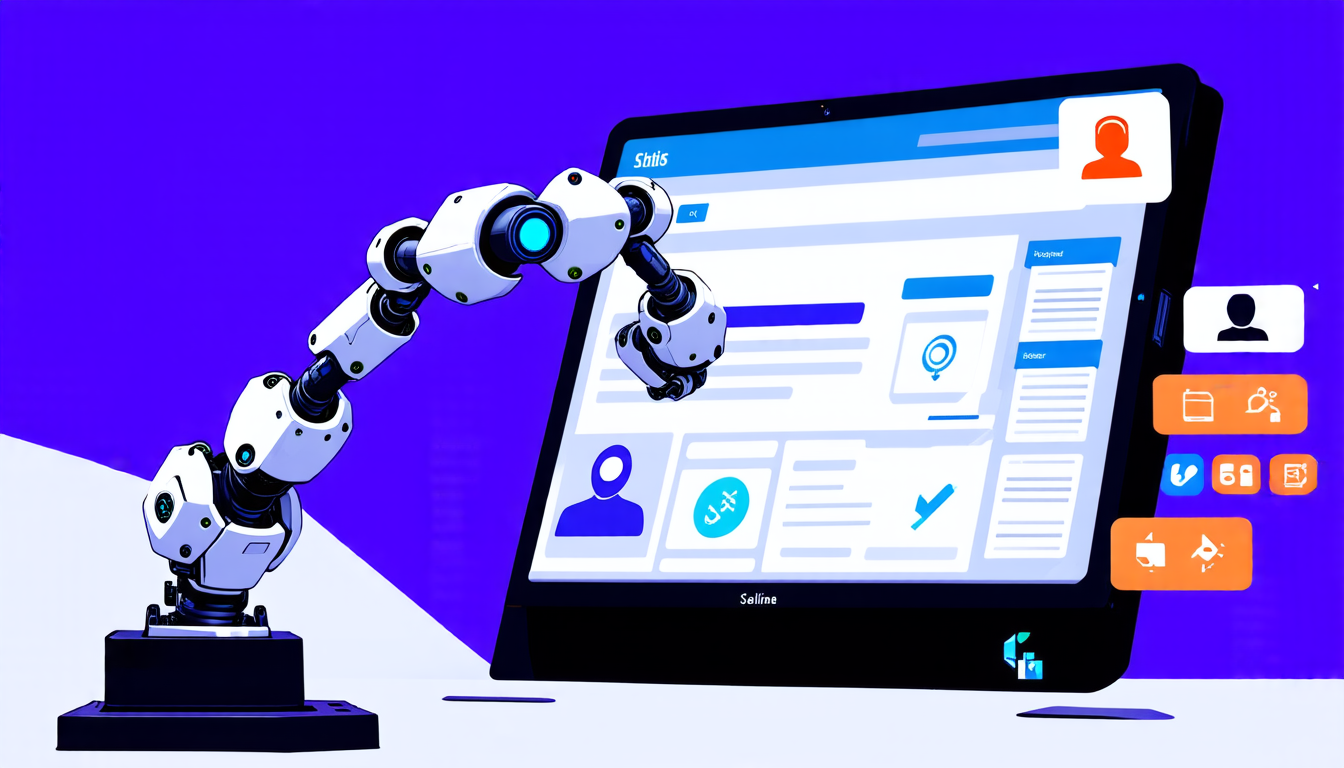
Reinforcement learning is a type of machine learning that involves training an AI agent to perform tasks by rewarding it for good behavior. In this case, the agent is trained to navigate a website, interacting with buttons, forms, and other elements in a way that’s similar to how a human would use the site.
Behavior-driven development, on the other hand, is a software development methodology that emphasizes collaboration between developers and non-technical stakeholders. It involves writing tests in a natural language style, making it easier for teams to understand what the tests are checking for.
By combining these two approaches, the researchers have created an AI agent that can learn how to interact with websites in a way that’s both efficient and effective. The agent uses reinforcement learning to discover new interactions and behaviors, while also incorporating BDD-style tests to ensure that it’s covering all the right bases.
The potential benefits of this approach are significant. For one, it could greatly reduce the time and effort required to test websites, making it easier for developers to release new features and updates more quickly. It could also help identify defects and bugs earlier in the development process, reducing the need for costly rework down the line.
But perhaps most importantly, this approach has the potential to make testing more accessible to non-technical stakeholders. By using natural language tests, it’s easier for people without a background in programming to understand what’s being tested and why.
The researchers have already demonstrated their approach on several websites, including an e-commerce platform and a social media site. In each case, the AI agent was able to learn how to interact with the site effectively, identifying defects and bugs that had gone undetected by traditional testing methods.
While there are still many challenges to overcome before this approach becomes widely adopted, it’s clear that the potential benefits are significant. As the demand for online services continues to grow, finding more efficient and effective ways to test websites will be crucial. With this new approach, developers may finally have a solution that can help them keep up with the pace of innovation.
Cite this article: “Reinforcing Web UI Testing: An Autonomous Reinforcement Learning Agent Methodology for Dynamic Web Interface Exploration and Defect Detection”, The Science Archive, 2025.
Artificial Intelligence, Website Testing, Machine Learning, Reinforcement Learning, Behavior-Driven Development, Software Development, Natural Language Tests, E-Commerce Platform, Social Media Site, Online Services.





