

Wednesday 09 April 2025
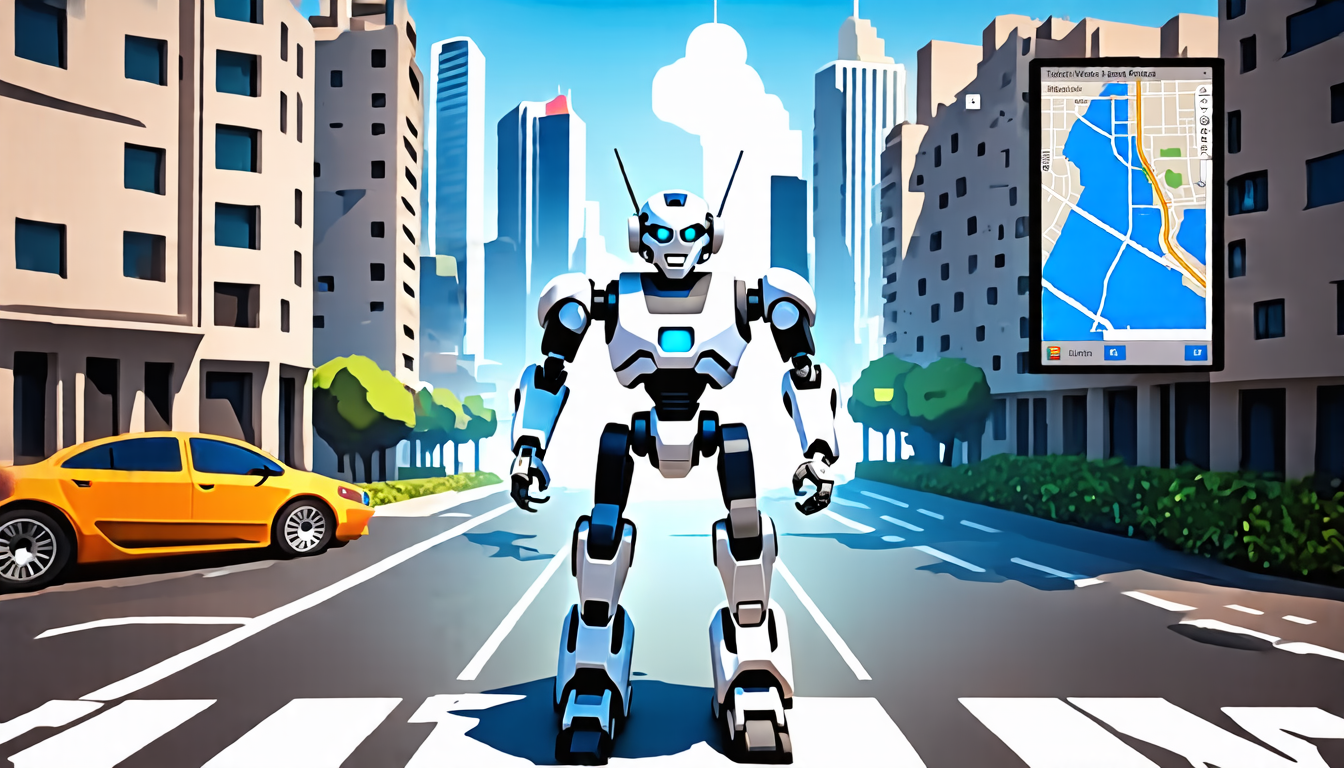
Scientists have made a significant breakthrough in the field of robotics and artificial intelligence, developing a new system that enables robots to build accurate maps of their surroundings while navigating complex environments.
The team behind this innovation has created an algorithm that can construct detailed 3D maps of spaces by combining data from multiple sensors, including cameras, lidar, and radar. This technology has the potential to revolutionize the way we design and use autonomous systems, such as self-driving cars and drones.
Traditionally, mapping algorithms have relied on a single sensor or a limited range of sensors, which can lead to incomplete or inaccurate maps. The new system, however, uses a combination of sensors to generate a more comprehensive picture of the environment. This is achieved by fusing data from different sources, allowing the algorithm to identify and correct errors.
The researchers used this technology to test its capabilities in a variety of scenarios, including urban and rural environments, as well as indoor spaces like buildings and museums. The results showed that the system was able to accurately map complex areas, even in the presence of obstacles or changing conditions.
One of the key advantages of this new algorithm is its ability to adapt to different situations. For example, it can adjust its mapping strategy based on the type of environment it is navigating, such as switching from a detailed map of a building’s interior to a broader view of the surrounding area.
The implications of this technology are far-reaching, with potential applications in fields such as search and rescue, environmental monitoring, and infrastructure inspection. It could also enable robots to perform tasks that were previously impossible, such as navigating through dense forests or underwater environments.
The development of this algorithm is an important step towards creating more sophisticated and autonomous systems. As the technology continues to evolve, we can expect to see even more innovative applications in a wide range of fields.
Cite this article: “Collaborative Urban Scene Graph Generation: A Novel Approach to Real-World Mapping and Object Detection”, The Science Archive, 2025.
Robotics, Artificial Intelligence, Mapping Algorithm, Sensors, 3D Maps, Autonomous Systems, Self-Driving Cars, Drones, Navigation, Environmental Monitoring





