

Wednesday 09 April 2025
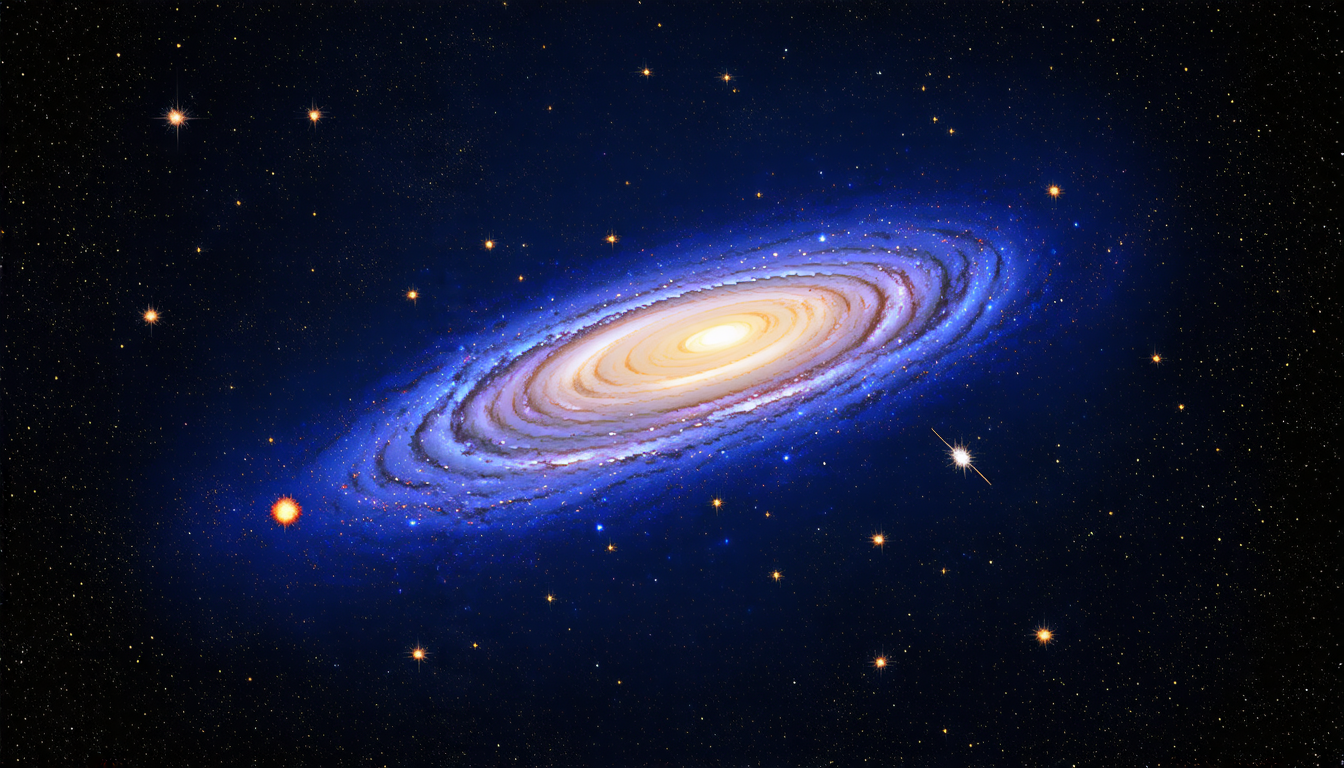
A team of astronomers has been studying the Small Magellanic Cloud, a satellite galaxy of our own Milky Way, and what they’ve found is fascinating. By analyzing the properties of star clusters within the SMC, researchers have gained new insights into the galaxy’s history and evolution.
The SMC is a small, irregular galaxy that orbits the Milky Way about 60,000 light-years away. It’s thought to be one of our closest galactic neighbors, and its proximity makes it an ideal target for astronomers studying the formation and evolution of galaxies like our own.
Using data from the Survey of the Magellanic Stellar History (SMASH) and other observations, researchers have compiled a detailed catalog of star clusters within the SMC. By analyzing the properties of these clusters – including their ages, metallicities, and distances from Earth – scientists can reconstruct the galaxy’s past and learn more about how it formed and evolved over time.
One key finding is that many of the star clusters in the SMC are much younger than previously thought. In fact, some are only a few hundred million years old, which is surprisingly young considering the galaxy is estimated to be around 10 billion years old. This suggests that the SMC has experienced a recent burst of star formation, possibly triggered by interactions with other galaxies.
Another interesting discovery is that many of these young clusters are located in the outer regions of the SMC, far from its center. This is unusual, as stars and star clusters typically form in denser regions closer to the galaxy’s core. It seems that the gravitational forces at play may have driven some of these clusters outward, creating new opportunities for star formation.
The researchers also found that many of the star clusters in the SMC are more metal-rich than expected, meaning they contain higher levels of elements heavier than hydrogen and helium. This could be a sign that the galaxy has been enriched by material from other galaxies or supernovae explosions.
These findings offer valuable insights into the complex history of the Small Magellanic Cloud. By studying this small but fascinating galaxy, scientists can gain a better understanding of how our own Milky Way came to be and how it will evolve in the future.
The research highlights the importance of continued observation and study of nearby galaxies like the SMC. As new data becomes available, scientists will continue to refine their understanding of these objects and uncover new secrets about the universe we live in.
Cite this article: “Tides of Change: Uncovering the Hidden History of the Small Magellanic Cloud”, The Science Archive, 2025.
Galaxies, Small Magellanic Cloud, Star Clusters, Milky Way, Evolution, Formation, Astronomers, Research, Satellite Galaxy, Galaxy History





