
Wednesday 09 April 2025
The quest for seamless, omnipresent connectivity has long been a holy grail of wireless technology. And now, researchers have taken a significant step closer to achieving that goal by developing a system that integrates sensing, communication, and power transfer in a single device.
At the heart of this innovation is the concept of Integrated Sensing and Communication (ISAC), which enables devices to simultaneously perform multiple functions while sharing the same physical space. This could revolutionize everything from smart homes to industrial automation, where devices need to communicate with each other seamlessly without sacrificing performance.
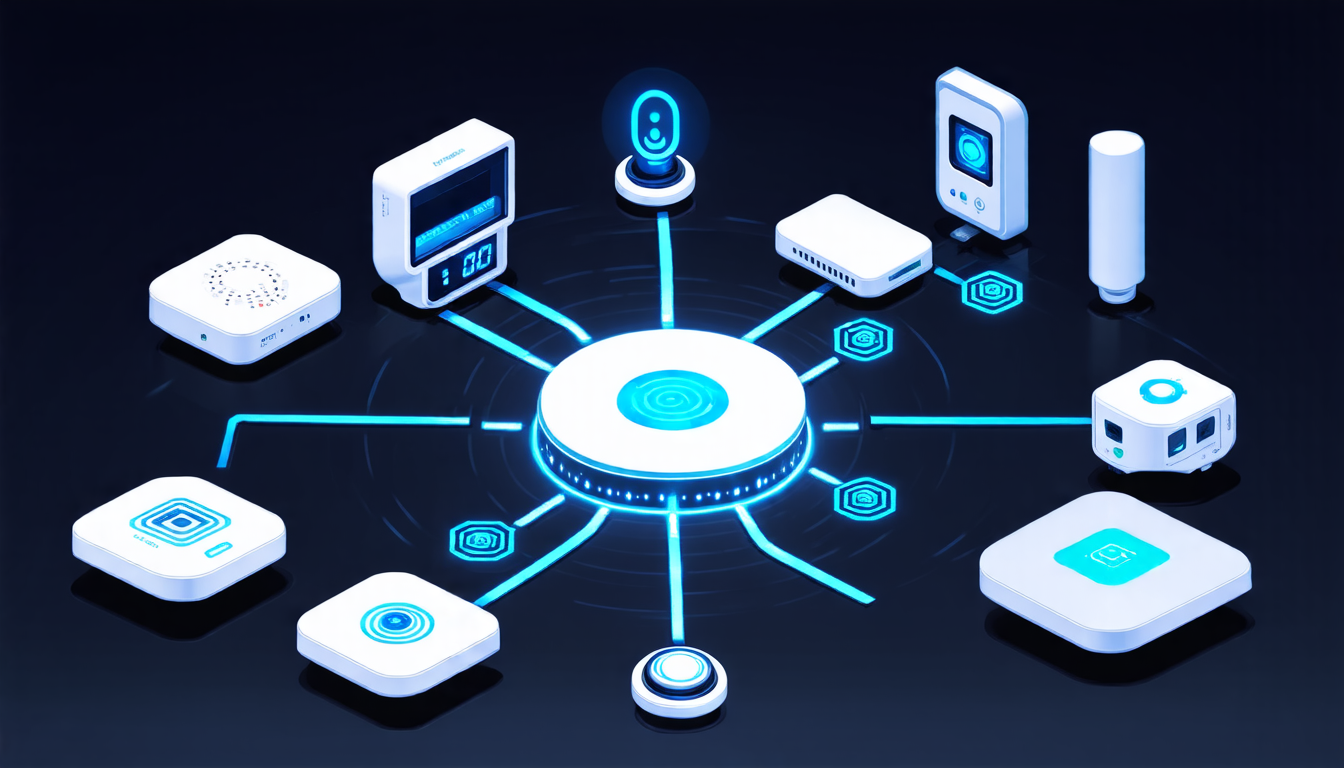
The system works by using a base station that can transmit information, power, and sensing signals to a group of IoT nodes. These nodes are equipped with advanced beamforming technology, which allows them to receive and process multiple types of signals simultaneously. This means that the same node can receive data from a sensor, communicate with another device, and even recharge its batteries wirelessly – all at the same time.
The key innovation here is the way the system optimizes resource allocation to achieve the best possible performance. By dynamically allocating power and beamforming resources, the base station ensures that each node receives the right amount of energy and information to perform its intended function.
This technology has far-reaching implications for a wide range of applications. In smart homes, ISAC could enable devices to communicate with each other seamlessly, allowing for advanced automation and control systems. In industrial settings, it could improve efficiency by enabling machines to communicate with each other in real-time, reducing downtime and increasing productivity.
But the benefits don’t stop there. The system’s ability to transmit power wirelessly also opens up new possibilities for battery-free IoT devices. Imagine a world where sensors and actuators can be deployed anywhere, without the need for cumbersome batteries or cables. This could have huge implications for fields like healthcare, where wireless sensors could monitor patients remotely and provide real-time feedback.
Of course, there are still significant technical hurdles to overcome before ISAC becomes a reality. But the potential benefits are so compelling that it’s likely we’ll see significant advancements in this area over the next few years.
One of the most promising aspects of this technology is its ability to adapt to changing environments and scenarios. By dynamically adjusting power allocation and beamforming, the system can optimize performance in real-time – whether that means responding to changes in network traffic or adapting to new devices entering the network.
Cite this article: “Unlocking the Power of ISCAP: A Game-Changing Approach to Wireless Sensing and Power Transfer”, The Science Archive, 2025.
Wireless Technology, Integrated Sensing And Communication, Iot Nodes, Beamforming, Power Transfer, Smart Homes, Industrial Automation, Battery-Free Devices, Wireless Sensors, Real-Time Feedback, Dynamic Allocation.