

Wednesday 09 April 2025
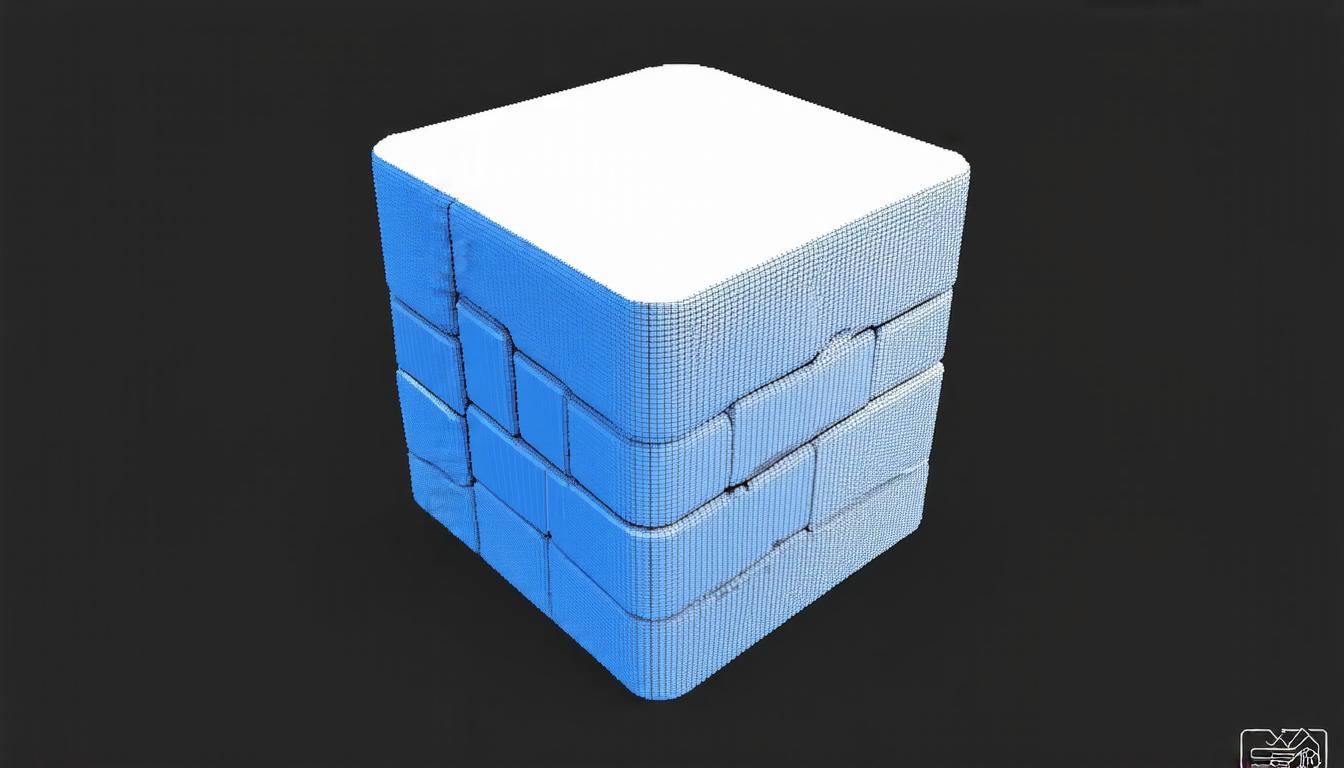
Scientists have been working on a revolutionary new way to generate three-dimensional point clouds, which are used to create detailed images of objects in computer graphics and virtual reality. The new method, called PointARU, uses an autoregressive approach to progressively refine and upscale the point cloud, resulting in highly realistic and accurate 3D models.
Point clouds are collections of points in space that describe the shape and structure of an object. They’re commonly used in fields like computer-aided design, engineering, and architecture to create detailed 3D models of buildings, machines, and other objects. However, generating high-quality point clouds can be a time-consuming and labor-intensive process.
PointARU changes this by using a novel approach that combines the strengths of autoregressive modeling with specialized networks designed specifically for handling irregularly structured data like point clouds. The model is trained on large datasets of 3D shapes, allowing it to learn patterns and relationships between points in the cloud.
The key innovation behind PointARU is its ability to progressively refine and upscale the point cloud, rather than generating it all at once. This allows the model to capture subtle details and textures that might be lost if the entire cloud were generated simultaneously. The result is a highly realistic 3D model that can be used in a wide range of applications.
One of the major advantages of PointARU is its ability to handle complex, irregularly shaped objects with ease. Traditional methods for generating point clouds often struggle with these types of shapes, resulting in inaccurate or incomplete models. By using an autoregressive approach, PointARU can more easily capture the intricate details and curves of these objects.
The potential applications of PointARU are vast and varied. In fields like computer-aided design and engineering, it could be used to create highly detailed and accurate 3D models of buildings, machines, and other objects. In virtual reality and gaming, it could be used to generate realistic environments and characters. Even in medicine, PointARU could be used to create detailed 3D models of organs and tissues for use in surgical planning and training.
PointARU is not without its challenges, however. The model requires large amounts of computing power and memory to train, making it inaccessible to researchers with limited resources. Additionally, the model’s performance can vary depending on the quality and size of the input data.
Cite this article: “Revolutionizing 3D Point Cloud Generation: A Breakthrough in Autoregressive Up-Sampling”, The Science Archive, 2025.
Pointaru, 3D Modeling, Computer Graphics, Virtual Reality, Point Clouds, Autoregressive Approach, Neural Networks, Machine Learning, Computational Power, Memory Requirements





