
Wednesday 09 April 2025
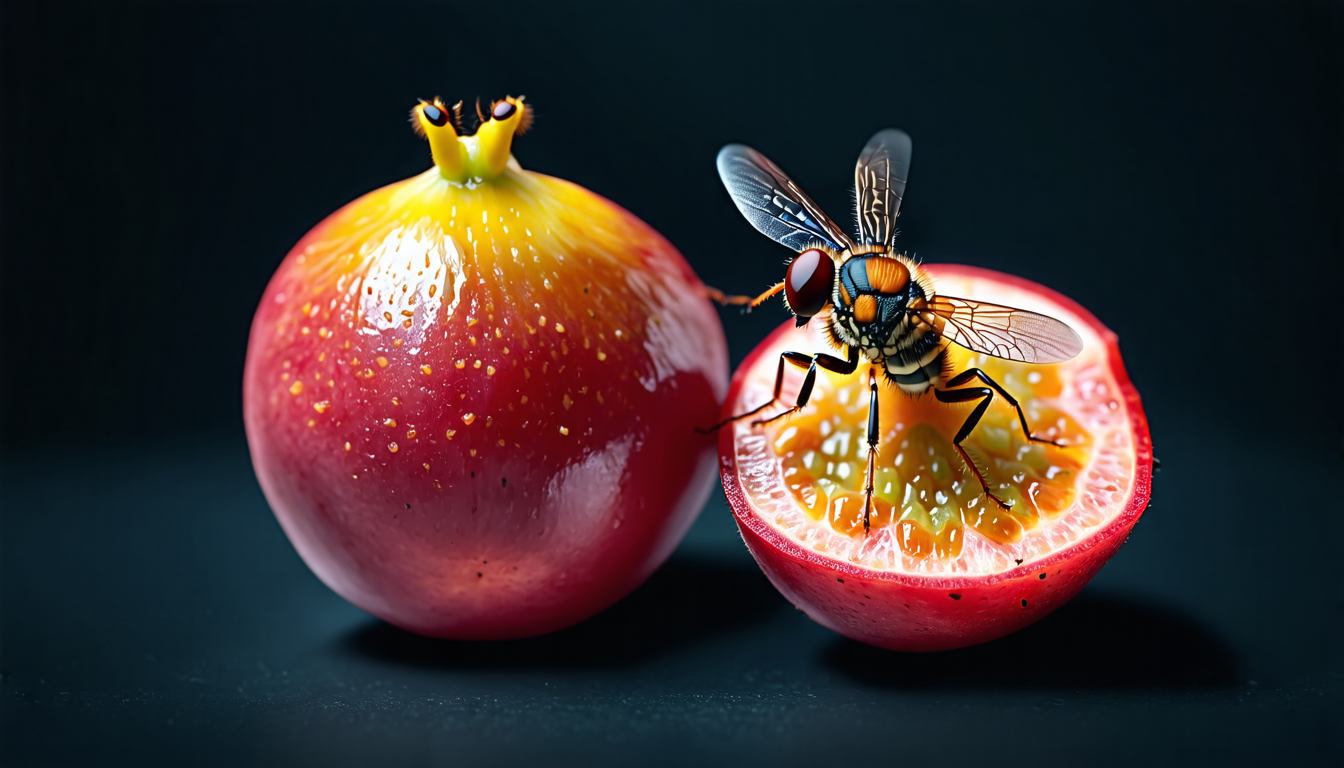
The quest to classify tiny creatures has just gotten a whole lot easier, thanks to some clever computer magic. Researchers have developed a new approach that uses deep learning methods and specially designed features to identify species of fruit flies in the Anastrepha pseudoparallela group.
These pesky insects are notorious for their ability to destroy crops, particularly passion fruits, and can cause significant economic losses. Identifying them accurately is crucial for effective pest management, but it’s no easy task – the different species look eerily similar, making it difficult even for experts to tell them apart.
The new approach uses a technique called transfer learning, which allows the computer to learn from existing knowledge and apply it to a new problem. The researchers designed special features based on the structure of the fruit flies’ wings, which contain unique patterns that can be used to identify each species.
By combining these features with deep learning algorithms, the team was able to develop a system that can accurately classify even rare species of fruit flies. In fact, they found that their approach outperformed traditional methods in identifying specimens from the Anastrepha pseudoparallela group.
But why is this important? Accurate identification of fruit fly species is crucial for understanding their behavior, ecology, and evolution, which can inform strategies to control their populations and protect crops. It also has implications for conservation efforts, as many species of fruit flies are found only in specific regions and are threatened by habitat destruction and climate change.
The researchers hope that their approach will be useful not just for identifying fruit fly species, but also for other applications where small differences between similar-looking individuals need to be detected. They envision a future where computers can help us better understand the natural world, and make more informed decisions about how to protect it.
In this digital age, we’re increasingly reliant on machines to help us tackle complex problems. And while there’s still much to be learned from these clever creatures, it’s exciting to think that our new allies in the quest for knowledge might just be the ones with the most advanced algorithms and biggest brains – the computers themselves.
Cite this article: “Unlocking the Secrets of Fruit Fly Identification: A Novel Approach Using Autoencoders and Deep Learning”, The Science Archive, 2025.
Fruit Flies, Species Identification, Deep Learning, Transfer Learning, Computer Algorithms, Pest Management, Crop Protection, Conservation, Ecology, Evolution.