

Wednesday 09 April 2025
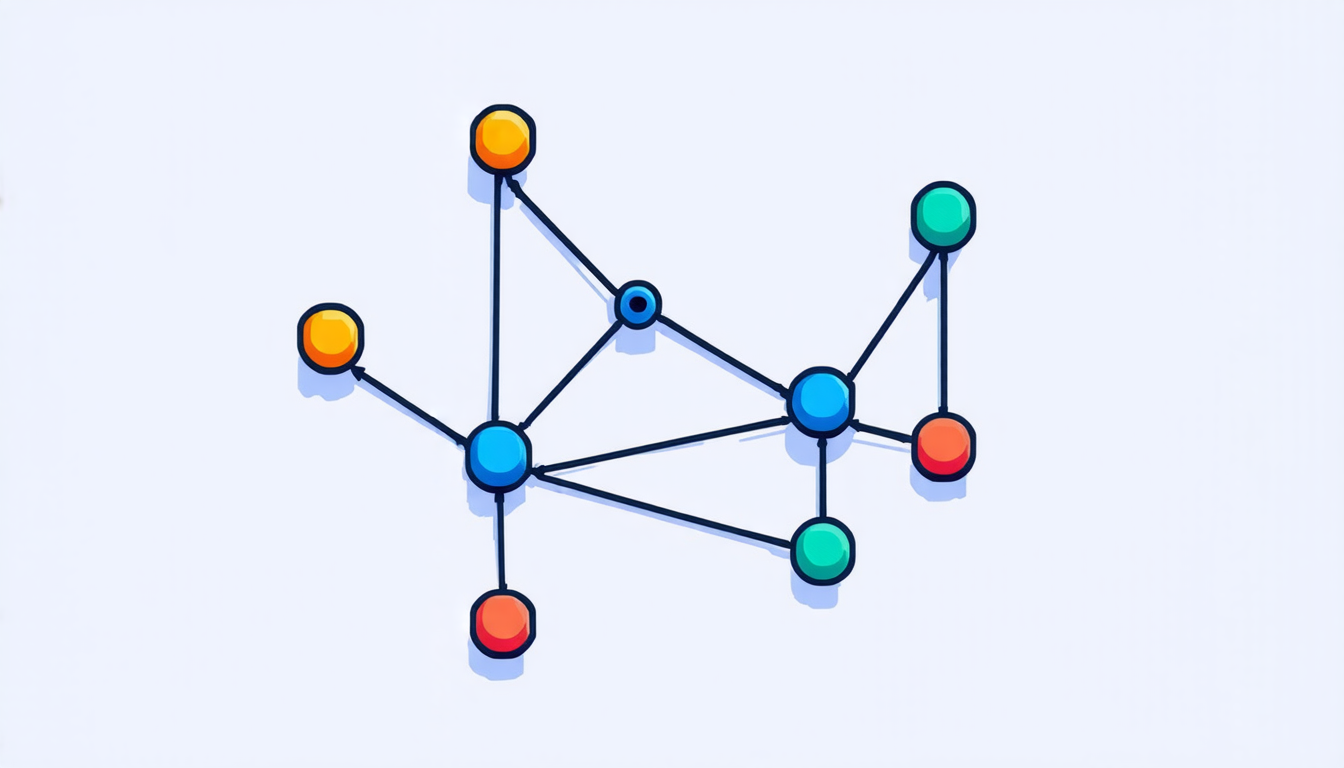
Mathematicians have long been fascinated by the properties of graphs, which are visual representations of relationships between objects. One particularly intriguing aspect of graph theory is the concept of cospectral graphs, which are two or more graphs that share the same spectrum – a set of numbers that describe the properties of the graph’s eigenvalues.
Recently, researchers have made significant progress in understanding how to construct cospectral graphs using a process called switching. This technique involves altering the connections between vertices in a graph while preserving its overall structure, effectively creating new graphs with identical spectral properties.
One approach to switching is known as WQH-switching, which involves making systematic changes to the connections within specific blocks of vertices. By applying this method, researchers have been able to generate an astonishing number of cospectral graphs – over 2 million for a graph of just 10 vertices!
But here’s the fascinating part: not all switching methods produce the same results. In fact, some methods can create graphs that are isomorphic, meaning they can be transformed into one another through a series of vertex permutations. However, in the case of WQH-switching, researchers have discovered that it is possible to construct graphs where no isomorphism fixes the switching set.
This finding has significant implications for our understanding of graph theory and its applications. For instance, it highlights the importance of considering multiple switching methods when constructing cospectral graphs, as different approaches can produce vastly different results.
The study also sheds light on the nature of graph symmetry, which is crucial in many areas of mathematics and computer science. By exploring the properties of WQH-switching, researchers are gaining a deeper understanding of how graphs can be transformed and manipulated to reveal new insights into their underlying structure.
As researchers continue to delve deeper into the world of graph theory, they are uncovering an astonishing array of patterns and structures that underlie seemingly simple networks. The discovery of cospectral graphs through WQH-switching is just one example of the many exciting developments in this field, and it has the potential to open up new avenues for research and innovation.
Cite this article: “Unlocking the Secrets of Graph Isomorphism: A New Approach to Counting Cospectral Graphs”, The Science Archive, 2025.
Graph Theory, Cospectral Graphs, Switching, Wqh-Switching, Graph Spectrum, Eigenvalues, Vertex Permutations, Isomorphism, Graph Symmetry, Network Analysis.





