

Wednesday 09 April 2025
As we strive for more efficient and secure ways to share data among devices, researchers have made significant strides in developing novel communication protocols that can significantly reduce the amount of data transmitted while maintaining model accuracy.
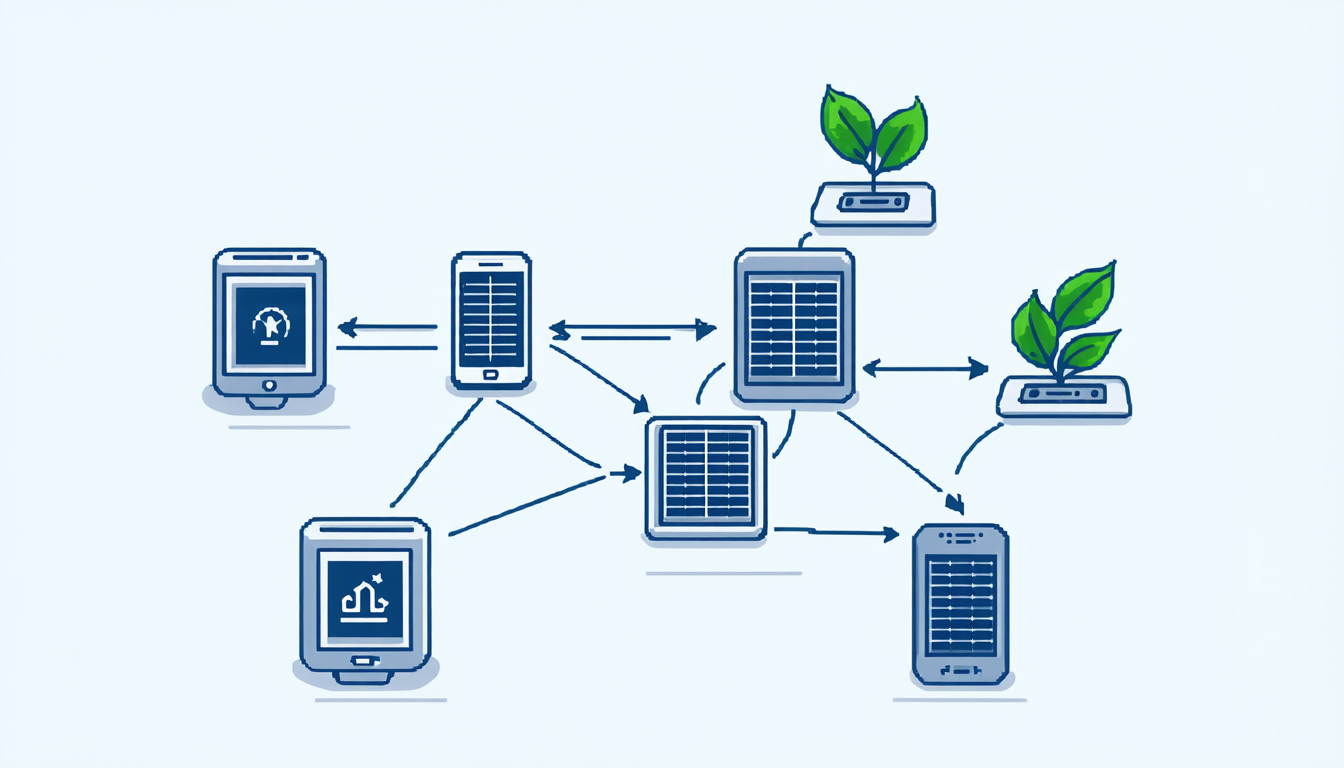
One such approach is a fast/slow communication protocol, which prioritizes transmitting local knowledge, or filter atoms, over entire models. This method has shown promising results in reducing communication overhead without compromising performance. By transmitting only the necessary information, devices can conserve energy and bandwidth, making it an attractive solution for applications where resources are limited.
Another technique is to create additional clients at no extra cost by decomposing convolutional filters into a linear combination of subspace components, or filter atoms. This approach not only reduces the number of parameters but also enables more efficient aggregation of local models. By generating multiple latent clients, the algorithm can better adapt to diverse data distributions and improve overall model performance.
To further optimize communication efficiency, researchers have also explored the use of sparse coding techniques. These methods aim to represent complex signals using a smaller set of atoms, reducing the amount of data required for transmission. In addition, by incorporating pruning strategies, devices can eliminate unnecessary parameters and further minimize communication costs.
Recent experiments have demonstrated the effectiveness of these approaches in various applications. For instance, on the CIFAR-10 dataset, the fast/slow protocol achieved a test accuracy of 94.25% with only 12 filter atoms, while Ditto’s hyper-parameters required 100 clients to achieve similar results. On more challenging tasks like Tiny-ImageNet, larger numbers of filter atoms were necessary to achieve accurate results.
The development of these efficient communication protocols holds significant potential for real-world applications. As the Internet of Things (IoT) continues to expand and devices become increasingly interconnected, reducing data transmission can conserve energy, extend battery life, and improve overall system performance.
Moreover, these techniques can also be applied in edge computing scenarios where devices must process large amounts of data locally without transmitting sensitive information to central servers. By optimizing communication overhead, devices can operate more efficiently, reducing latency and enhancing security.
While these advances are promising, there is still much work to be done to fully harness the potential of these approaches. Researchers continue to refine their methods, exploring new strategies for sparse coding, filter atom decomposition, and fast/slow protocols. As these developments unfold, we can expect even more innovative solutions to emerge, further shaping the future of data communication in a rapidly evolving digital landscape.
Cite this article: “Accelerating Federated Learning with Filter Decomposition and Fast/Slow Communication Protocol”, The Science Archive, 2025.
Data Communication, Efficient Protocols, Iot, Edge Computing, Model Accuracy, Filter Atoms, Sparse Coding, Pruning Strategies, Latency, Security





