

Wednesday 09 April 2025
The rise of large language models (LLMs) has opened up new avenues for understanding how opinions form and evolve within social networks. A recent study has developed a simulator that incorporates these LLMs to model competing influences within online communities.
The simulator, which can be used to study opinion dynamics in various domains, including politics, health, and misinformation, allows researchers to explore the complex interactions between individuals and groups within a network. By integrating established opinion dynamics principles with state-of-the-art LLMs, the tool enables the analysis of societal phenomena without requiring extensive coding expertise.
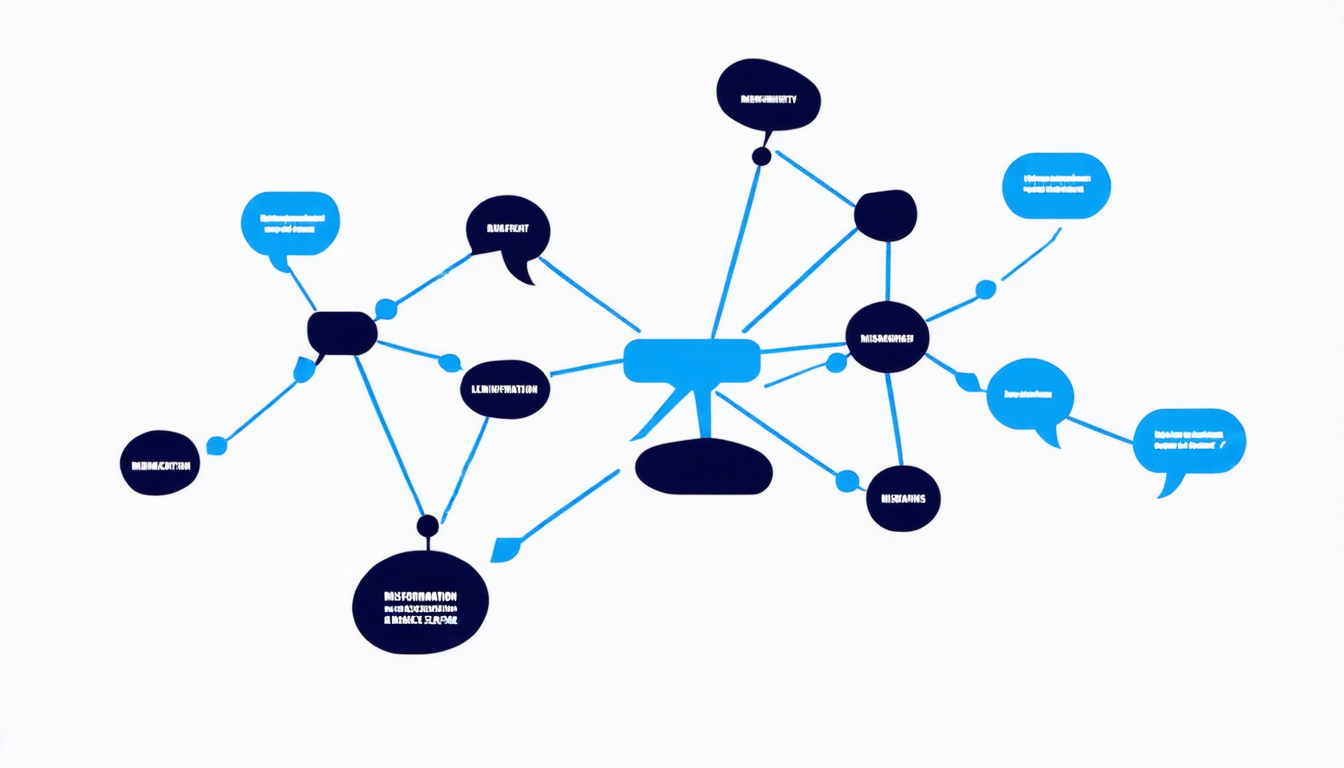
One of the key features of the simulator is its ability to model the propagation of influence through networks. This is achieved by having agents, represented by LLMs, broadcast messages to other nodes in the network. Each node then adjusts its opinion based on the messages it receives and its predispositions towards different perspectives.
The study’s findings suggest that the LLM-based agents are able to exhibit complex behaviors, such as adapting their influence strategies and forming coalitions with other agents. This is particularly evident when studying the dynamics of misinformation spread, where the simulator shows how a single agent can rapidly spread false information throughout a network.
Moreover, the simulator highlights the importance of resource management in influencing opinion formation. In the study, the LLM-based agents operating under resource constraints must strategically allocate their messaging efforts to maximize their influence. This adds a new layer of complexity to the dynamics of opinion formation, as agents must balance their desire to spread their message with the need to conserve resources.
The implications of this research are far-reaching, with potential applications in fields such as public health, where the spread of misinformation can have severe consequences. By better understanding how opinions form and evolve within social networks, researchers may be able to develop more effective strategies for mitigating the impact of misinformation.
Furthermore, the simulator’s ability to model complex social dynamics could also inform the development of artificial intelligence systems that mimic human-like decision-making in complex environments. As LLMs continue to advance, their potential applications will only grow, and this research provides a valuable step towards unlocking their full potential.
The study’s authors are now working on improving the simulator’s prompting strategies and providing more control for users. As the technology continues to evolve, it is likely that we will see even more innovative applications of LLMs in social dynamics research.
Cite this article: “Unleashing AIs Social Influence: A Simulator for Studying Opinion Dynamics in the Age of Large Language Models”, The Science Archive, 2025.
Large Language Models, Opinion Dynamics, Social Networks, Misinformation, Public Health, Artificial Intelligence, Decision-Making, Complex Systems, Resource Management, Simulator





