

Wednesday 09 April 2025
In the pursuit of efficient cutting and packing, researchers have been tackling a long-standing problem: how to minimize waste when slicing through sheets of raw material. A recent breakthrough in this field has shed new light on the optimal strategies for reducing scrap, with significant implications for industries that rely heavily on cutting and processing materials.
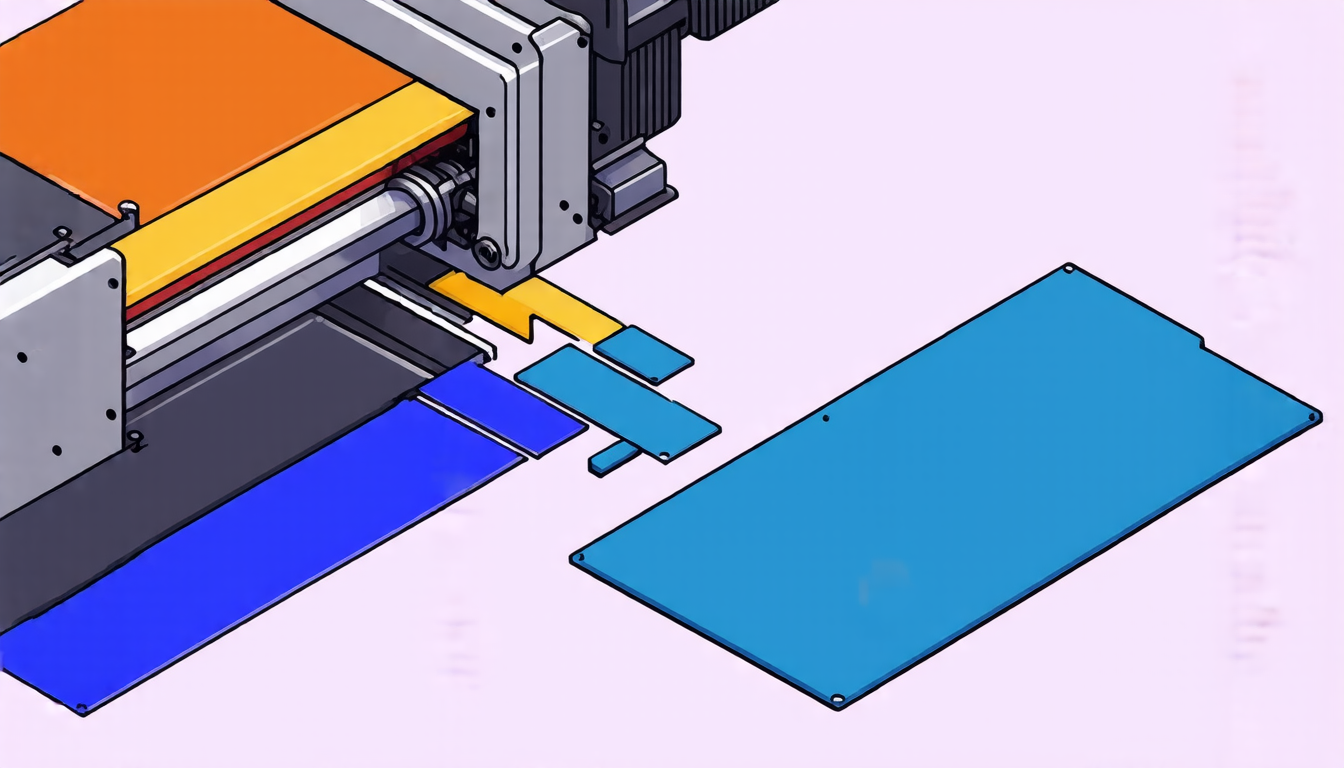
The two-dimensional strip packing problem (2DSP) is a classic challenge in operations research, where rectangular items must be arranged within a fixed width to maximize space utilization. The complexity of the problem arises from the need to balance competing goals: minimizing waste while ensuring efficient use of material. In industries such as furniture manufacturing, metal processing, and glass production, precise cutting and packing can make all the difference in reducing waste and increasing productivity.
A new algorithmic approach has been developed to tackle this challenge head-on. By combining a beam search with parallel processing, researchers have created an efficient method for solving the 2DSP. The strategy involves iteratively exploring possible solutions, pruning non-optimal branches, and refining the search space to converge on the most effective packing arrangement.
One of the key innovations lies in the use of parallel processing, which allows the algorithm to explore multiple solutions concurrently. This enables the algorithm to quickly identify optimal arrangements that would be difficult or impossible to discover using traditional sequential methods.
The benefits of this approach are already being realized in various industries. For instance, furniture manufacturers can now optimize their cutting and packing processes to minimize waste and reduce material costs. Similarly, metal processing plants can streamline their operations by reducing the time spent on cutting and arranging materials.
While the algorithm has shown impressive results, there is still room for further refinement. Future research will focus on adapting the approach to more complex scenarios, such as three-dimensional packing problems or irregularly shaped items. Additionally, researchers will investigate ways to integrate machine learning techniques into the algorithm to further improve its performance.
The potential impact of this breakthrough extends beyond industry, however. The underlying principles can also be applied to other areas where efficient cutting and packing are critical, such as logistics, transportation, and even urban planning. By developing more sophisticated algorithms for solving complex problems like 2DSP, researchers can unlock new efficiencies and innovations that have far-reaching consequences.
As the algorithm continues to evolve, it is likely to play an increasingly important role in shaping the way we design, manufacture, and manage resources. By tackling the challenges of cutting and packing with renewed vigor, scientists are paving the way for a more efficient, sustainable, and productive future.
Cite this article: “Beam Search Revolutionizes Strip Packing Efficiency”, The Science Archive, 2025.
Cutting, Packing, Optimization, Algorithm, Operations Research, Waste Reduction, Material Utilization, Furniture Manufacturing, Metal Processing, Glass Production





