

Wednesday 09 April 2025
The quest for a more realistic in vitro model of biological barriers has led researchers to develop innovative solutions, and their latest achievement is a multiwell plate that can measure transepithelial electrical resistance (TEER) with unprecedented precision.
For years, scientists have struggled to create accurate models of human tissues, which are essential for testing new drugs and understanding the intricacies of cellular behavior. One major hurdle has been replicating the complex interactions between cells and their microenvironments, particularly in epithelial and endothelial barriers, such as those found in the gut and blood-brain barrier.
The problem with current methods lies in their inability to accurately measure TEER, which is crucial for assessing the integrity of these biological barriers. Conventional techniques often involve complex and time-consuming procedures, or rely on indirect measurements that lack precision. The result is a lack of confidence in the data obtained from these experiments.
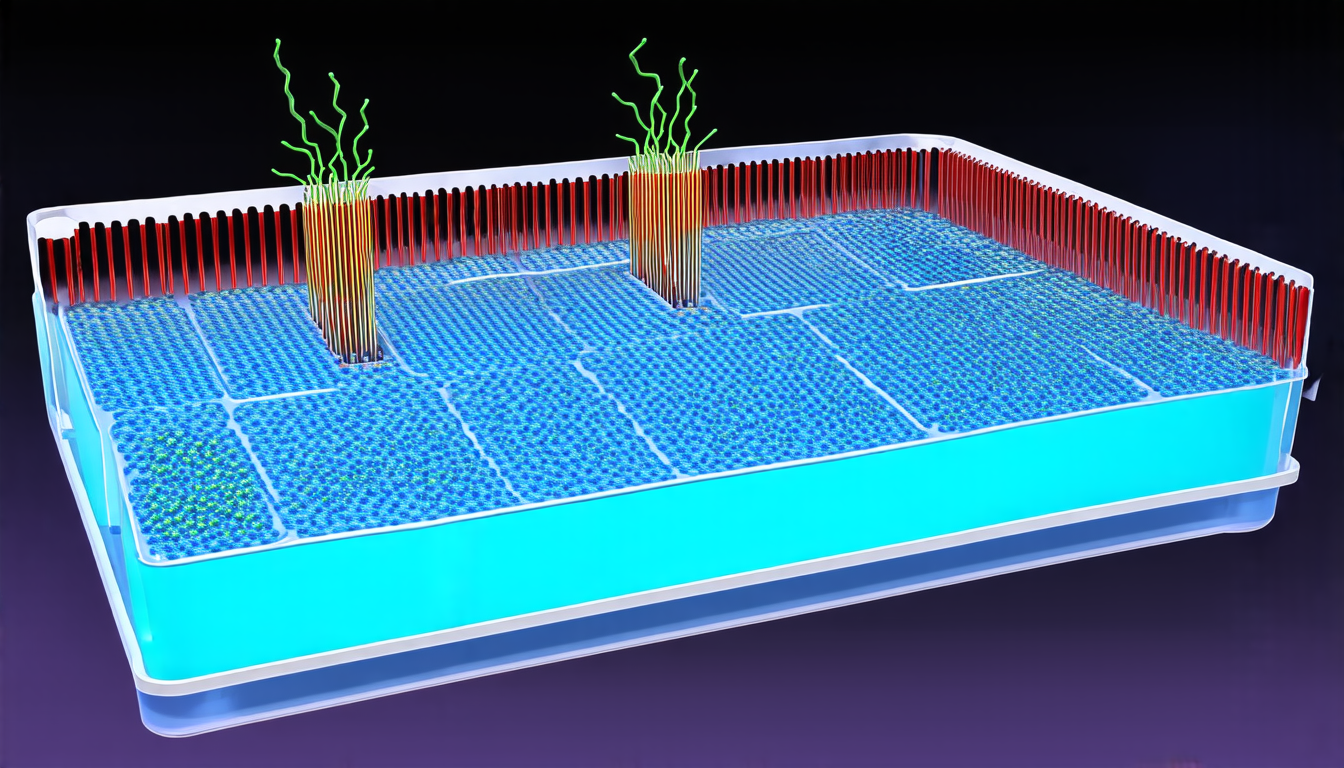
Enter the new multiwell plate design, which promises to revolutionize the field by providing high-throughput TEER measurements with unprecedented accuracy. By integrating biplanar electrodes into the wells, researchers can non-invasively monitor the electrical properties of epithelial and endothelial barriers in real-time, allowing for a more comprehensive understanding of their behavior.
The key innovation lies in the plate’s ability to accommodate different cell types and microenvironments, enabling researchers to study various biological barriers with precision. This flexibility is particularly important when considering the vast array of cellular interactions and responses that occur within these complex systems.
One notable application of this technology is in the field of drug development, where it can be used to test the efficacy and safety of new compounds. By simulating the conditions found in human tissues, researchers can gain valuable insights into how drugs interact with biological barriers, ultimately leading to more effective treatments.
Another significant benefit is the potential for personalized medicine, where this technology could be used to create tailored models of individual patients’ biological barriers. This would enable researchers to test therapies in a highly accurate and relevant environment, increasing the likelihood of successful treatments.
While there are still many challenges to overcome before this technology becomes widely adopted, the implications are undeniably exciting. By providing a more realistic and precise means of studying biological barriers, scientists can accelerate our understanding of human disease and develop new treatments that target these complex systems with unprecedented accuracy.
As researchers continue to refine this technology, it’s likely that we’ll see significant advancements in our ability to model and understand the intricacies of human biology.
Cite this article: “Breaking Down Barriers: Advances in Measuring Cellular Integrity on a Chip”, The Science Archive, 2025.
Biological Barriers, Multiwell Plate, Teer, Epithelial Barriers, Endothelial Barriers, Drug Development, Personalized Medicine, Cell Culture, Microenvironments, Electrical Resistance





