

Wednesday 09 April 2025
Scientists have long struggled to develop artificial intelligence that can learn and adapt in complex environments, particularly those filled with visual distractions. These distractions can come in many forms, such as moving objects or changing backgrounds, and they can significantly impede an AI’s ability to make decisions.
Recently, a team of researchers has made significant progress in developing an AI system that can learn to navigate these types of environments. The system, called Disentangled World Models (DisWM), uses a combination of machine learning techniques and computer vision to disentangle the various components of a visual environment.
In essence, DisWM is able to break down complex scenes into their individual elements, such as objects, textures, and colors. This allows it to focus on the most relevant information when making decisions, rather than being overwhelmed by the sheer amount of data presented.
To achieve this level of disentanglement, DisWM uses a technique called offline-to-online latent distillation. This involves pre-training the AI system on a large dataset of videos, and then fine-tuning it on specific tasks using real-time visual feedback.
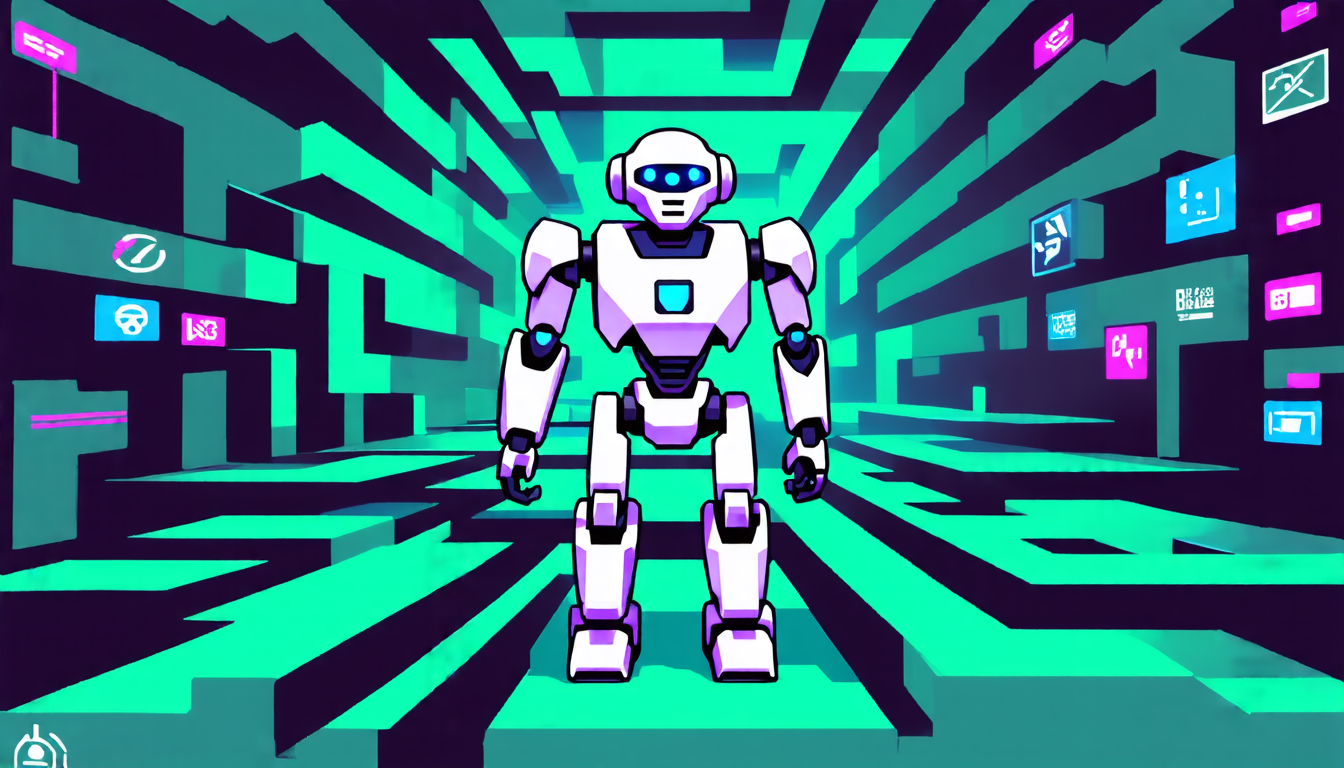
The researchers tested DisWM in several challenging environments, including virtual reality simulations and video games. In each case, the system was able to learn and adapt quickly, even when faced with complex visual distractions.
One of the most impressive aspects of DisWM is its ability to generalize across different environments. This means that once it has learned how to navigate a particular environment, it can transfer this knowledge to new situations without additional training.
The potential applications of DisWM are vast. For example, it could be used in robotics and autonomous vehicles to enable them to better understand and interact with their surroundings. It could also be used in healthcare to help diagnose diseases or develop personalized treatment plans.
Overall, the development of DisWM represents a significant step forward in the field of artificial intelligence, particularly in terms of its ability to learn and adapt in complex environments. As researchers continue to refine this technology, it is likely that we will see even more innovative applications emerge.
Cite this article: “Unlocking Transfer Learning in Visual Reinforcement Learning: A Novel Approach to Disentangling World Models”, The Science Archive, 2025.
Artificial Intelligence, Machine Learning, Computer Vision, Disentangled World Models, Visual Distractions, Offline-To-Online Latent Distillation, Robotics, Autonomous Vehicles, Healthcare, Generalization





