

Wednesday 09 April 2025
In a breakthrough that has the potential to revolutionize the field of image processing, researchers have developed a new algorithm that uses quantum computing to enhance and restore low-quality images.
The new algorithm, called QUIET- SR, uses a combination of classical and quantum computing techniques to process and analyze images. This allows it to overcome the limitations of traditional image restoration methods, which often struggle with noise and distortion.
QUIET-SR achieves this by using a technique called quantum attention, which enables it to focus on specific parts of an image and amplify or suppress certain features as needed. This allows it to accurately restore details that would otherwise be lost in low-quality images.
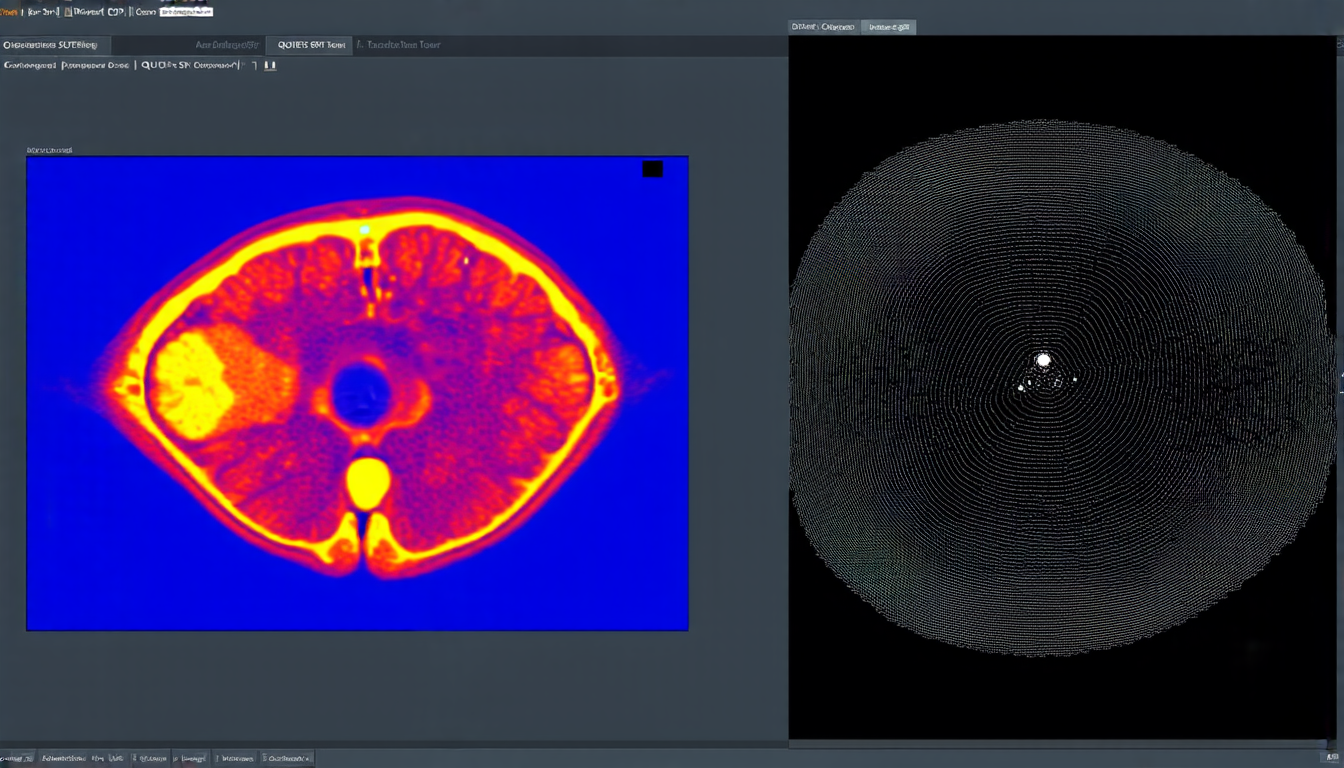
The algorithm has been tested on a range of images, including medical scans, satellite photos, and even works of art. In each case, QUIET-SR was able to significantly improve the image quality, often restoring details that had been previously lost or distorted.
One of the most impressive aspects of QUIET-SR is its ability to handle complex, high-dimensional data. This is made possible by the use of quantum computing, which allows for parallel processing and manipulation of vast amounts of data.
The potential applications of QUIET-SR are vast and varied. In medical imaging, it could be used to improve diagnostic accuracy and enable doctors to make more informed treatment decisions. In satellite imaging, it could be used to enhance and analyze images of the Earth’s surface, providing valuable insights into climate change and environmental degradation.
But perhaps most excitingly, QUIET-SR could also be used in the field of art conservation. By enhancing and restoring damaged or degraded artworks, it could help to preserve cultural heritage for future generations.
Of course, there are still challenges to overcome before QUIET-SR can become a widely adopted technology. For one thing, quantum computing is still a relatively new field, and there is much that is not yet fully understood about its capabilities and limitations.
Additionally, the development of practical applications for QUIET-SR will require significant advances in areas such as data storage and processing, as well as user interfaces and software tools.
Despite these challenges, the potential benefits of QUIET-SR are undeniable. As researchers continue to develop and refine this technology, we can expect to see a wide range of innovative applications emerge in the years to come.
Cite this article: “Quantum Leap in Image Resolution: A Novel Framework for Super-Resolution using Distributed Quantum Circuits”, The Science Archive, 2025.
Image Processing, Quantum Computing, Algorithm, Image Restoration, Noise, Distortion, Attention, Parallel Processing, Medical Imaging, Art Conservation





