

Wednesday 09 April 2025
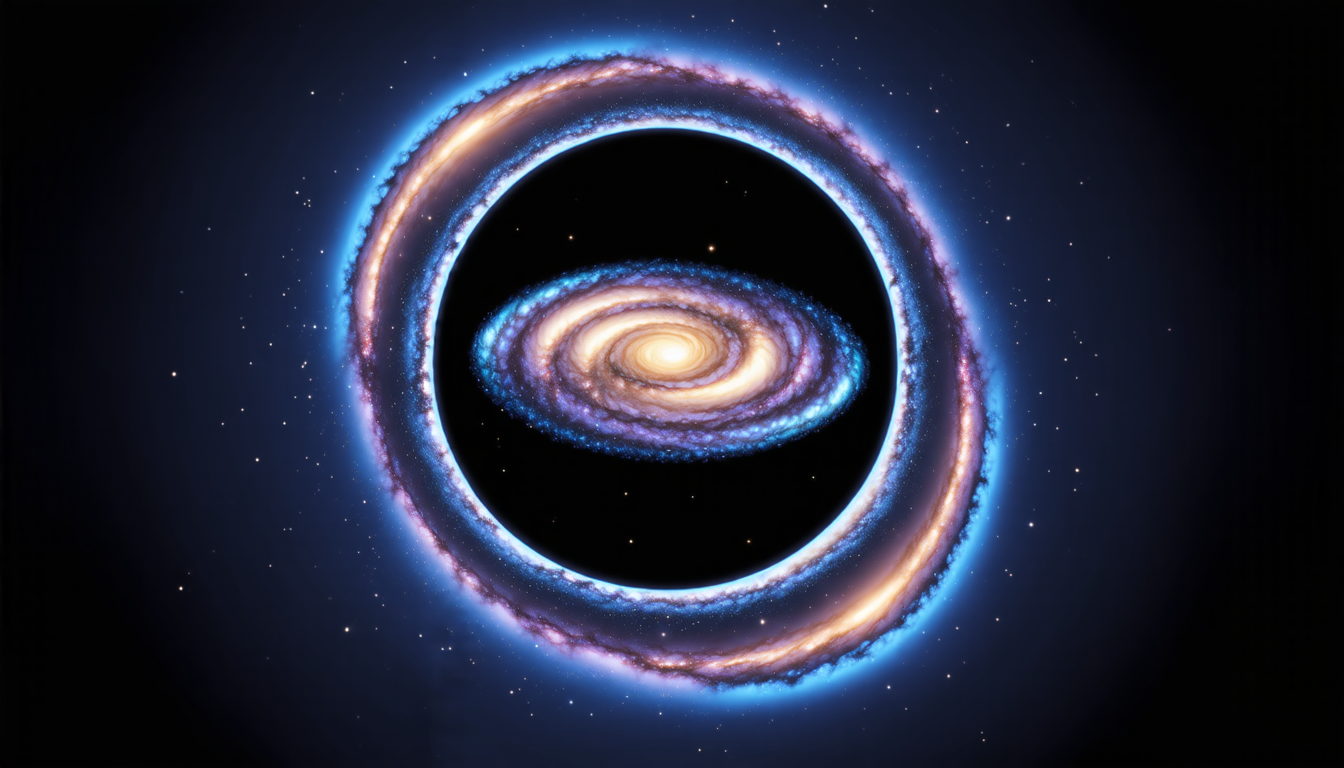
Scientists have made a significant breakthrough in their quest to understand strong gravitational lenses, which are massive galaxies that warp and distort light as it passes through them. By studying these cosmic phenomena, researchers can gain valuable insights into the structure and evolution of the universe.
Using data from the James Webb Space Telescope (JWST), a team of astronomers has created a detailed forecast of what strong gravitational lenses should look like in the distant cosmos. They’ve also analyzed observations of 17 spectacular lenses, which are thought to be some of the most extreme examples of this phenomenon.
The results are striking: while the forecast and observed data show some similarities, there are significant differences between the two. The scientists found that the observed lenses were smaller than expected, with fewer galaxies and less mass in their cores. Additionally, the observed sources, which are the distant objects whose light is being bent by the lenses, were different from what was predicted.
These findings have important implications for our understanding of galaxy evolution and the role of strong gravitational lenses in shaping the universe as we know it. The JWST’s observations of these cosmic phenomena are helping scientists to refine their models of galaxy formation and evolution, which will ultimately shed more light on the mysteries of the cosmos.
The study also highlights the importance of combining theoretical predictions with observational data to gain a deeper understanding of complex astrophysical processes. By comparing forecasts with actual observations, researchers can identify areas where their theories need refinement and make more accurate predictions about what they might observe in the future.
As scientists continue to analyze the JWST’s vast treasure trove of data, we can expect even more exciting discoveries that will help us better understand the workings of the universe. With each new finding, our understanding of this complex and awe-inspiring cosmos grows a little clearer, and we are reminded once again of the importance of continued exploration and discovery.
In this study, scientists used advanced statistical techniques to compare their forecast with the observed data. They found that while there were some similarities between the two, there were also significant differences that required further investigation. By combining theoretical predictions with observational data, researchers can gain a deeper understanding of complex astrophysical processes and make more accurate predictions about what they might observe in the future.
The JWST’s observations of strong gravitational lenses are helping scientists to refine their models of galaxy formation and evolution, which will ultimately shed more light on the mysteries of the cosmos.
Cite this article: “Unveiling the Secrets of Cosmic Lensing: A Groundbreaking Study Reveals the Power of AI in Predicting Galaxy Interactions”, The Science Archive, 2025.
Gravitational Lenses, James Webb Space Telescope, Galaxy Evolution, Strong Lensing, Cosmic Phenomena, Jwst, Astrophysical Processes, Galaxy Formation, Universe Evolution, Observational Data.





