

Wednesday 09 April 2025
In the world of manufacturing, precision is key. Tiny misalignments can lead to defective products and wasted resources. For years, engineers have been struggling to develop a reliable method for controlling registration errors – a problem that plagues roll-to-roll printing processes.
Roll-to-roll printing involves rolling sheets of material through a series of machines, where layers are added or patterns are printed onto the sheet. Sounds simple enough, but in reality, it’s a complex process that requires precision alignment to ensure the final product is accurate and functional.
The problem lies in the rollers themselves. As they spin, tiny imperfections can cause the sheet to misalign, leading to defects and waste. Currently, engineers rely on manual adjustments or primitive control systems to mitigate these errors. But these methods are time-consuming, prone to human error, and often don’t account for the complex interactions between the rollers.
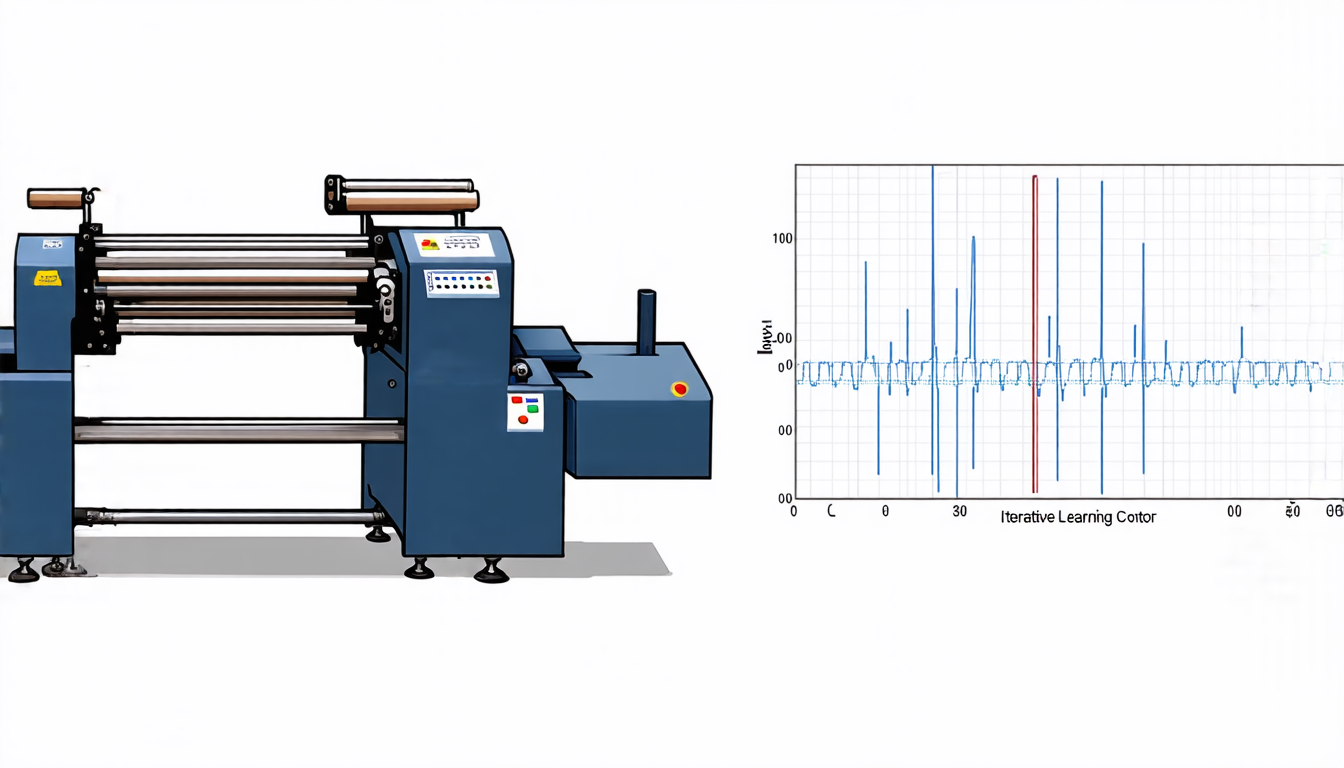
A team of researchers has finally cracked the code by developing a novel control system that uses spatial- terminal iterative learning control (STILC) to eliminate registration errors in roll-to-roll printing processes. The approach combines advanced algorithms with real-time data analysis to continuously monitor and adjust the roller’s position, ensuring precise alignment.
The key innovation is the use of a cosine-form basis function, which captures the periodic nature of the rollers’ motion. By incorporating this function into the control system, engineers can accurately predict and compensate for tiny misalignments in real-time.
Simulations have shown that the STILC approach can reduce registration errors by up to 95%, resulting in higher-quality products and reduced waste. Moreover, the system is flexible enough to adapt to changing environmental conditions and subtle changes in roller performance.
The implications of this breakthrough are far-reaching. Roll-to-roll printing is used in a wide range of industries, from electronics to textiles, and the ability to produce high-quality products with minimal waste could revolutionize manufacturing processes. The technology also has potential applications beyond roll-to-roll printing, such as in robotics, medical devices, or even spacecraft.
As the world continues to rely on increasingly complex manufacturing techniques, innovations like STILC will play a crucial role in ensuring precision and quality. With its ability to adapt to changing conditions and compensate for tiny imperfections, this technology has the potential to transform industries and reshape the future of production.
Cite this article: “Rolling with Precision: A Novel Data-Driven Approach to Eliminate Registration Errors in Roll-to-Roll Printing Systems”, The Science Archive, 2025.
Roll-To-Roll Printing, Precision Alignment, Registration Errors, Control Systems, Spatial-Terminal Iterative Learning Control, Stilc, Cosine-Form Basis Function, Real-Time Data Analysis, Manufacturing, Robotics





